

Welcome to GR Online, a series of short-form articles that take aim at the moving target of contemporary culture as it’s whisked along the guide rails of innovations in digital media, globalisation and late-stage capitalism.

Object permanence
Tigger arrived with one eye and a tender but wary disposition, and at first it seemed like the missing eye would be the locus of his mystery. But within a few months of his living in my small apartment, he began presenting strange troubles – back legs listing when he turned a corner, spasms in his resting spine – that were quickly diagnosed as arthritis and diabetes.

When the birds scream
I read books in which girls like me made friends with cockatoos and galahs, and my mum told me stories about my pop in Queensland who could teach any bird to speak and to whistle his favourite country songs. My favourite story was the one about the bird who used to sit on his shoulder while he drove trucks for work.

As dead as
As a Mauritian person, I’ve always known about dodos. I first heard about them from my dad’s family. The dodo was only ever found in Mauritius, and I naively believed that everyone knew that. But when I was relaying my experience of listening to the podcast to a group of friends, they were surprised to hear that the dodo was Mauritian.

The animal in the walls
Scrambling the scientific assumptions of the time, fungi and fungi-like organisms also gained new cultural and symbolic meanings. They began to sprout in the claustrophobic houses of gothic fiction and the swamps of horror; in the centre of the Earth and on the distant moons of science fiction; in utopian tracts, revolutionary and anti-revolutionary literature; and in the parasitic infections of the post-apocalyptic.

Taking the reins
That’s when it started, I think. That evening at home I cantered on an imaginary horse along the lawn towards our back paddock, reciting over and over the lines I could remember. An unusual initiation, maybe, but it was ‘The Man from Snowy River’ that set a bespectacled, bookish ten-year-old on course to becoming a ‘horse girl’.

Sartre’s lobsters
In The Secret Life of Lobsters (2004), Trevor Corson describes how, before the lobster’s status had sufficiently improved for affluent urbanites to desire its meat, ‘lobster’ was used derogatorily to describe British redcoats during the American Revolution and, later, dupes or fools in general.
Divine dis/connection
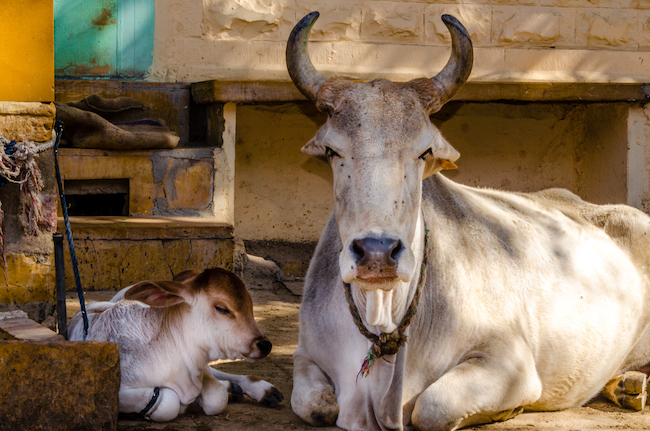
MY FAMILY HAVE always been wary around animals, especially in the home (I could have written ‘non-human animals’, but a stark separation of human from animal is truer to them). My brother and I have changed because of animal encounters in share houses and via intimate others, and we now each live with a partner who likes cats (I ‘have’ one cat; he ‘has’ two). But our parents have remained the same.
Where the wild things aren’t
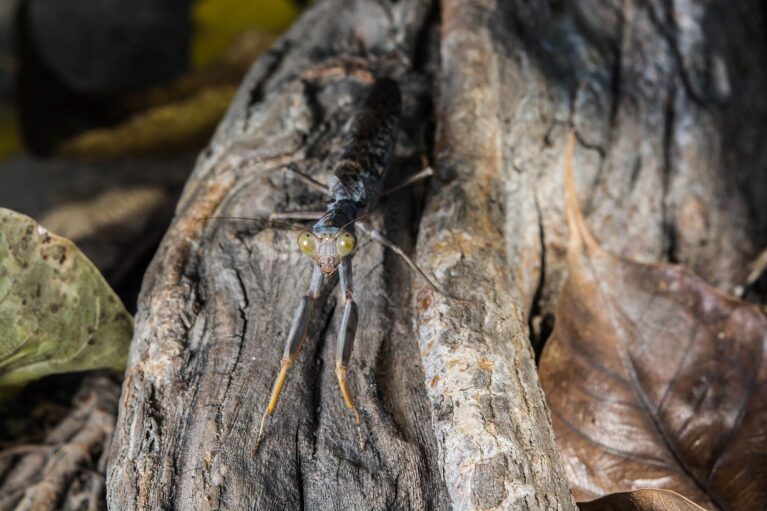
Melbourne Zoo knows that it sits in an uneasy position as a conservationist advocate, still keeping animals in cages, and with an exploitative and cruel past. Our guides for the evening walked a practised line between acknowledging the zoo’s harmful history and championing its animal welfare programs, from the native endangered species they’re saving to their Marine Response Unit, a dedicated seaside taskforce just waiting for their sentimental action movie.
Talking to turtles
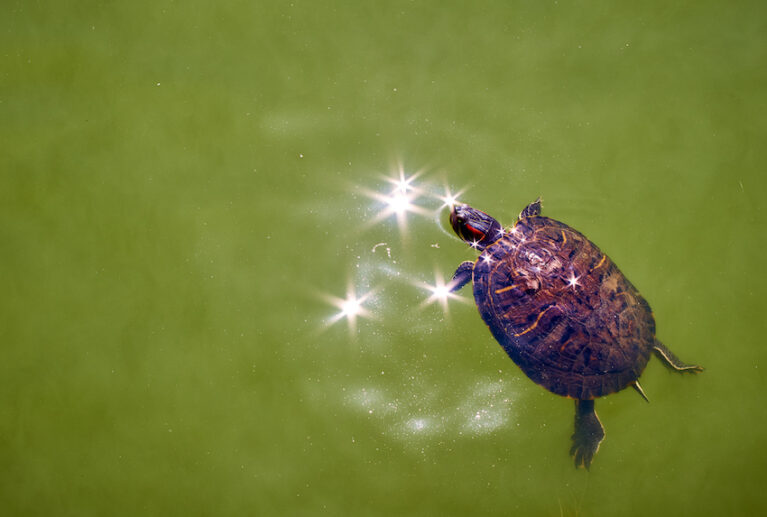
Eighteen years ago, I moved to a seaside village on Cape Cod on the north-eastern shore of the United States. Finding the ocean there too dangerous, I swam in ponds. I waded through mud the consistency of yoghurt ever on the lookout for fifty- and sixty-pound snapping turtles. I dove in, swam and got out as fast as possible.
Smoking hot bodies
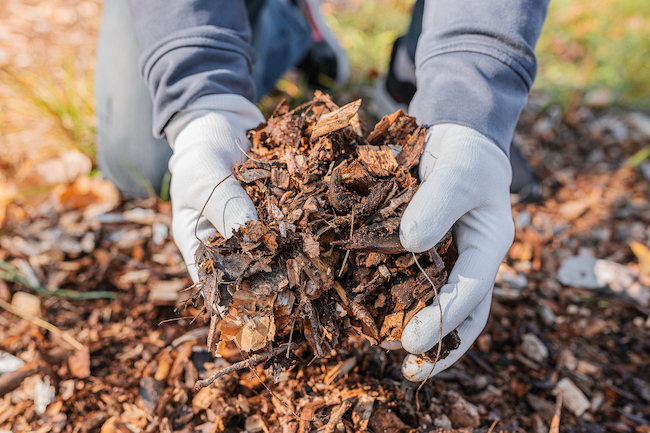
Since 2013, South Korea has mandated the use of compost bins for uneaten food and the country now recycles an estimated 95 per cent of its food waste. Similar schemes exist in Europe and North America, and in June, Nevada became the seventh American state – after Washington, Colorado, Oregon, Vermont, California and New York – to legalise human composting.

Revolutionary wave
This was the late ’60s, early ’70s and surfing in Wales was regarded by the parent generation as delinquency. It was for losers, layabouts, rogue males. In those early days Welsh surfers numbered around one hundred, congregated on half a dozen beaches down fifteen miles of coastline west of Swansea, known as the Gower. I knew each one of those surfers by the styles they deployed on the waves. So idiosyncratic was early Welsh surfing that out on the road if you saw a car with boards on the roof coming at you, both drivers would pull over for a chat.

The defence
The history of computer science is bound up with the game of chess, whose innate complexity and clearly defined rules make it the ideal proving ground for artificial intelligence. And yet the game not only survived the defeat of Garry Kasparov in 1997 by IBM’s supercomputer Deep Blue, but also seemed to flourish in its wake. According to International Chess Federation figures, more people are playing the game than ever before, and not merely over the internet. Now, as a new generation of AIs aces the Turing test – according to which a machine may be deemed intelligent if the human interacting with it can’t tell if it is a machine or not – it might be worth taking a closer look at chess as a social and creative phenomenon that speaks to the limits of ‘smart’ machines.
