
Journal
Articles
Into the void
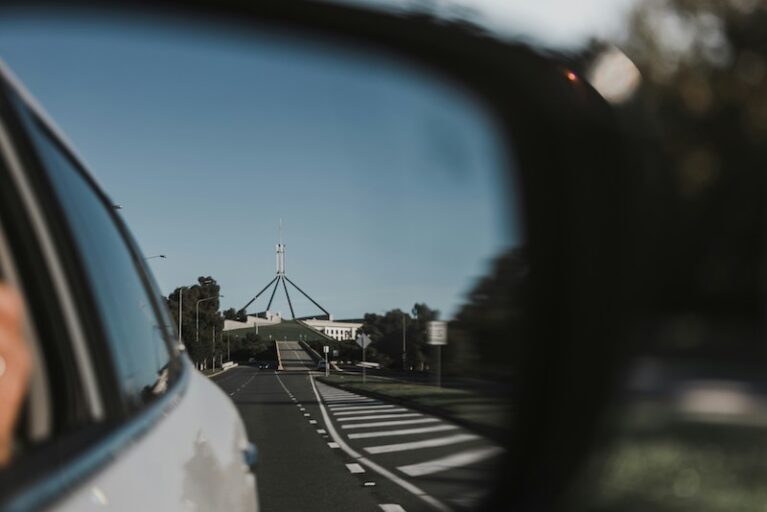
The singular achievement of mass politics was allowing otherwise powerless individuals a greater say in how society was ruled. It gave ordinary people the kind of status that hitherto they could hardly imagine. Its withering away, therefore, has allowed those in society whose status has always been higher to assert their interests more fully. Business and the wealthy are no longer forced to make big compromises to accommodate the interests of those below them in the social pecking order. For example, trade and financial liberalisation policies have permitted many companies to shift production, and even some services, offshore to capitalise on lower labour costs, weakening unions’ bargaining power considerably. Many lower paid workers have been pushed into insecure, low-paid jobs with poor conditions, a transformation justified by political and economic elites as contributing to greater economic ‘efficiency’ and labour market ‘flexibility’. Owners thus pocket a greater share of the economic pie, while workers’ incomes often stagnate or even decline in real terms, causing wealth inequality to rise steeply...
Class acts
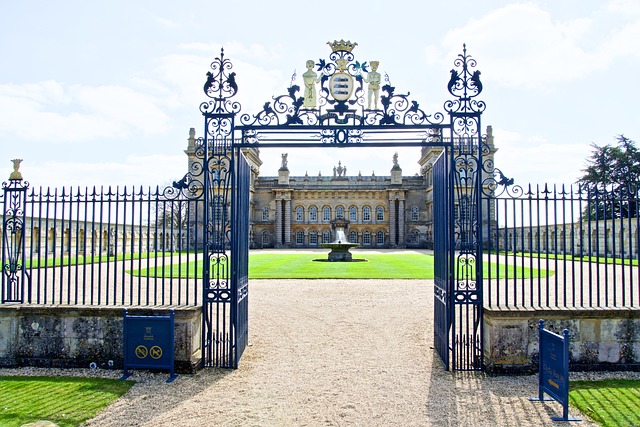
Under capitalism, perhaps the most conventional mode of asserting status is through the performance of wealth. In the early twentieth century, German sociologist Max Weber identified that Northern European societies had conflated an individual’s personal worth with their financial value. This represented the amalgam of two distinct theories: one moral, the other economic. The first was the Protestant idealisation of the work ethic – the idea that to work hard was to exhibit virtue. The second was what historian Eli Cook, author of The Pricing of Progress: Economic Indicators and the Capitalization of American Life, calls ‘the lessons of mainstream neoclassical economics, which suggested, through [the economist] John Bates Clark’s theory of marginal productivity, that everyone earns what they in fact produced’.

Dying of exposure
Publishing is a weird industry, a retail supply service where every day hundreds – thousands – of brand-new, untested products are launched, each one a little bit different to the last. The long-haul career trajectory of most writers is increasingly difficult to maintain with incomes nosediving, as evidenced by multiple surveys. The road is cluttered with novelists brought down by ‘bad track’, their new books rejected because of the poor sales of previous titles. But as readers we still need help to discover good books, to figure out what to read next. As book pages, magazines and newspapers shrink or disappear altogether, it’s no longer clear what impact book reviewers can have on a career. The endorsement of someone whose work – critical or otherwise – you admire remains important to many writers.
The Gordon cult
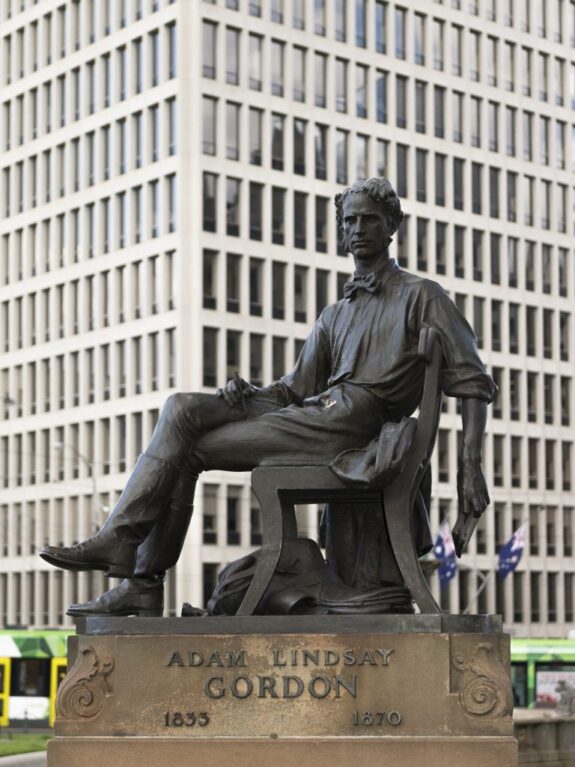
From a modern perspective Gordon makes an odd choice for a national poet, since he wrote only rarely about the country that embraced him. He set many of his popular verses in England and studded the others with the classical references familiar to an English gentleman. Yet before the passage of the 1931 Statute of Westminster – or, more exactly, until similar laws passed through the Australian Parliament in 1942 – Britain retained the legal right to determine foreign relations for the Australian Commonwealth. Accordingly, prior, during and for some time after the Great War, respectable Australian nationalism generally manifested as Empire patriotism.

Birthmarks
There’s no denying the pride and glory that comes with being born Aboriginal and knowing it, along with knowing the history of my culture. Yet with this comes a weight, attached by invisible rope tied by the hands of colonial settlers. Aboriginal people live with the death and damage our ancestors have experienced since 1788, while trying to outweigh it with the strength we inherit from the 2,000 generations that came before us. Cultural integrity is one of many facets of Aboriginal identity, and a testament to our reclamation of social governance led by our own communities. Aboriginal people recognise the power and impact lore and values have on the body and mind, and the life elements between, and this fuels our fire to design structures that allow our knowledge and history to be at the forefront of the services our people receive. Certainly, this powered my need to be working within the community, to acknowledge and understand the strength we find in the face of difficulty and push it into the valleys of my physical form as an Aboriginal creative.
Healthcare is other people
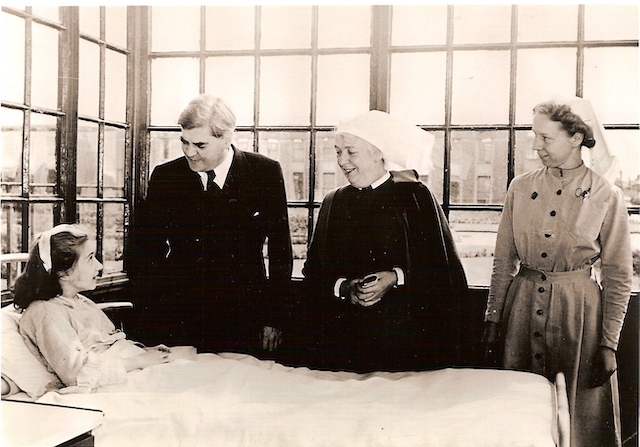
‘I see a lot of junior doctors suspend what I think of as their natural self during training,’ Bravery tells me – the self that is patient-centred and came to the profession because they wanted to help people. ‘They think that once they get far enough along the training pathway then their natural self will just come rushing back. But often it doesn’t.’ With this observation, Bravery identifies what is known in the broader education context as the ‘hidden curriculum’, the unwritten and untaught – and generally negative – behaviours that we see in those around us and learn to emulate to assimilate and excel. In the medical context this usually means a retreat from patient-centredness, a harried and sometimes imperious air, and a concern for money and distinction. Medical students are told about patient-centred care… We labour over weekly theoretical case studies during our pre-clinical (that is, classroom) years to the constant refrain from tutors to think of the patient’s experience and social circumstances.

Drowning in a puddle
The thought of being accepted is terrifying when you’re so used to not being accepted. You expect the worst because the worst is what you’ve become accustomed to. The people in that meet-up group will become your closest friends for the next year. You’ll come to understand that they worry about the same silly little things you do. But those silly little things aren’t so silly and they’re not so little. We just designate them as such because that’s how we’ve been taught by some of the people around us – who expect us to behave in the exact same way they do. But life just doesn’t work like that. Different experiences create different strengths and weaknesses in all of us.

Conferral
Beneath my fantasy of a regular wage is the puerile hunch that if I stay in academia, I can regain some of the nervy possibility I held as an undergraduate student. It was at university that I first met people whose days were preoccupied with thinking, reading and writing, revelatory mostly because they were compensated for these activities with bourgeois trappings and validation. With hindsight, I can recognise that my straining so doggedly to become the kind of person who succeeded according to the university’s metrics mainly taught me what bell hooks says is the primary lesson of college – namely, ‘obedience to authority’.

Finding the right phenotype
I paused to consider the possible benefits of a diagnosis. If I was autistic, my disinclination towards hugging, eye contact and small talk would stop being seen as a sign of my underlying coldness and instead be considered a legitimate accessibility need. I imagined a whole new world where the federal Disability Discrimination Act (1992) would be my shield, protecting me from the scourge of ‘camera-on’ Teams meetings. Could I insist on my own four-walled office at work, and get out of the cacophony of the modern open-plan office too? Maybe my new condition could even explain away my patchy work record and reluctance to accept underwhelming authority figures.
But I already had a label. One that, like autism, regularly stirred up moral panic around wokeness and social contagion. As a recently diagnosed transgender person, I was already part of a highly online, over-educated and underemployed cohort, routinely blamed for stifling free speech as well as both maintaining the gender binary and destroying it. The alt-right discourse was already aflame, decrying the social scourge of everyone wanting to be seen as a ‘special snowflake’ and the creeping ‘politics of victimhood’. Did I really need to inhabit a second suspect identity?

When adults are at risk
One significant subset of our modern adult-safeguarding environment is elder abuse, which we know is a significant and under-reported problem. In 2021 the Australian Institute of Family Studies released the results from the first-ever broad survey of elder-abuse prevalence in Australia. This showed that 14.8 per cent of adults aged sixty-five and over had suffered abuse in the previous twelve months. Importantly, only a little more than one third of people who experienced abuse sought help.

Uninsurable nation
AS I DRIVE into the small Victorian riverside town of Rochester, a banner tied to a metal fence greets...

The inspirations of radical nostalgia
There is nothing natural or inevitable about the ‘decline’ of history and the broader arts and humanities, any more than there is the destruction of nature. Neither are passive or natural processes; both occur as a consequence of deliberate decision-making made in accordance with ideological preferences, usually supporting the material objectives of the vested interests that systematically corrupt our democracy and society.
Redeeming universities and other public institutions requires sustained political effort. The decline of academic history can be reversed through ending the ideological sway of neoliberal managerialism in universities, the allocation of reasonable levels of resourcing, and the provision of job security and professional autonomy to sufficient numbers of historians, plus time and space to learn for their students. Loss of historical consciousness, unlike extinction, need not be forever. With air returned to their lungs once more, the disciplines preoccupied with human purpose and meaning, fostering habits of critical thinking, are amenable to full resuscitation.
