
Featured in
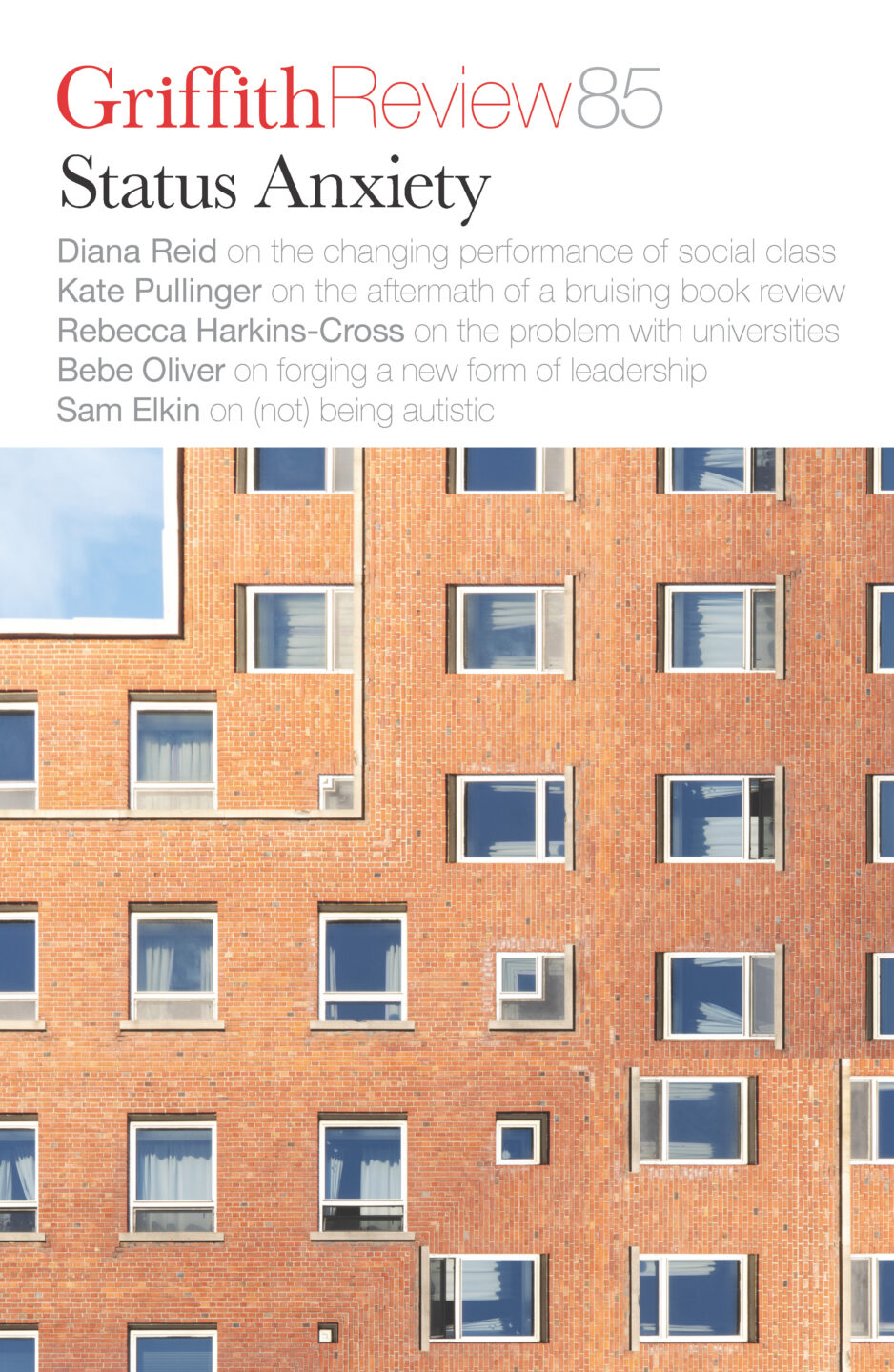
- Published 20240806
- ISBN: 978-1-922212-98-6
- Extent: 216pp
- Paperback, ePUB, PDF
Already a subscriber? Sign in here
If you are an educator or student wishing to access content for study purposes please contact us at griffithreview@griffith.edu.au
Share article
More from author

My tiny green teacher
In June 2025, I was one of the many people emotionally wounded by a viral video clip of a little puppet named Tiny Chef (affectionately known as Cheffy) receiving some bad news. I hadn’t heard of this character and his playful children’s show, but the clip had a profound effect on me. It depicts a more potent vulnerability than many human skits achieve.
More from this edition

Lifedorm
FictionThe fourth, fifth, sixth and seventh decades filled me with bitterness. I felt like the big oak tree in the centre of our play garden, stuck in the same place forever. Except even the oak tree’s life was more interesting because when it was small Parent 3 had told us to be careful not to step on it, and now it was this huge thing with ugly tree wrinkles and scars in the trunk from the branches we cut off to build a raft one summer, but I’d hardly grown at all.

The National Institute of Standards and Technology
Poetry I disappoint myself each day that I remember my work password I take it that seriously that I base my key on the National Institute of Standards and...
Finding the right phenotype
Non-fictionAs a recently diagnosed transgender person, I was already part of a highly online, over-educated and underemployed cohort, routinely blamed for stifling free speech as well as both maintaining the gender binary and destroying it. The alt-right discourse was already aflame, decrying the social scourge of everyone wanting to be seen as a ‘special snowflake’ and the creeping ‘politics of victimhood’. Did I really need to inhabit a second suspect identity? Did I need another personal attribute I felt deeply ambivalent about to become a public part of my persona?
