
Edition 92
Lost and Found
- Published 5th May, 2026
- ISBN: 978-1-923213-19-7
- Extent: 196pp
- Paperback, eBook, PDF
‘Loss,’ wrote Marcus Aurelius, ‘is nothing else but change’. We lose face, lose time, lose heart, lose touch, lose ground, lose our keys (often); we can lose the things that hold us back or weigh us down, just as we can lose the people and places we love most.
Loss, whether it offers us pain or reward, is fundamental to the experience of being human. What might we lose or gain as technology continues its rapid advance? How do we halt the loss of our natural world? What’s lost by growing up between cultures? Are we losing our sense of a shared reality? And what are the benefits to being a loser?
Lose yourself in this edition of Griffith Review as we go in search of answers.
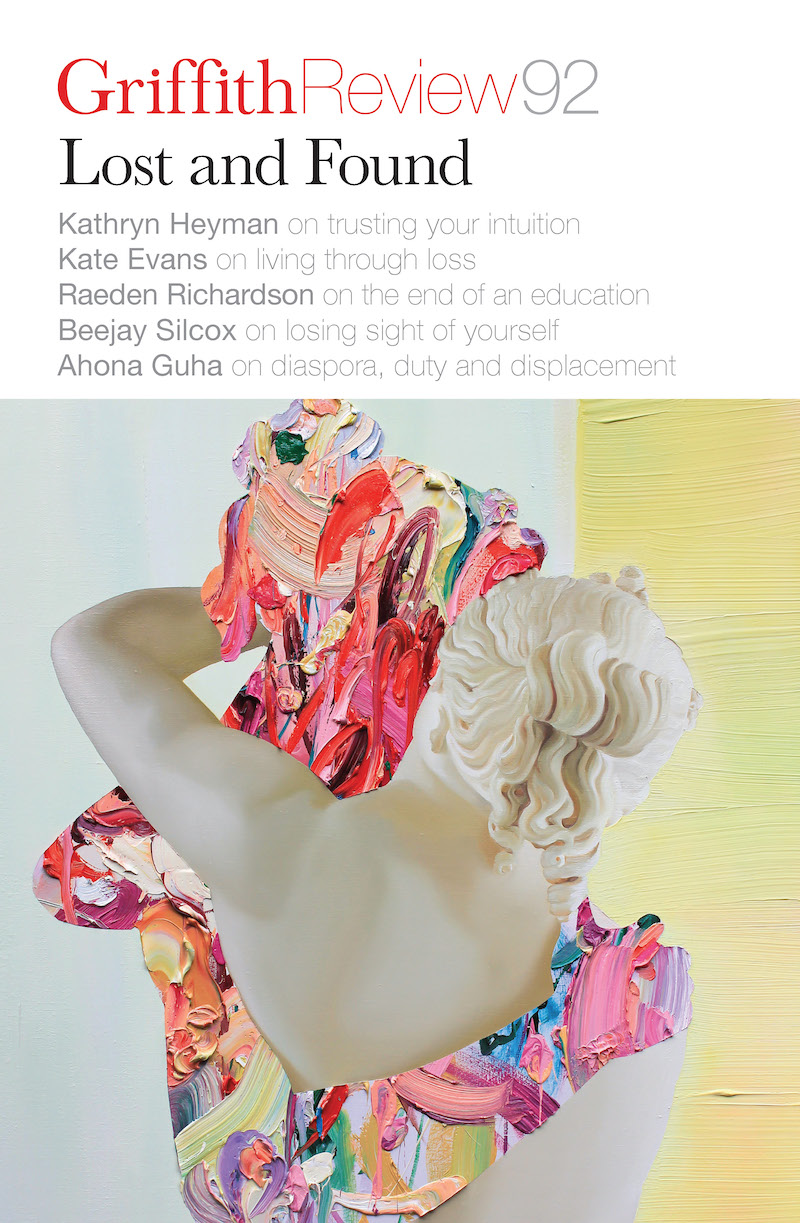
Cover image: Marie Pol, The Unbearable Lightness of Being (2022), oil on linen, 92 x 82 cm
In this Edition
Slapton Sands
You’ll also find a Sherman tank overlooking the water. Stay with me.
Slapton Sands is not that easy to get to if you don’t have a car – the nearest railway station is Totnes, a three-hour train ride from London, and from there it’s a bus to Kingsbridge and another to the Sands. When you arrive, you’ll find that the beach is actually made of pebbles, but that’s not important right now.
You’ll also find a Sherman tank overlooking the water. Stay with me.
Slapton Sands is not that easy to get to if you don’t have a car – the nearest railway station is Totnes, a three-hour train ride from London, and from there it’s a bus to Kingsbridge and another to the Sands. When you arrive, you’ll find that the beach is actually made of pebbles, but that’s not important right now.
You’ll also find a Sherman tank overlooking the water. Stay with me.ON THE SOUTH coast of the United Kingdom, in the county of Devon, there’s a triangular sprawl of land that juts out into the English Channel. At its southern tip lies the wealthy sailing town of Salcombe, where a latte costs as much as it does in Shoreditch, and in peak season you’ll queue down the cobbled street for half an hour to get it. Approximately thirty miles up the coastline, there is one of Devon’s most deprived conurbations, Torquay, which sits at the heart of an area known without irony as ‘the English Riviera’. Halfway between the two is Slapton Sands.
Slapton Sands is not that easy to get to if you don’t have a car – the nearest railway station is Totnes, a three-hour train ride from London, and from there it’s a bus to Kingsbridge and another to the Sands. When you arrive, you’ll find that the beach is actually made of pebbles, but that’s not important right now.
You’ll also find a Sherman tank overlooking the water. Stay with me.
Gut feeling
A little while later, the judge leans her head on her hand and says, Mr Brain, were you touching their breasts as part of your Christianity, or were you just touching their breasts?
I sit up straighter, as though ready to stand for the first hymn.
Mirror, mirror
I have lost my face. This is not a metaphor; I no longer recognise myself in mirrors. I know the facts: I’m wearing the face I’ve always worn, the same muscle, the same scaffolding of bone – but recognition is a different order of knowing. My sense of kinship is gone. I stare and a stranger stares back.
Bad teeth
I have my own serious questions: what’s the truth about teeth? Teeth can be a vessel for so many things we want to believe in – whether those things are lies (imaginative or otherwise) or the truth is irrelevant. Teeth can go from magical to mundane in an instant. From beautiful to ugly, from correct to wrong and back again.
Herbert or Harry?
While living creatures also die, go extinct and at times evolve into something else entirely – just as the built environment eventually disappears – it seems a stretch to suggest that the significance of other creatures depends only on our relationship to them – on what they provide for us, whether as resources or a source of personal awe and emotional resilience.
Mourning in a time of planetary crisis
As species disappear and climate change accelerates, a small but growing group of activists, artists and writers across the world is embracing mourning as transformative ethical and political work. Their approaches are wide-ranging, from public funerals and vigils for departed species to acts of civil disobedience that take the form of mass ‘die-ins’ representing the extinction crisis.
Bucket of water
When clients were brought to Australia, they were held in hotels or detention centres. Detainees were allowed to see external psychologists in visiting rooms in the detention centres. The rooms were stark and grey with bright, white lighting. I filled out an online application form to visit one of my clients. It asked me to list the items I wanted to bring with me, and how I intended to use each of them.
Old feelings, new appetites
Suddenly, my body was allowed to be big, weary, bed-bound and gorged. It was to eat readily, rest gladly, leak chaotically and swell without objection. For close to ten months, it was to be spared anorexia’s vicious rules. As I approached the end of my body’s heavy sabbatical, I felt nervous.
The knitting
The spores that caught and coupled. The filaments that grew, the hyphae that became the sum of our parts. All of it powered by water, powered by oxygen, powered by sugars, nutrients, deaths, resulting in bodies rotting in the ground. We spread out, touching the soft new roots of trees, entering them. Connecting them. A knitting.
Blaming the pastries
Contemporary life constantly offers us the illusion of control – many of us can access whatever we want whenever we want it at the click of a button. In reality, though, we lack control over so many elements of our lives. Since it can be painful to think about that, we make ourselves forget.
From the new world
The first time I played Dvorak’s New World Symphony, I couldn’t believe the sheer power of inked shapes on paper. Breathing into the first note with eighty other musicians; the swelling fortississimo crescendos of pure angst; traversing stories inspired by communities borne from diaspora and unbelonging. Nothing I’d ever done had felt so real.
Final five days
We sent Red off to school on Tuesday, Wednesday, Thursday – but we had to ask him to say farewell, to be ready for her absence, just in case. Every day. To bid your dying sister goodbye, each morning, and then go into the arms of your friends – who didn’t know.
Encircling the flames
I was seventeen. I didn’t own a passport. I’d never been on a plane. The extent of my ‘cultural exchange’ was one Toorak party where, reciting Hamlet’s first soliloquy, I tried to woo the private schoolgirls before they realised ‘this too too solid flesh’ belonged out near Dandenong.
Australia’s lost literary sector
As I’m writing this essay, at the start of 2026, nearly every arts, cultural and literary organisation in Australia is in some sort of trouble – whether at the hard-but-ticking-along-if-everything-stays-equal end of the scale or the other extreme: a not-sure-how-long-we-can-keep-going-like-this existential crisis.
The limits of authenticity
It was as though the genuine bid towards a more inclusive literary culture had led to the commodification of identity instead. It became clear that any broader interest in identity withered beyond the initial question of representation; I discovered I’d been naively unprepared for what adopting the term ‘Asian Australian writer’ meant.
Little gifts of flowers
It’s unclear whether Boyd, who would have been two years old when Wilde was convicted and imprisoned for gross indecency, similarly literalised his homoerotic fantasies. Contemporaneous reviews of Brenda Niall’s 1988 biography, Martin Boyd: A Life, commend Niall, in a way that reveals the soft prejudice of the times, for how she handled the subject of Boyd’s sexuality. Paraphrasing Boyd’s family friends – who referred to Boyd, endearingly, as Floppy – Niall writes that Boyd was probably ‘too fastidious for casual sex, and with too strict a sense of honour to exploit the innocent, he probably repressed and aestheticized his sexuality’. This conclusion is buttressed by the conspicuous absence of the only work in Boyd’s catalogue that presumably possessed an unambiguously homosexual point of view, of which we know little except that there were flowers.
In a way that strikes me, again, as typically Australian, Boyd is slightly behind the times with his fin de siècle attitude towards classicism and homo- sexuality. His novels are uniquely appealing to me for the narcissistic reason that they are perhaps the only Australian books I can imagine myself having written. It’s why I find the correspondence about The Shepherd of Admetus so appallingly fascinating. I’ve read countless gay novels, by gay authors, in an attempt to discover my own writing. The author to whom I feel closest, by virtue of nationality, style and subject, wrote one such novel, and for all anyone knows, it might have been rubbish.
The creative arts in a time of fragmentation
‘A time of fragmentation’ is a phrase that describes a period in which profoundly different world views jostle for dominance, and the destructive capacities of human beings threaten to do their worst. It isn’t just that public opinion is polarised. There’s a centrifugal quality to everyday life that makes it feel as if it’s being ripped apart.
A moment of wonder
When Elizabeth Blackburn became Australia’s first female Nobel Laureate in 2009, the media focused not on her research but on the ‘challenges’ she reportedly faced as a woman in science. Her journey was not dissimilar to mine – she had supportive parents and teachers as well as champions at work who helped her focus her passion – so there are clearly other factors at play here.
The lists
I want to hold her. She doesn’t know it yet, but her world is about to change. Yes, all the things happening at home are bad and it’s an open secret throughout town, but she doesn’t know how much further she has to fall.
Endless summer
In a perfect world, every season would be summer – a time of seemingly endless promise. At least, that’s how I remember the summers of my youth: freedom from the confines of school or university, with nothing but lengthy, sun-filled days of play and pleasure. As pleasing as the nostalgic image is, I know it isn’t true.
There’s something wrong
Almost twenty years ago, before I left my parents’ house – my home, my country, my continent – to adventure into a new world, I did the maths. If I visited my parents every week for the rest of their lives, I might be able to spend another year with them.
A liability
THE JOURNALIST IS calling again. I don’t know how he got my number. I suppose it couldn’t have been that hard. My whole life, people have been selling me out to get their two cents in the paper. It seems to happen in cycles. Every...
Venerable
WHEN WE PULL up outside the block, she is waiting in her best grey skirt and pearl-pink blouse with a patent-leather handbag dangling from her left hand. I usually get out to help her into the passenger seat, opening the door and holding her...
Walking Upside-down Country
life, habitat & ruin / run recombinant // & helical in hurt forms / that keep life going & do / not heal – ‘Clear Water Renga’, Brian Teare morning draws us out sensing an unsteadied life can only lose and find itself within this habitat which is...
Mushrooms
In the dark, out of damp black loam, they’ve sprung back in their bonnets and straw hats. Pale arms dusted by the moon. Pale faces without weariness. ‘Explain yourself,’ my grandmother once said to me, hands on her hips. ‘You think you can explain it all away?’ said my grandfather, disgusted. And my mother’s...
A Million Eyes
for Eileen Chong The story has been told over and over: Saigon crossed out on maps in crimson ink, its refugees pleading their way across the sea, arriving at the white closed door of the cliff shore. Saigon was burning. The atlas had crumbled into ashes. At mansion thresholds, voices...
Featured Contributors
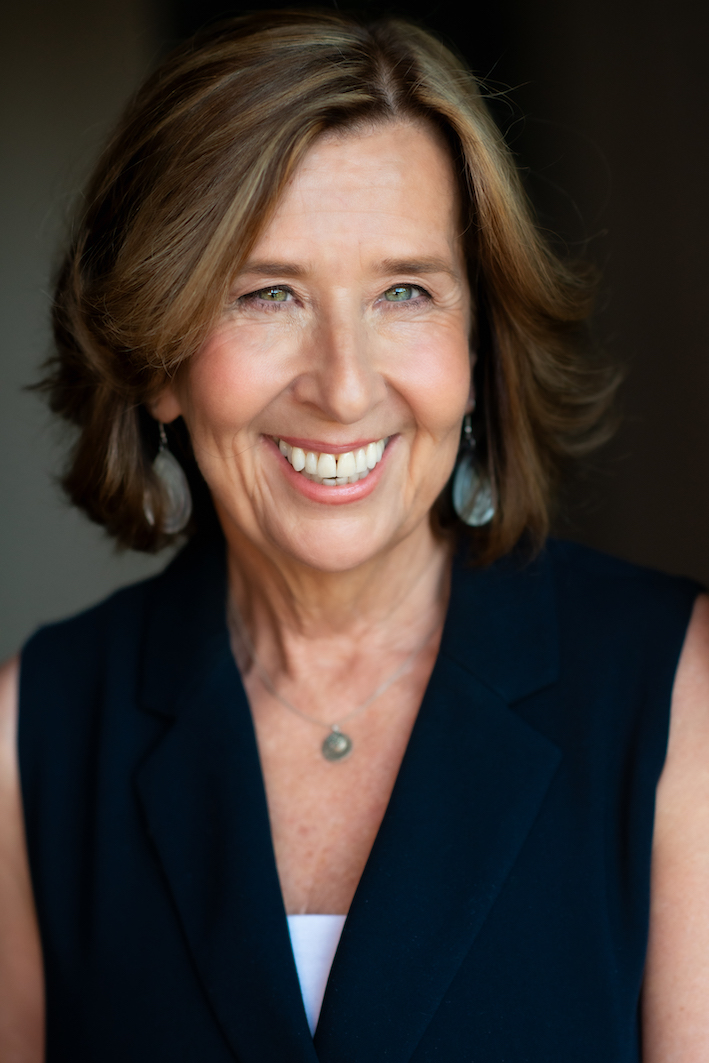
Kathryn Heyman
Kathryn Heyman’s latest novel is Circle of Wonders (4th Estate, April 2026). Her website is www.kathrynheyman.com.
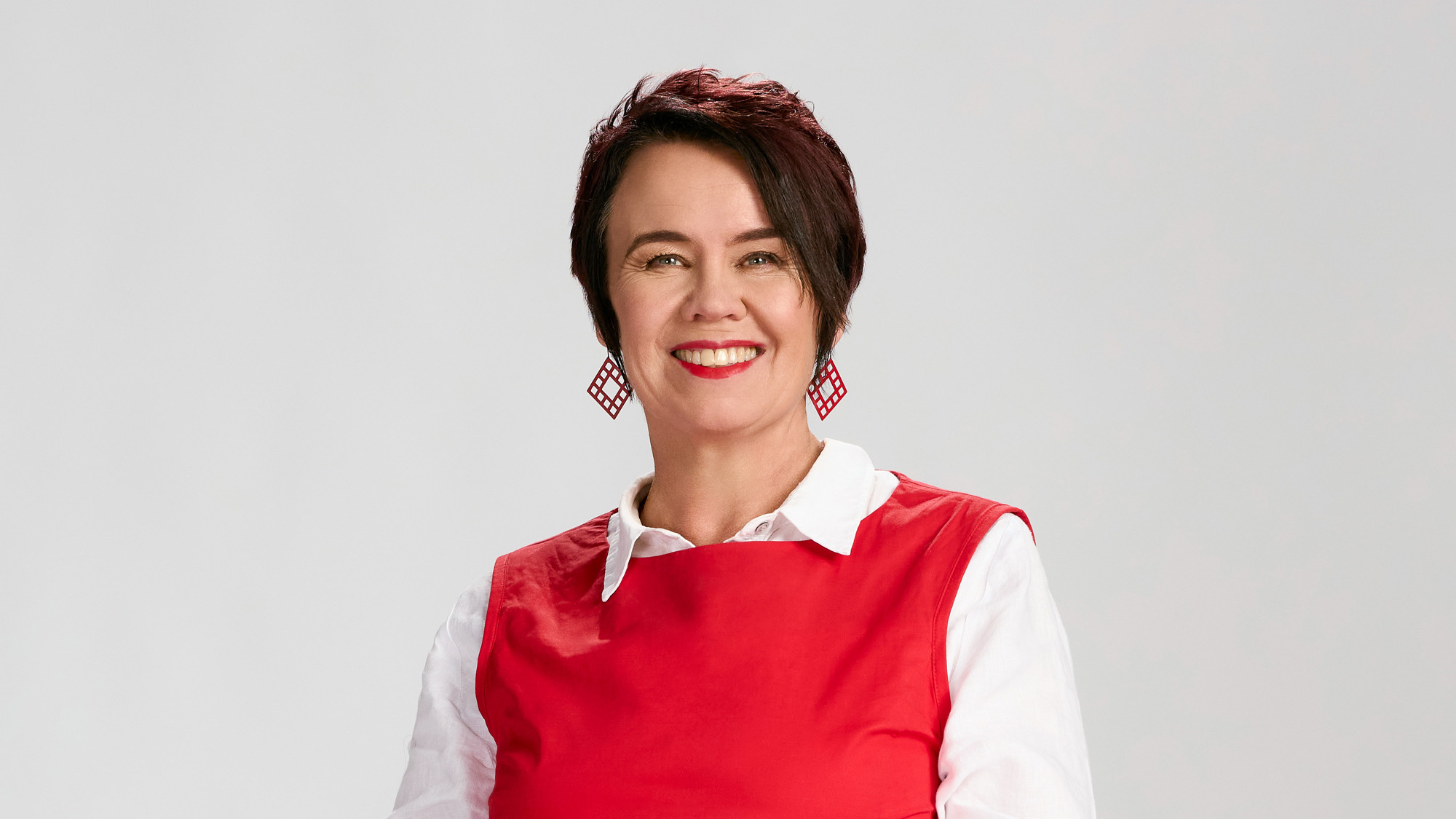
Kate Evans
Kate Evans is the co-host of ABC Radio National’s weekly review program and podcast, The Bookshelf, and is a regular...
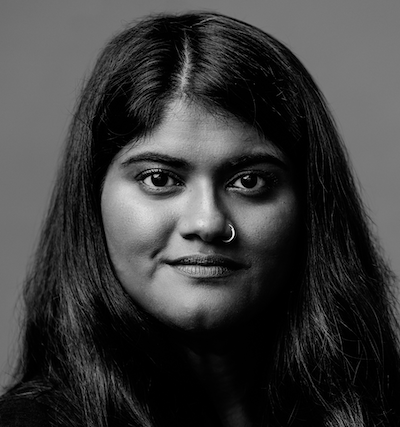
Ahona Guha
Dr Ahona Guha is an author and clinical and forensic psychologist from Melbourne, Australia. Her latest book, How We Relate, was published by Scribe in...
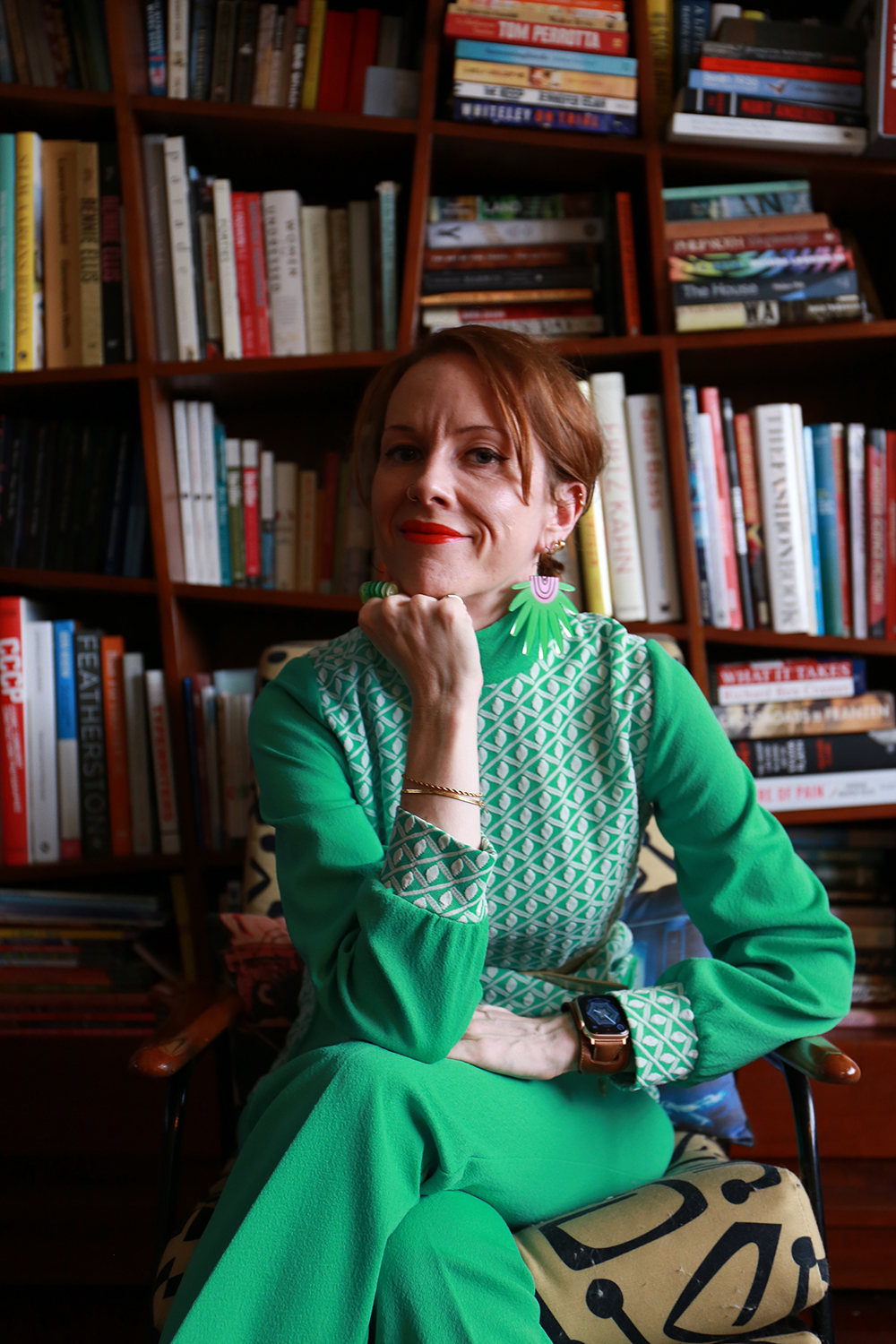
Carody Culver
Carody Culver is the editor of Griffith Review. She's also a writer and a literary interviewer. She was a contributing...
