
Journal
Articles
Shopping at Babel
All civilized states have considered it their primary duty to provide for equal weights, measures, and coins – REPORT FROM...
Menopause™
Because I was not yet forty-five, my doctor asked the pathologist to look at my fertility hormones. The results showed that while my ovaries were still producing oestradiol, the strongest form of oestrogen, my levels of follicle-stimulating hormone and luteinising hormone were high. These results indicated I was perimenopausal – I would likely go through menopause sometime in the next two years.
Wanting it all
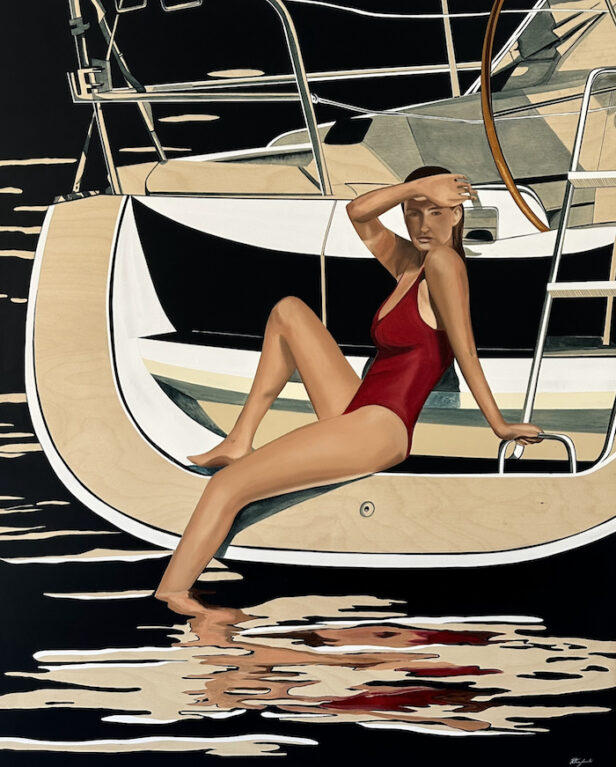
I’m really interested in why we want these things. I know I’m personally drawn to clever marketing – the kind that makes you think, ‘If only I had that thing, maybe then I’d feel complete’, or ‘Once I get it, maybe the wanting will stop.’ But, of course, once we’re in that loop, it’s never enough. As soon as the package arrives, we’re already craving the next fix.

Undisclosed funds
In 2022, the American culture writer Jordan Calhoun penned a column in The Atlantic that I still think about. In his piece, Calhoun recalls the financial precarity of his college years, where he began ‘the first of many adventures being surrounded by people I felt were rich while I pretended not to be poor’: stealing food when his study allowance ran out, scanning the pages of textbooks in a bookshop when he couldn’t afford to buy his own copies. No one he knew talked openly about their income or spending habits – so as Calhoun grew older and sought to overcome his ongoing struggles with money, he turned to pop culture in the hope of gaining insight into what ‘“normal” finances’ looked like.
Rent-a-grave
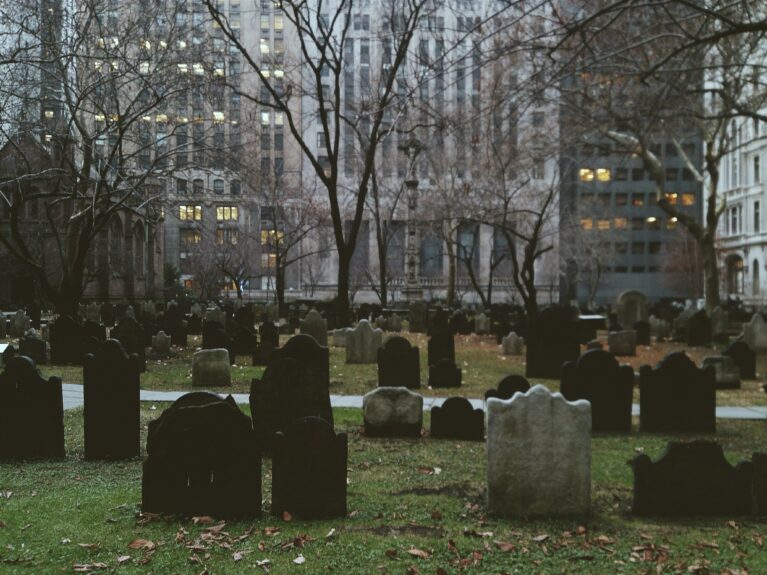
Renewable or limited grave tenure is considered a niche burial option by the few cemeteries in New South Wales that offer it. I hadn’t heard of it until I began looking into sustainable deathcare after a conversation with a friend about water cremation (or alkaline hydrolysis): a process whereby the body is broken down in a steel vat of hydrogen peroxide and water, heated to 93 degrees.
A diasporic dilemma
I was confined within the borders of a country, practising a borderless art in the only language I could express myself in: Turkish. Everything I wrote back then merely imitated the works I was familiar with – Turkish classics I had to study in school, and some prominent writers from Iran, Russia and Brazil. It wasn’t until my late teens – when I discovered writers like Jhumpa Lahiri, Amy Tan and Ahdaf Soueif – that I realised there were stories that existed beyond the boundaries of any one nation’s literary traditions.
Ghostwriting in the machine
Ask ChatGPT a few basic questions, and the responses all begin in the same way: That’s a really insightful question! That’s a deep and fascinating question! When asked if it lies to please people, it still responds with flattery: That’s a tough but important question . . . You calling that out is actually helpful. LLMs don’t challenge the ideas and beliefs shared by the humans using them. Their programming won’t let them.

Grin and bear it
Girls are taught to be quiet and competent, accommodating and pleasant, nurturing and helpful. Eldest daughters shoulder the burdens of everyone around them. From the womb to the urn, women fix and soothe; the archetype is wired by social constructs and our environment.
Hold fast to yourself
There was once some reward for effort on social media, when our carefully curated feeds allowed our curiosities to roam and discover points of cultural interest that appealed to us. On today’s platforms, the act of choosing has been ruthlessly substituted by the act of receiving.

Why books burn
Epistemicide is the systemic annihilation and devaluation of knowledge and knowledge systems because of broader political pursuits. These pursuits are sought by a group of people whose aim is to disconnect another group from their cultural identities, histories and futures.
Perfect match
Art and fashion have long been co-conspirators, collaborating commercially and creatively to mutual benefit since the early twentieth century. At first glance, the disciplines appear to be fundamentally opposed. Where fashion has traditionally been seen as fickle, transient and driven by popular culture trends, designed to make itself redundant with each new collection, art is understood to be more thoughtful, intellectual and elitist, in pursuit of longevity – the nobler pursuit, owing to its intellectual and philosophical origins. Fashion embraces reinvention to make itself relevant, responding to consumer demands and the commercial imperative, whereas art, born of an artist’s creativity, has historically been regarded as the higher form, one that does not necessarily depend upon financial gain, nor require money for its creation.
Of course, these are outmoded, romantic notions – absolutes. Art is a commodity like any other, bought and sold as an investment. Art and fashion are economic systems with a great deal in common: both exist because they can, not because they serve a practical purpose.

Sovereign forever
I didn’t see many First Nations designers when I was growing up, but I suppose my saving grace was the few Black models working in the industry, such as Naomi Campbell, Tyra Banks, Iman and Veronica Webb. They introduced me to luxury fashion, and I’d cut their pictures from magazines and plaster them on my wall. I’d study the unique tailoring and signature styles of the clothing they wore. Without even realising what I was doing, I’d started creating my personal lookbook to capture what I dreamed of wearing one day.
