
Pay writers like politicians
Rethinking Australia’s literary funding
Featured in

- Published 20260203
- ISBN: 978-1-923213-16-6
- Extent: 196pp
- Paperback, eBook, PDF

IN THE EARLIEST days of the Australia Council for the Arts, before the passage of the Australia Council Act in 1975, members of the fledgling Literature Board fielded radical proposals about how the federal government could support the development of a national literature. Thomas Shapcott, in a 2004 memoir of his time on the board, recalls that a guaranteed minimum income scheme for writers was on the table in those first meetings in 1973, though it didn’t go far. Even more startling were the calculations around major fellowships: three-year grants awarded by the Literature Board to writers of talent and reputation. Shapcott as well as Richard Hall, who was Gough Whitlam’s private secretary prior to the 1972 election, made the case for increasing the annual stipend of $4,000 offered by the Commonwealth Literary Fund (CLF) to $9,000. Their reasoning seized my attention. ‘Our argument,’ he writes, ‘was that $9,000 represented both a middle-range journalist’s salary, and was also equivalent to that payable to backbenchers in federal parliament. We proposed that our writers were worth at least as much as a parliamentary drone.’
The audacity of this proposal made me gasp, as did the recklessness of the phrasing. I do believe that writers are as valuable to the flourishing of our democracy as politicians, but I’ve become so thoroughly assimilated to the paternalistic austerity of Australian cultural funding, to the abysmally low rates of pay that are now the standard for writers, that I wouldn’t dare to suggest they get paid hundreds of thousands of dollars a year. Now, our benchmarks are the poverty line and the minimum wage. Our expectations for government support of writers are modest. Be reasonable, we’re advised. Be realistic.
When we talk about Australian books and writers today, we often find ourselves talking about money. Like patients with chronic illness, we’ve become adept at enumerating the symptoms of our malaise. We talk about broke writers and broke publishers and broke editors. Is anyone making any money? We talk about the cost of books and the cost of paper. We talk about writers’ incomes and the salaries of publishing staff. We talk about the cost of housing and university redundancies. There simply isn’t enough grant funding to go around. We talk about who can’t afford to write. We talk about the indie publishers selling out to multinationals because the margins are too tight. We talk about the market – the market for Australian literature that’s so small, even a prize-winning bestseller doesn’t bring financial security to its author. The market can’t be trusted with our national literature – unless what we want is self-published erotic fiction, which is apparently where the money lies. We talk about the obscenity of wealthy tech corporations shitting on copyright. If tech companies won’t pay writers, who else will?
Even when we’re not talking about money – when we’re talking about our hopes for a national literature, or whose stories should be told, when we’re talking about easy reading, or books that infantilise their readers, or how to safeguard freedom of expression, or the moral principles at stake in wholesale breach of copyright – our conversations are caveated and curtailed by the money question. At our most ambitious, we talk about how to pay writers a living wage.
Little wonder Shapcott and Hall’s vision – which was smothered by inflation, the dismissal of the Whitlam government, the election of Malcolm Fraser – now seems so remote. The major fellowships were ‘almost instantly frozen’. What began, Shapcott writes, ‘as equivalent to a federal parliamentary backbencher’s salary has ended up being much less than that same backbencher’s tax-free allowances’. As I write this essay, the base salary for a backbencher in the Australian Parliament is $239,270. The average annual income for an Australian writer – well, you know this already. The 2022 National Survey of Australian Book Authors found that Australian writers earn on average $18,200 each year from their creative work.
FEDERAL FUNDING FOR literature has declined in both real and relative terms since the early days of the Australia Council, with policy settings calibrated to the needs of our comrades in the performing arts. The trend, broadly, has been that Coalition governments have slashed or repurposed arts funding, sometimes singling out funding for literature, as when George Brandis borrowed $6 million from the Australia Council to set up the Book Council of Australia a decade ago. Labor governments have failed to restore funding to earlier levels. In an op-ed written to greet the launch of Writing Australia, Meanjin Editor Esther Anatolitis summed it up: ‘Over the last decade, federal funding for literature has dropped roughly 43% in real terms, even as writers’ incomes have stagnated below the poverty line and threats to their livelihoods have proliferated.’
This long-term, chronic underfunding of the Australian literary sector is one of the reasons the launch of a new federal entity charged with supporting Australian literature was so closely watched. Writing Australia was legislated into being via the Creative Australia Act 2023 and was the final chip of Labor’s 2023 national cultural policy, Revive, to be slotted into place. At the launch in July 2025, Minister for the Arts Tony Burke announced that Writing Australia would receive $26 million in new funding over three years, on top of the existing $7.8 million invested annually in literature.
Yet the signals being sent do not suggest that drastic changes to the way Australian literature will be funded are en route. Writing Australia will be led by the well-regarded Wenona Byrne, formerly head of literature at Creative Australia, and its advisory council has been populated with experienced industry leaders, not one of whom could be classified as a renegade. These steady hands will be required to cultivate audiences for Australian books and to steer Writing Australia through turbulence generated by the underfunding of literature, the prevalence of large language models and the pressures of global publishing.
In early 2025, Creative Australia squandered the confidence of artists in the arms-length funding process when, under political pressure, they rescinded the appointment of Khaled Sabsabi and Michael Dagostino as Australian representatives to the Venice Biennale before reinstating them months later. Writing Australia must convince writers that their grants will not be subject to political interference and that their freedom of speech will be defended. Even though, in late 2025, the Attorney-General ruled out the Productivity Commission’s recommendation that a loophole be created in local copyright law for the purposes of training large language models, Australian writers are still vulnerable to the predations of international tech firms. Writing Australia must continue to defend the right of artists to make a living from their work. These are challenges that have taken on new dimensions since the passage of the Creative Australia Act; the territory delineated by AI is evolving rapidly, making redundant long-held policy assumptions, especially with regard to copyright. A renegade or two might help Writing Australia persuade writers it can keep up with the pace of change.
In the midst of all this, no one is flying any kites about writers getting paid like parliamentarians or even like their staffers, and everyone is curious about how this new funding will be invested. Any optimism that may have been sparked by the launch of Writing Australia was quickly dampened by Melbourne University Publishing’s (MUP) announcement in September last year that it intended to close down Meanjin. The decision, according to MUP, was made on financial grounds, a claim that was greeted with some incredulity within the industry. Compared with most literary organisations, Meanjin was in rude health. If Meanjin’s books weren’t robust, how could anyone else survive? This closure is a stark reminder of the precarity of Australia’s literary organisations, who are all one ‘purely financial’ decision away from shutdown. The infrastructure of our literature is stretched thin, and conditions are not promising for new journals seeking to foster emerging generations of writers and readers.
FOR ALL THAT the landscape of writing and publishing is shifting, federal arts funding has been distributed to writers in more or less the same way for decades – that is, either directly, via grants, fellowship schemes and the like, or indirectly, via publishers, literary magazines such as Griffith Review and Meanjin, and other organisations who pay writers fees and advances. Funding panels are charged with taking a whole-of-industry approach, especially when making multi-year organisational funding decisions, but the process largely turns around writers and organisations. Resources for sector-development initiatives have been scarce.
When writers apply for individual grant funding, they propose a system of payment for their work. This might be a flat stipend or a day rate tallied to MEAA guidelines. Grant applicants are encouraged to submit budgets that reflect the actual work they will devote to a project and that embody the principle of fair pay for creative labour. What this means in practice is that a chunk of work covered by grant funding might be paid at award rates, but those sections of a project not under the grant umbrella will not. Completing a major project can involve hundreds if not thousands of hours of unpaid work that’s effectively off the books. In her 2022 zine, Decorum Serves the Rich, Anwen Crawford breaks down the relationship between her income and her labour for her 2015 contribution to Bloomsbury’s 33 ⅓ series, Live Through This, and her acclaimed 2021 book, No Document. She was awarded $70,000 in grant funding as she was writing the latter: ‘I began work in earnest on the writing and research that would become No Document in roughly May 2017, and “finished” it about a day before it went to the printer, in February 2021. That’s almost four years of work. Now, 70k divided by four years…is not a living income. It’s an income subsidy…’
Grant funding, for those lucky enough to receive it, used to represent a more meaningful income subsidy than it does now. Crawford draws on research by Jennifer Mills to show the changing relationship of Australia Council fellowships to the average wage. In the 1970s, senior fellowships for writers were paid at a rate higher than the average wage. Right now, writers can apply for a maximum of $50,000 funding for their projects; the median average wage is close to double that. One of Writing Australia’s first investments was a two-year creative fellowship scheme that awards writers $80,000. If this scheme represents progress, it’s not much. Only two fellowships were awarded to writers – and $40,000 a year still falls far short of the average wage. The horizon for sector development along these lines is very limited.
Yet in the first decades of Australian federal government support for writers, the model for disbursing government funds to writers was a welfare system: it wasn’t grants or fellowships that were paid out, but pensions. The CLF, established in 1908, paid pensions to a select cohort of writers who had fallen on hard times, and sometimes to their widows and descendants. Allocations were made according to literary merit and financial need. Barry Andrews writes, ‘once a de facto minimum standard of achievement had been reached, the question of poverty became paramount: how poor rather than how good.’ In the first year of the program, fourteen out of fifty-one applications were funded. (Incidentally, this is a 27 per cent success rate, higher than the 15–20 per cent rates that Creative Australia advises grant applicants to anticipate.) The CLF supported Henry Kendall’s widow, Charlotte, for sixteen years after the poet’s death.
It was not until 1939 that the remit of the CLF expanded, in part at the behest of the Fellowship of Australian Writers. Not only did the renovated CLF pay pensions; it was also tasked with educating the public ‘to a full appreciation of Australian literature’. It provided assistance to publishers, awarded fellowships to writers and granted funding to magazines. The rhetoric of government literary patronage skewed towards cultivating audiences for Australian literature rather than markets. The CLF supported the publication of new books and the reprinting of significant works of Australian literature, as well as bolstering the teaching of Australian literature in universities. After 1973, when the responsibilities of the CLF were absorbed by the Literature Board of the Australia Council, the board continued to pay pensions to eighteen writers. That scheme was replaced by an Emeritus Fellowship program – and later by the Writers’ Emeritus Awards.
The pensions have now long been paid out, and I wouldn’t propose reinstating them. The detour into the history of federal literary funding demonstrates that the present model of grants and fellowships is neither timeless nor inevitable. A pension model obviously wouldn’t do anything to nurture that generation of Australian writers now coming of age and mired in precarity – but those writers are hardly reaping the benefits of merit-based grants and fellowships either. For most of them, the question of poverty, to borrow Andrews’ phrasing, remains paramount.
HOW TO SPEND the Writing Australia windfall? This is the question facing that august council of advisers. If the history of federal literary funding in this country offers some alternatives to over-subscribed grant and fellowship schemes, there are also well-known contemporary prompts. Ireland, for example, finished a pilot basic-income-for-the-arts scheme in 2025. The evaluation of the scheme garnered overwhelmingly positive responses. The basic income eased financial stress for participants, who were chosen at random, once eligibility criteria were met, and allowed them to spend more time on their artistic practice. And in welcome news to policymakers, the scheme generated economic benefits, returning €1.39 for every €1 of public investment. In September 2025, the Irish Government announced that the basic income support scheme for artists would be installed as permanent policy from 2026. In Norway, the federal government purchases a thousand copies of every new title by a Norwegian writer, typically for distribution to public libraries. In Australia, which has five times Norway’s population, a writer is understood to have hit the big time if they sell a thousand copies of their book.
Canada provides generous funding to publishers via the Canada Book Fund (CBF), which seeks to foster ‘a strong book industry that publishes and markets Canadian-authored books’. Between 2022 and 2023, the CBF granted funding to some 261 publishers. In the 2025–26 budget period, the Canadian federal government was projected to spend CA$37 million on CBF grants and to contribute a further CA$3 million to the fund, in addition to the usual raft of grants for writers. We can see a difference in policy here: Canada prioritises industry development and channels significant funds to publishers. But the starker difference lies in the level of funding. The new funding for Writing Australia is welcome and offers a morale boost for the industry. But is $26 million – spread over three years – enough? Not likely. Can good-faith policy thinking transform Australian literature without adequate funding – or is this where we’re stuck?
A boss once warned me against trusting commentators on cultural and higher education policy who were, in his words, rent-seekers. People need to move beyond just asking the government for money, he advised, and come up with some serious policy solutions. Serious. Policy. Solutions. This is the fantasy: we make things better without spending any money. My boss’ lesson was that no one will take you seriously if you keep asking for money. Don’t make stupid suggestions about bloody writers getting paid ludicrous wages. Make believe that funding levels are not the problem. Don’t be ungrateful. Never, ever bite the hand that feeds you. Yet this is exactly what Writing Australia must do: advocate for adequate funding for Australian literature. An additional $8 million a year is not enough. It’s true that the archives of Australian literary funding are stuffed with petitions for funding increases, as they are in other, better funded jurisdictions (a recent evaluation of the CBF, which seems astoundingly well-resourced from an Australian perspective, reported stakeholder consensus that a funding increase was overdue).
But innovative cultural policy thinking and round after round of good-faith consultation will not get us out of the cul de sac of austerity. Rent-seeker is a term of derogation, but it also captures the objective guiding campaigns for better pay for writers and funding for the literary sector. Writers want to be able to pay their rent. Journals and publishers want to be able to pay their staff and their writers. Everyone is sick of talking about how broke Australian writers are, about how precarity is shaping the novels and poems and plays that are being written, about how abysmal pay keeps our literature white and middle class. If we’re resigned to a certain level of impoverishment for writers and arts workers being inevitable, this is where we will remain.
It’s a tremendous relief that Writing Australia is operational. But let’s not fall into a cycle of servile gratitude, anxious that we might lose any modest gain we’ve received if we speak up. Writers and literary organisations are, as I’ve written, often counselled to be realistic in their funding expectations. You can’t ask for money that’s not there. Bear in mind there isn’t much to go around. Perhaps we need to redefine what it means to be realistic. What funding is required for the sector to thrive? Once upon a time, just for a flicker of history, policymakers talked about paying writers like parliamentarians. That won’t happen again. But we must set our sights higher than just scraping by.
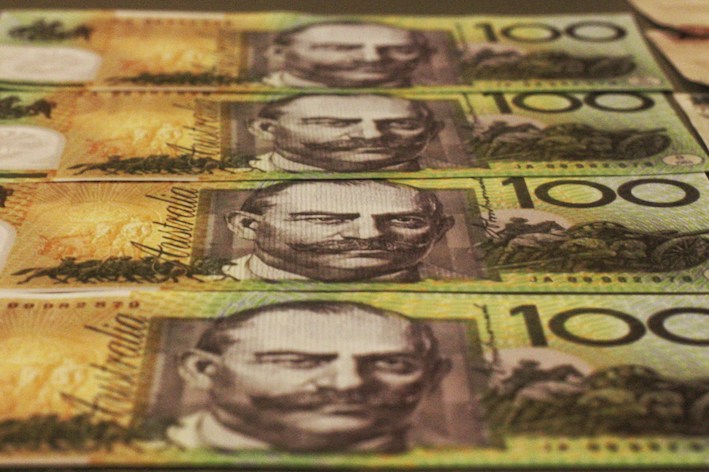
Image: Art Lasovsky from Unsplash
References
- — (1951) ‘The Commonwealth Literary Fund’, Southerly, 12(1), 58–59, https://search.informit.org/doi/10.3316/informit.542190439876114.
- Anatolitis E 1 July (2025) ‘Writing Australia: Can the new national literature body make a real difference for authors?’, Guardian Australia, https://www.theguardian.com/books/2025/jul/01/writing-australia-poet-laureate-national-literature-body-authors.
- Andrews B (1982) ‘The Federal Government as literary patron’, Meanjin, 41(1), 3–19
- Burke T 1 July (2025) A new page for Australia’s literary sector [media release], Minister for the Arts, https://minister.infrastructure.gov.au/burke/media-release/new-page-australias-literary-sector
- Crawford A (2022) ‘Decorum serves the rich’, Anwen Crawford website, https://demandspopular.net/decorum-serves-the-rich.
- Dimond J (2005) ‘Alms and the author’, Australian Author, 37(1), 15–17.
- Gordon J (1954) ‘Writers and the Commonwealth Literary Fund’, Meanjin, 13(3), 452–455, https://search.informit.org/doi/10.3316/informit.752909136968581.
- Shapcott TW (2004) ‘First days at the Literature Board: Australia Council for the Arts’, Overland, 177, 25–30.
Share article
More from author

A half-century of hatchet jobs
Non-fictionAuthors and publishers worry that bad reviews kill sales. I’ve seen no evidence that this is the case, but plenty that bad reviews distress and demoralise their subjects. Many people who care about literature endow criticism, and especially negative reviews, with magical powers. They hold dear the fantasy that if critics did a better job, if they were braver soldiers, the profound structural problems that bedevil Australian literature – books rushed to press, low pay, policy indifference, plummeting reading rates, crisis in higher education, not to mention the racism and the classism – might somehow disappear. A cracking review ennobles its subject with attention and consideration, but I’ve never seen one earn an author a higher advance on their next book or buy them more time for revision, let alone shift the federal arts budget.
More from this edition
Uncanny virtue
Non-fiction I FIRST HEARD Peter Singer speak at the University of Western Australia (UWA) in the summer of 2009. The subject was the ethics of...

Finer details
GR Online The team at GR HQ had some thought-provoking conversations while selecting the cover art for Griffith Review 91: On the Money. Of course, there...

Conditions of Entry
Poetry Thirty lines max, it says. Only twenty-nine left as some wag might have quipped but who’s counting? All bags must be opened for inspection. All poems disassembled and unpacked so...
