
Featured in
I WAS AROUND ten years old when I first heard the term ‘baby boomer’. My mother was explaining that she and my father – born in the early 1950s – were part of the baby boom that followed the resumption of civilian life after World War II. I’m paraphrasing, of course, but that was the gist. My grandparents on both sides served in the defence forces and were modest contributors to the post-war surge in Australia’s fertility rate that peaked in 1961 at 3.5 births per woman. The current rate is just under 1.5.
That my mother’s generation had a label but mine didn’t was unremarkable in the 1980s. My generation wouldn’t have its own handle until the 1990s. Cultural consciousness of gen X, as a designation for the cohort of people born between 1965 and 1980, came into being via Douglas Coupland’s 1991 novel, Generation X: Tales for an Accelerated Culture. Gen X emerged as a generation ironically detached from the values and goals of their boomer parents. Speaking to the Boston Globe in 1991, Coupland says of the generation he helped define: ‘We’re sick of stupid labels, we’re sick of being marginalized in lousy jobs, and we’re tired of hearing about ourselves from others.’ The 1994 film Reality Bites, staring Winona Ryder and Ethan Hawke, supposedly solidified the ‘slacker’ gen X persona: cynical, disenfranchised and disillusioned with capitalism and corporate culture.
I was married and had a baby in 1994, which is probably why Reality Bites largely passed me by as a cultural touchstone. Nevertheless, the gen X moniker, when it filtered into the broader public consciousness, became a way for all of us to juxtapose ourselves against our boomer parents, whether we embodied those characteristics or not. Thanks to social media and the internet, the idea that someone’s generation signifies core personality traits has become further entrenched in the public consciousness.
In his 1928 essay, ‘Das Problem der Generationen’ (translated into English in 1952), sociologist Karl Manheim argued that generational identity is forged through individuals sharing the same historical-social ‘location’. In addition to sharing cultural experiences – fashion, music, film and television, consumer fads – our worldview is forged through our youthful impressions of major events and significant social transformations: political upheavals, social crises and technologies. My daughter, a tail-end millennial, believes the litmus test to determine if you’re a millennial or gen Z is whether you remember 9/11.
The timespan that separates generations can be credited to the Spanish philosopher José Ortega y Gasset, who in 1927 argued that history moves in roughly fifteen-year cycles, creating a ‘vital sensibility’ that characterises each generation. Coming afresh to the world they’ve inherited, each generation alters cultural and social patterning – ‘habits’ – in unique ways, as wryly observed in this reel. The millennial and gen Z aversion to answering the phone is another one. These habits are a recipe for intergenerational discord and ‘us’ vs ‘them’ showdowns across various social media platforms (with your generational affiliation also determining which platforms you’re likely to use).
Society evolves because younger generations challenge the social mores and power held by the most established generation: hence, the longstanding boomer versus millennial argy-bargy. The foibles of gen X, once the forgotten generation – absurdly encapsulated in this viral CBSN graphic – is now being forced into the limelight by disgruntled, social-media savvy gen Z. And while I’m here for it, I’m also wondering why ‘we’, citizens of the internet, seem so vested in perpetuating intergenerational conflict. Is it all just for shits, giggles and clicks? Or is it more hard-nosed than that?
CONFESSION: I’M KIND of obsessed with contemporary generational discourses, which is to say, I’m a sucker for generational-themed content and memes that feed our incessant doomscrolling. My favourite is ‘guy bumping into a wall’: a twenty-three-second viral masterpiece created by Chilean actor Cristián Riquelme. If you don’t know it, go watch it; I’ll wait. That Riquelme looks a bit like John Bender from The Breakfast Club – the gen X coming-of-age film, in my opinion – gives the video a touch of delicious irony.
Social media algorithms already herd us into like-minded silos, which increasingly push generational-affirming content. Gen X is fed benign time-capsule material: curated accounts and BuzzFeed lists featuring feral perms, lethal playground equipment, rollerskates, cassette recorders, butt-faced Cabbage Patch Kids, View-Masters, Game & Watches and so on, while millennials enjoy montages of neon acrylic phones, Beanie Babies, butterfly clips, Tamagotchis, portable CD players and Polly Pocket. An image of scented novelty erasers is enough to send a gen X woman into a paroxysm of wistful, rose-tinted nostalgia. Without warning, these images, rolling through our feeds, trigger our simpler-times yearning reflex. Reminders that we used to drink scalding water out of a garden hose offer a welcome, temporary relief from the relentless misogyny, racism, genocide, rape and paedophilia apologia, fascism, climate collapse and general global shitfuckery otherwise choking up our feeds. Send me back to 1983, please.
The more gen Xers are reminded, however, of free-range childhoods with lax adult supervision, the more we edit our memories to uphold that starry-eyed version of late twentieth-century youth and the notion that it shaped us into a certain type of adult. Writing for The Guardian in 2021, Douglas Coupland notes that ‘generations are united and divided over sentimental markers much more than when they were born’. Complex narratives of how selfhood is realised lose their nuance; class differences, religion, politics, race and ethnicity, sexuality, rural versus urban upbringings are subsumed into the grander, sexier story of generational belonging. How many gen Xers are going to complain about being likened to a smug-faced, martini drinking Karen Walker or a shrugging Han Solo? But are we all happy with being flattened and homogenised this way? In an essay for The Conversation, Professor Sean Lyons writes that ‘these [generational] narratives are compelling in their simplicity’, reducing, as they do, ‘the bewildering complexity of social change into an easy-to-apply typology. Merely knowing someone’s year of birth seemingly gives you all you need to know to judge a person’s character, life goals, values and purchasing intentions.’
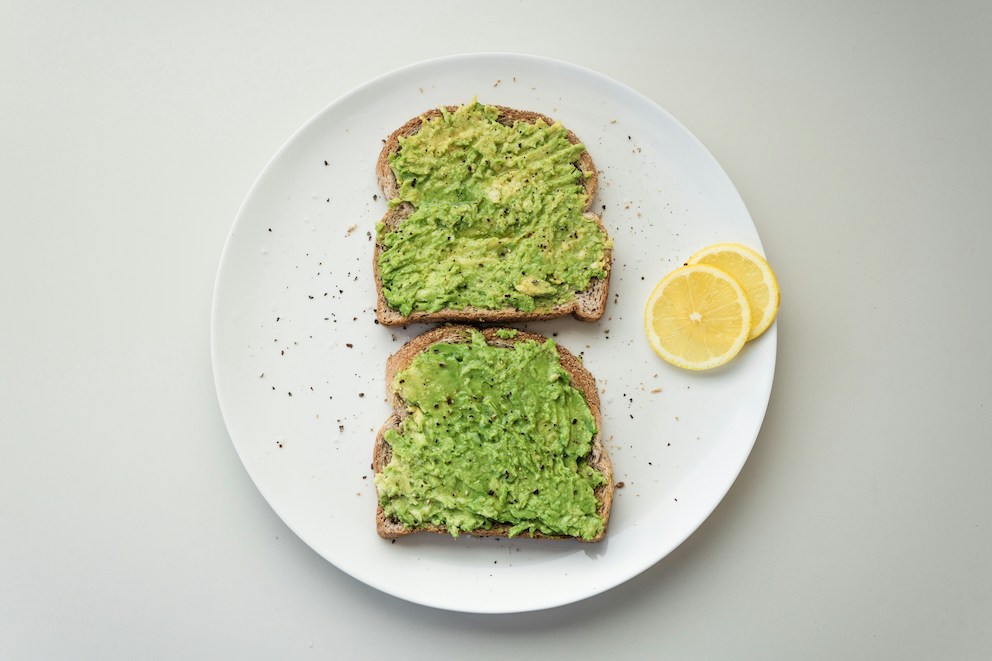
Demography – in which data relating to human populations is collected and analysed – gives legitimacy to the idea that categorising people by their birth year tells us something inherent about those people. For example, demographic studies show that millennials, unlike every other generation before them, are not getting more conservative as they age, mostly because there’s not a lot to conserve. Members of the avocado-on-toast generation, so the narrative goes, are not very happy with the boomerist neoliberal policies that got us here. And who can blame them? For starters, they have been priced out of the housing market and saddled with jaw-dropping childcare fees, rental hikes and ballooning grocery bills.
Boomers will argue they just worked hard for their houses and their spoils. Okay, boomer (insert eyeroll emoji). To this, Converse-wearing gen Xers – heads down, bums up, quietly getting on with things – have, purportedly, only shoulder shrugs to offer. While gen Z, with their gender-defying mullets, cry into their matcha lattes after quitting yet another job that expected them to do some work. Such stereotypes might make us chuckle – and there may be a kernel of statistical or anecdotal truth to them – but whose interests are these easy caricatures actually serving?
SOCIAL MEDIA THRIVES on dissonance and conflict, and one of its most abundant fuel sources is generational mudslinging. Just today in my feed, for example, were headlines like ‘This gen Zer just shared their budget on a full-time job, and millennials are losing it in pure rage’ and ‘Young People share their petty boomer complaints, proving old folks can be right’. Gen Zs are now making reels bitching about their gen X elders, and gen X – the ones who could be bothered, at least – are clapping back with their ‘stitch-incoming’ you don’t who you’re dealing with replies.
Intergenerational discord is low-hanging fruit for engagement and clicks. I think people tolerate – even enjoy – the strife because, apart from basic tribalism, ageism (in both directions) is low risk. Open disdain for boomers, for example, does not attract the same opprobrium and outrage that blatant racism or sexism does, especially as it’s easy to point to ways in which such disdain is deserved. We know which demographic is doing the heavy lifting of propping up the Murdoch press (#NotAllBoomers).
This is not a battle cry to denounce silly, generational-themed memes. We all deserve a laugh at gen Z’s expense (thanks, Cristián). Or an appeal to let boomers (and, increasingly, I’m embarrassed to say, gen X) off the hook for their ignorance and racism because ‘they’re just like that’. Perhaps, though, we should pause a little before diving headfirst into divisive generational discourses, especially when they are being cultivated for the purpose of distraction and social division. After all, the only people profiting from the generation wars are billionaires and tech oligarchs who, as long as they’re making more dollars, couldn’t care less if we’re ripping each other, and what remains of the social fabric, apart.
Image credit: Doug Bagg via Unsplash.
Share article
More from author

The McDonagh sisters
Initially, I didn’t question the generous-foreign- uncle story, and it’s the one Mandy Sayer went with in her 2022 biography, ‘Those Dashing McDonagh Sisters’. There are a few reasons, however, why the story doesn’t add up, but you have to dig into the archives to find them.
More from this edition
