
Decayed words, decayed thoughts
Orwell, algorithms and the infantilisation of language
Featured in
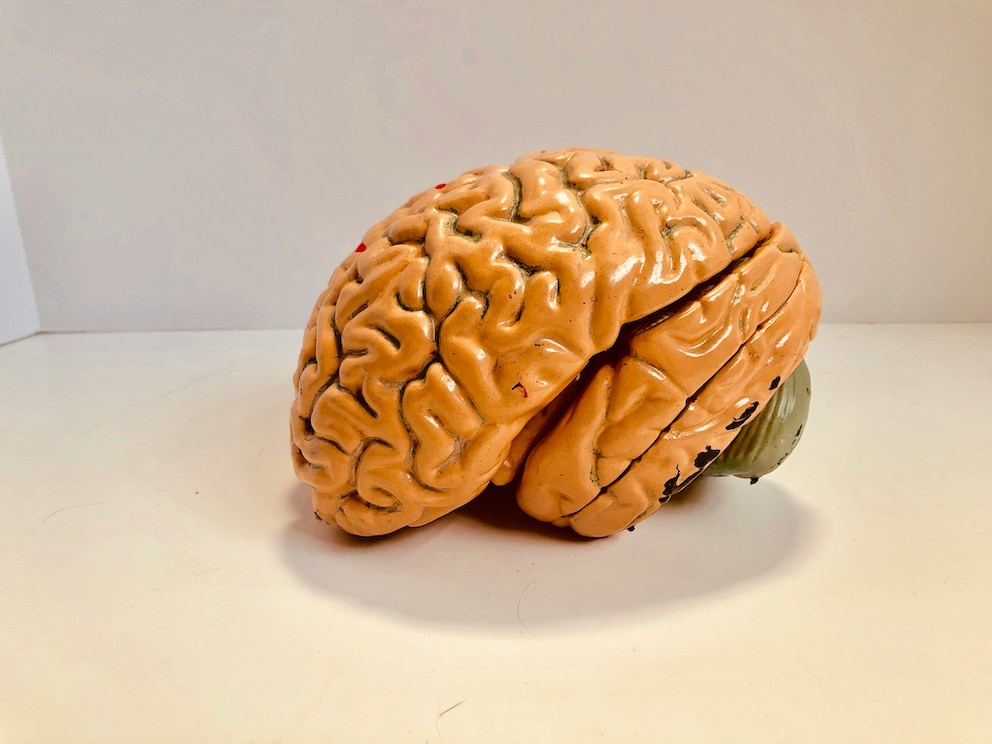
IN 1946, AS World War II drew to a close, George Orwell published a now-famous essay entitled ‘Politics and the English Language’ in which he spoke to the decline of English. Orwell observed that a kind of literary laziness had emerged among writers and orators of the time, whose articles or speeches contained pre-defined phrases, meaningless words and dying metaphors. He argued that this decayed writing produced a decayed thinking; as words lost their meaning, so too did their power to engage people politically. Today, we face a similar linguistic crisis: an emerging corruption of our language (which I call infantilisation) driven by social media, algorithms and self-censorship.
Unalive. Grape. Corn. In the last year or so these terms have permeated the online lexicon by way of social media, each of them representing stand-ins for more ‘offensive’ words that ‘the algorithm’ might flag if content creators used them: Kill. Rape. Porn. All three of these words evoke sensitive imagery and subjects, not because they are inherently offensive to any one person or group of people but because they are the linguistic constructs we use to describe existing things in the world. They are necessary for these things to exist as concepts.
For example, there is no English equivalent to the French word flâneur – therefore, the concept (a man who saunters around observing society) exists only in complexity. This raises an important question: why is it that people can no longer engage in challenging topics without pre-rinsing their speech through a sensitivity filter? If the linguistic construct for a word like rape is erased, what impact will that have upon the concept?
Throughout his essay, Orwell demonstrates that words possess a quality that can range from fresh to stale to outright meaningless. He measures this quality by how well a writer’s words, metaphors and sentences evoke imagery and convey meaning. To Orwell, words and metaphors hold ‘evocative power’; to use them deliberately is to think deliberately, and to invite the reader to think as well. Of course, in the same way that the opposite of high is low, or left is right, the opposite of thinking deliberately is thinking lazily–to abandon scrutiny in favour of ease. While it can be a relief to surrender to the falsehoods of the world, to simply allow one’s mind to follow the path of least resistance, a problem arises when surrendered vigilance becomes a complete annexation of the mind.
INFANTILISERS – OR NONSENSICALS – dull our discourse and in turn dull our reactions. Today, when the police murder a Black man by firing their weapons, they are no longer ‘shooting’ him but ‘pew-pewing’ him. When a politician has assaulted a young female staffer, he has no longer raped her but ‘seggsually asphalted’ or ‘graped’ her. Before long I imagine we’ll have content creators reporting devastating explosions as ‘kablamos’ or abortions as ‘splooshers’ to avoid sensitivity filters. Powerful words are being replaced by nonsensicals, turning our most mature discussions, grievances and injustices into nonsense themselves. Even passive, weak language like ‘a man has died after a confrontation with police’ would be more acceptable in attempting to convey the severity of the subject.
The difference between powerful words and weak words is like that of a boxer punching an opponent’s jaw with bare knuckles – bone on bone, inflicting pain upon each fighter – versus a punch from a cushioned fist, which is forceful yet bearable. However, in the case of infantilisers, one fighter wields a can of silly string that he sprays childishly at his opponent. Suddenly the moment loses all seriousness. It is this same lack of seriousness that threatens our public and political discourse. Who will be moved to defend a woman’s right to splooshers? Who will have their heart throb in pain and anger because a Palestinian child was unalived by a big kablamo? Who will be inspired to join the calls for a wevowution against the wich? Words conjure images and meaning, so when we use these infantilisers and nonsensicals, we are in fact substituting concrete meaning and evocative images for a series of unimpactful winks and nudges. When we use words that evoke nothing, we feel nothing, and if we feel nothing, then we are moved to do nothing.
Admittedly, I am somewhat guilty here of engaging in hyperbole. Most of us are capable of translating these substitutions into their true context. However, anyone who has learnt a second language knows that translation is a filtering process. It can take a long time before people start feeling like themselves in their second language, as what gets lost in this filtering process is, in fact, the essence of who they are. So why, in the digital space, should we accept this normalisation of translating our own language from itself? Why should we lose the essence of our thoughts or our shared identities as politically, intellectually and conversationally engaged people? Orwell himself – being the father of concepts such as doublethink and goodthink/badthink –recognised the insidious nature of language being abused, and his essay points to the cyclical nature of bad language use, stating that ‘if thought corrupts language, language can also corrupt thought. A bad usage can spread by tradition and imitation, even among people who should and do know better’.
Orwell argues that bad writing, and therefore bad thinking, arises from the allure of convenience. This framework also applies to infantilisers. Some people will argue that they have no choice but to use this kind of language – that they are beholden to the algorithm and are cunningly defying censorship like Soviet dissidents, who used samizdat to subvert government oppression. The difference here is that many of these people who engage in self-censorship and debase the English language are entirely motivated by self-interest – specifically, the interest of succeeding in a capitalist domain. There is no real punishment incurred for failing to self-censor (they will not end up in the gulag, for example) beyond the unsubstantiated notion that they may lose ‘reach’ or ‘visibility’ on their chosen platforms, and consequently lose fame and money.
Herein lies the sinister truth. These platforms do not have explicit style guides or rules or a list of banned words; therefore, these infantilisersand nonsensicals will infest the social lexicon as content creators produce new ways of self-censoring, their belief of being ‘made invisible’ rooted solely in conjecture, rumour and the fear of their content being de-monetised. Without any explicit censorship to point towards, how far will this go? It seems to me that without tangible guidelines, this corruption of language will fester and spread to every word and every subject that holds the propensity to offend whoever decides these topics are ‘undesirable’.
THE WORLD IS undergoing radical change as the upheaval of the global order throws safety, structure and normalcy into a chaotic scramble for power. The US walks right up to the line between civil war and dictatorial subjugation while China looms, waiting to take the top spot in the global hierarchy. These serious times call for serious language. The type of language that is direct, meaningful and dares to embroil people’s hearts with passion – language that confronts the graveness of all the world’s issues with dignity, maturity and deliberate consideration.
The infantilisation of our language could be a passing fad, if we allow it to be. That is if we consciously reject it, and if we demand that social media companies give us the full range of our language and thought. As Orwell said in the wake of World War II, when propaganda and polispeak were prolific, ‘silly words and expressions have often disappeared, not through any evolutionary process but owing to the conscious action of a minority’. I, for one, intend to be a part of that minority.
Image credit: Natasha Connell via Unsplash
Share article
About the author
Zac Bushfire
Zac is a writer currently studying a Master of Writing, Editing and Publishing at UQ. After taking a hiatus from study to live in...
More from this edition
