

Welcome to GR Online, a series of short-form articles that take aim at the moving target of contemporary culture as it’s whisked along the guide rails of innovations in digital media, globalisation and late-stage capitalism.
Psychobabble
Much of my life has been spent in search of frameworks to help me understand the trauma that was transacted in my upbringing, and the cataclysmic emotional and relational changes wrought. Moving between the psychological illiteracy of the world I was raised in and the fluency of our current era feels like time travel.
The octopus within
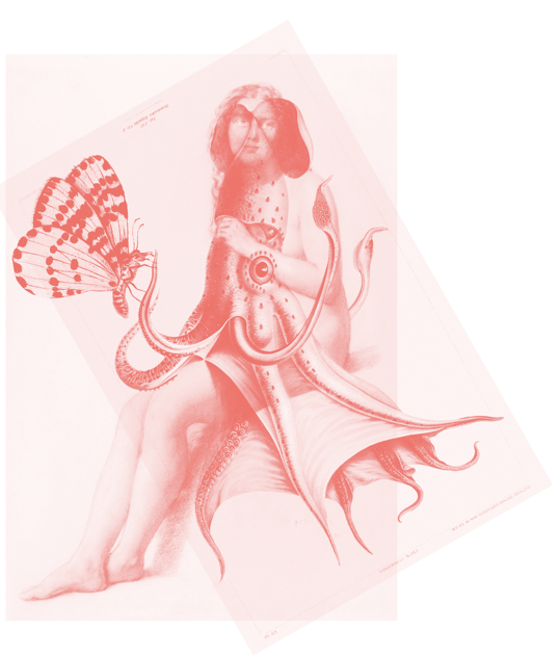
I’ve now watched quite a few doctors sketch my thyroid on office pads, something they all seem to love to do, relishing that butterfly shape, the two spreading wings. They do shade-hatching on the left or right lobe, colour in a dark circle to represent the tumour and draw four little dots for the parathyroid glands. I have started to look forward to this moment when a medical specialist transforms suddenly into an artist, taking pride in their drawing, picking up a special pen with a thin black nib, concentrating on making this invisible organ real to me. They are maybe unaware that through their own idiosyncratic drawing styles, they become instantly more interesting as people. They hand over the piece of paper and explain the next steps, and I take their drawings home, magnet them to the fridge beside the more exuberant pictures done by my kids, start making the necessary calls, and turn up on time to the next appointment, curious as a child in kindergarten.
Which is how I first learnt that there is an octopus within.
The whole truth
Acting methods...have remarkable similarities to spiritual cults. They have leaders, dogmas, even seminal texts. They have supervised rites and orthodox practices. They have stages of enlightenment, and trained leaders who will inform you whether you’ve reached such heights (and you usually haven’t, unless you’re sleeping with the leader in question).

Bringing up Baby
My husband, the softer touch with Baby, couldn’t get the leash on him so I took over. I had a handful of food to placate Baby, and he seemed to relax as I held it slightly away from his snout and went to attach the leash with my other hand. But when Baby realised what was happening, he went stiff, then bit my hands eight times like he wanted to kill me.

Black love matters
Love in Beloved is joyous, exuberant, heart-stabbingly painful, dark and deadly, full of grace and, above all, expansive and generous. There are many ways to love. Uncomfortably for the reader, Morrison insists that even some acts that look and sound like abuse could also be the malformed manifestations of love by the unloved.

Against the grain
At sixteen, I interviewed Billie Joe Armstrong, the frontman for Green Day. It was a Tuesday and I should have been at school. That morning, my mum dropped me off at the front gate. I snuck out the back, navigated the train schedule to reach the city, and found out what time the band would arrive for sound check at Festival Hall for that night’s show. Green Day had recently played a significant role in bringing punk into the mainstream. At the time, they weren’t doing press because they had a mistrust of the media – but, armed with my zine and my determination, I approached Billie Joe. He loved that I made a punk zine and agreed to a quick chat.
When the news spread through the grapevine at school, my peers were in disbelief – interviewing famous musicians was an unimaginable feat to them. Suddenly, I went from being ‘the weird girl’ to proudly wearing the badge of ‘punk girl’. Interviewing was exciting; it gave me a sense of purpose and boosted my self-esteem.
I graduated in 1996, becoming the first in my family to complete senior year. Making zines paved the way for a career in writing for music and entertainment magazines.
Origin stories
I CAN MAP your life by what was lost. History (personal and other). Culture. Language. Identity. Home, and all the references to you that it could have held. The very idea of home. The streets you would have walked down, streets that know the history of your family, of those who came before you. The chance to be the version of yourself who grew up with your biological family. The stories that should have been your birthright.
Intimacies, intricacies, cadences
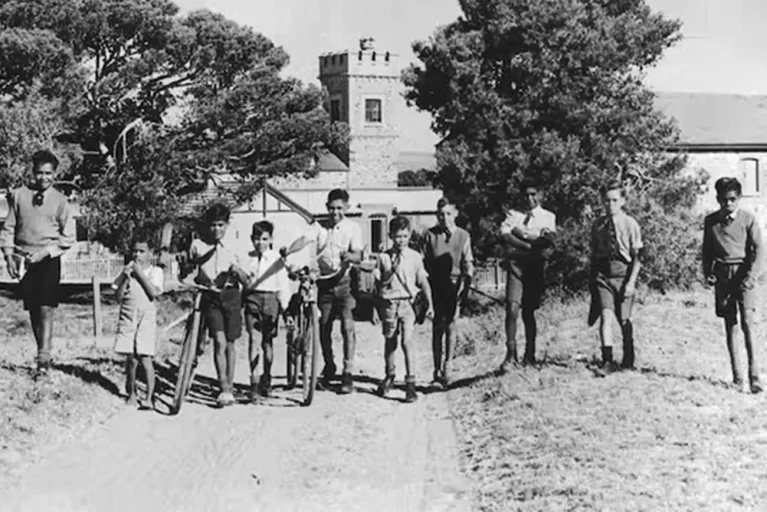
Over cups of tea, Vince was soon telling me stories. About his grandfather, his Ngadjuri heritage, the Aboriginal boys’ home he’d lived in for seven years, a small town called Curramulka where he’d captained and coached the local Australian Rules football team. He also told a story, in passing, about how his mum had to hide him from welfare after his dad died, when Vince was a small child.
Seized by a ceaseless meanwhile
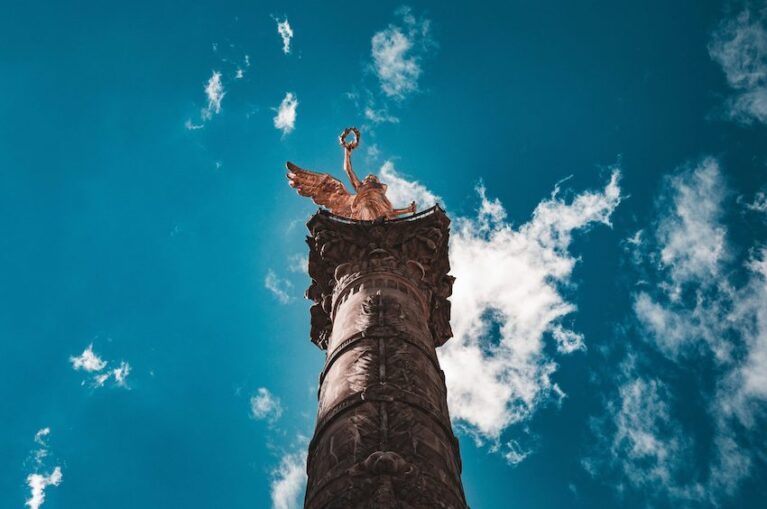
Owing to its prominent location and spectacular collapse, Álvaro Obregón 286 featured prominently in media coverage of the earthquake rescue. But residents told me they always suspected something was afoot. Within twenty-four hours of the disaster, rescuers from Israel and Spain arrived onsite. Both teams quickly recovered documents and computers and rescued only specific people, while others in the rubble still cried out for help.
It’s only natural
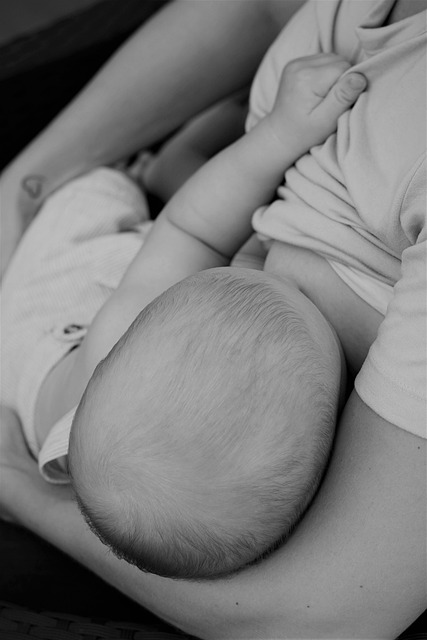
I often feel that we have landed in the worst of all possible worlds for women when it comes to breastfeeding. We are subject to an ideology that argues for its singular efficacy in generating infant attachment to the mother, making an inviolable and exclusive bond. We are also expected to breastfeed to repudiate the maternal industrial complex that fills our supermarkets with formula in shiny tins.

Land of my fathers
On Saturday mornings his friends would call in to pick him up for the game. Like him, they were broad and tall and humorous, and never still. None of them ever seemed comfortable indoors. Their faces were fevered from sitting in winter stadiums. Even as septuagenarians they continued to refer to themselves as ‘the boys’, and if my mother materialised before them, they’d blush like children.

Reluctant farewell to a trusted companion
I visited the Metropolitan Museum of Art, the Guggenheim, the Museum of Natural History, basically anywhere that allowed strollers. I spent a lot of time in Barnes & Noble on 86th (which is now, depressingly, a Target). There was even special stroller parking on the kids’ level.
In fact, I didn’t really go anywhere that I couldn’t get to with the stroller. The children and I only left Manhattan a total of nine times the entire year (three times to go to the New York Botanical Garden in the Bronx, twice to go to a Greek restaurant in Astoria that had an extremely high Zagat rating and was very good, once to go to the Bronx Zoo, once to go to Brooklyn to see what all the fuss was about, once on the train to Boston and once we hired a car to drive to Washington, DC to spend Easter with friends). That was it.
Here was the thing – the red double stroller gave me the freedom and security of knowing that I could go outside with both children, be completely prepared with all my accessories and baby/toddler supplies and everything would be okay. If I could make a plan to leave the apartment and walk there with the stroller, I would do it.
