
Featured in
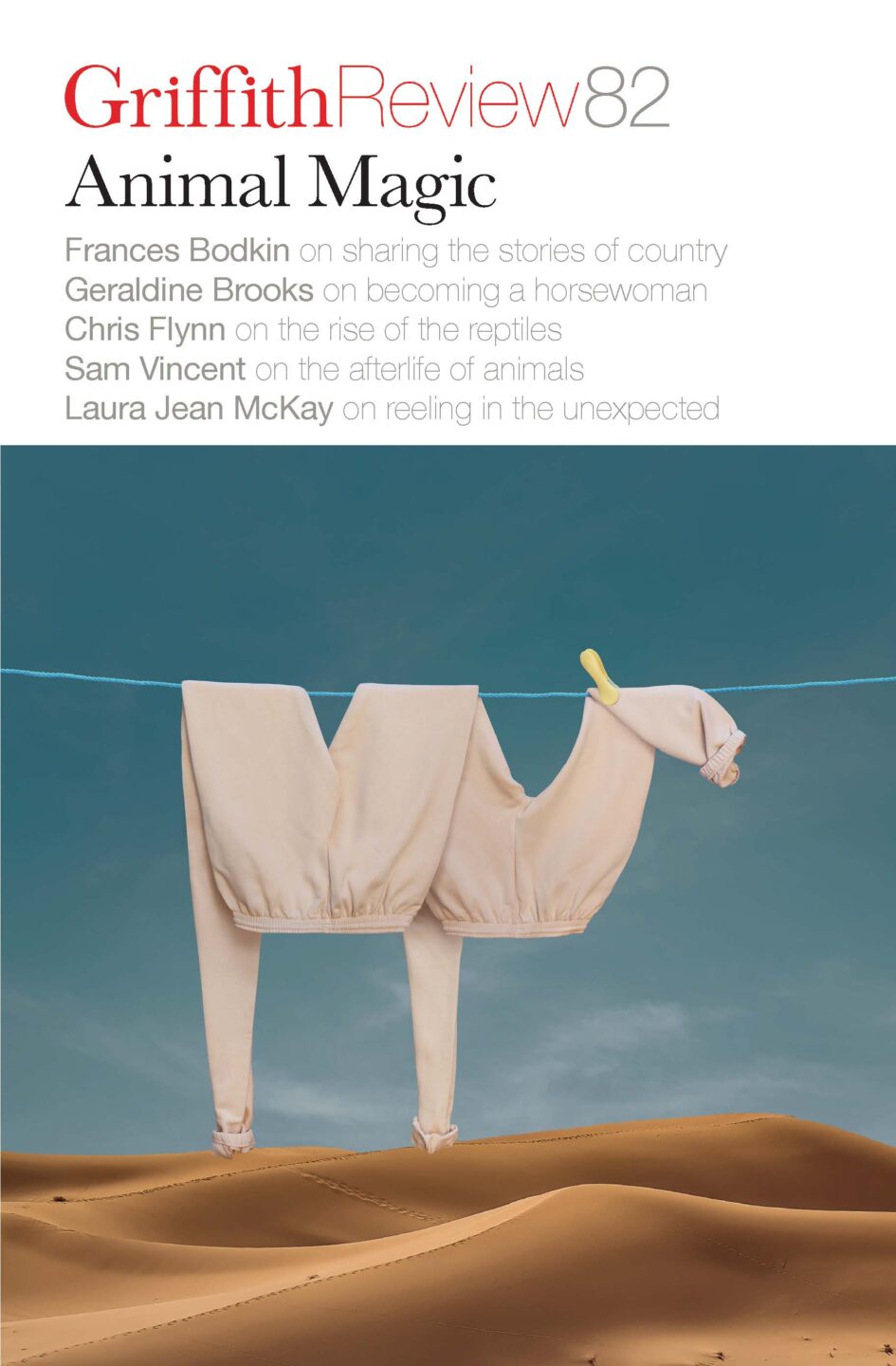
- Published 20231107
- ISBN: 978-1-922212-89-4
- Extent: 208pp
- Paperback, ePub, PDF, Kindle compatible

Already a subscriber? Sign in here
If you are an educator or student wishing to access content for study purposes please contact us at griffithreview@griffith.edu.au
Share article
More from author
Suffer for fashion
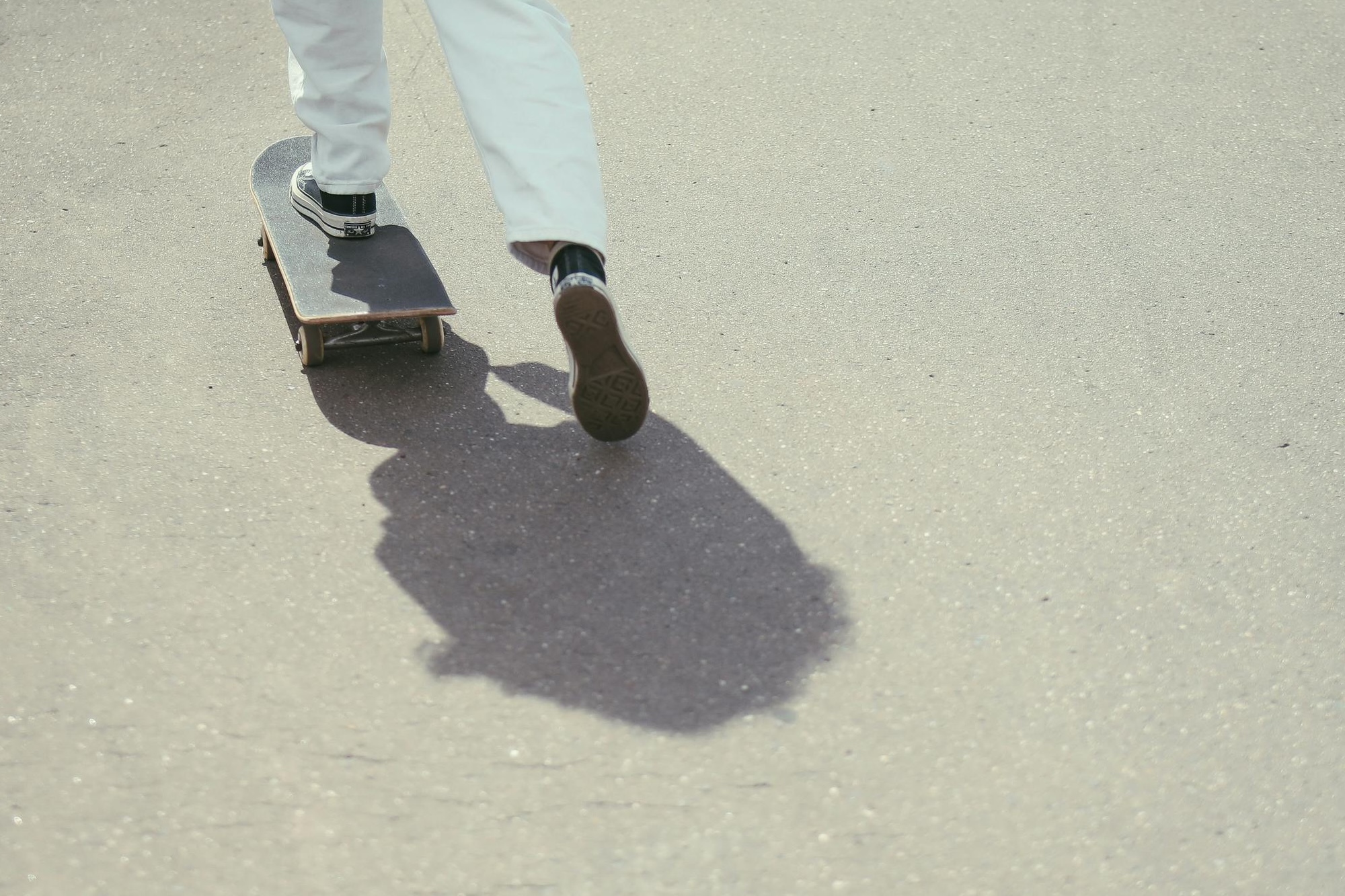
There were plenty of boys in Brisbane in 2001 who dressed in attentive and interesting ways. But you’d have to be sure of yourself, which I wasn’t, or you’d have to have been straight. For the rest of us, survival meant the avoidance of colour; you had to avoid flourishes, avoid anything tight, avoid the sense of a considered style. My vision of an appropriate male dresser involved jeans, in the tropical heat, and a T-shirt, again dark. Sneakers were the acceptable form of shoe, skate shoes if you were chancy, with a pair of Holeproof Heroes in black or grey.
More from this edition
A life with horses
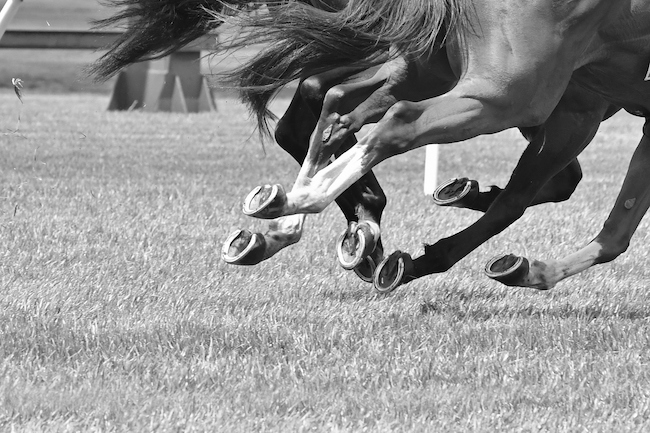
In ConversationIn 2011, I was invited to a writers’ retreat in Santa Fe. It was held on a lovely old ranch with beautiful horses – Western Paints, Appaloosas – and one of the wranglers noticed me admiring them and invited me on a trail ride. It was an ecstatic experience.
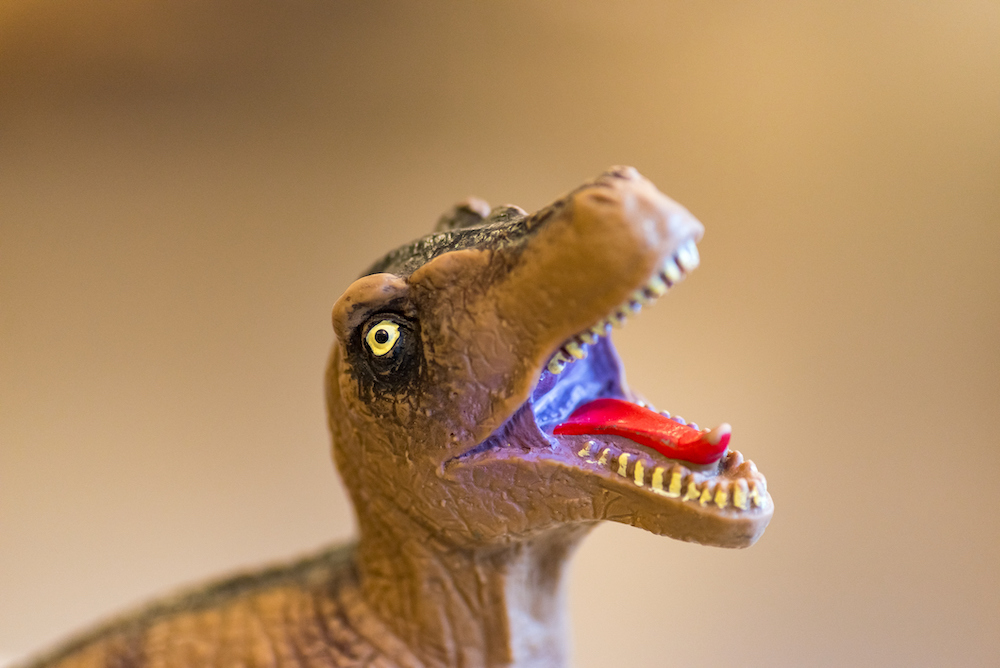
Rise of the reptiles
Non-fictionIn tandem with these plans to cultivate meat in laboratories, bioscience companies in Europe, North America, South Korea and China are currently working to resurrect living, breathing examples of the woolly mammoth, thylacine and dodo. While this may seem foolhardy, the intention is to restore nature’s balance by rewilding animal habitats and damaged ecosystems.
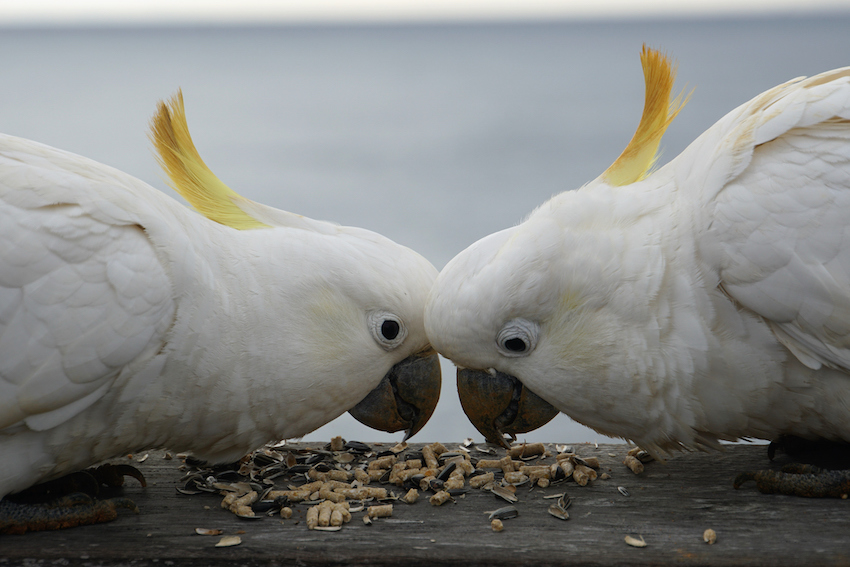
When the birds scream
Non-fictionI read books in which girls like me made friends with cockatoos and galahs, and my mum told me stories about my pop in Queensland who could teach any bird to speak and to whistle his favourite country songs. My favourite story was the one about the bird who used to sit on his shoulder while he drove trucks for work.
