
Featured in

- Published 20250506
- ISBN: 978-1-923213-07-4
- Extent: 196 pp
- Paperback, ebook, PDF

WHENEVER I REACH for my phone – which is more often than I care to admit, although I suppose I just did – I think of that old thought experiment about the tree falling in a forest. You know the one: if there’s no one around to hear the tree, does it make a sound? A similar principle, I’ve realised, applies to my consumption of online content: if I don’t mindlessly watch those Instagram deep-dives into the duelling lawsuits between Blake Lively and Justin Baldoni or the veritable parade of Easter eggs hidden in Kendrick Lamar’s Super Bowl half-time performance…do I really care?
In a frenzy of New Year determination, I sought to resolve this vexed question by switching my smartphone for a flip-phone with limited internet access. Am I now free from the tyranny of social media and its spoils? Dear reader, I wish it were so: the flip-phone model I purchased on eBay couldn’t read my SIM card properly, but it did have 4G, the result being that I could book an Uber, check my bank balance and listen to a podcast – but I couldn’t make calls or send texts (which, arguably, offered me a different yet equally tempting kind of freedom). I’m back to using a smartphone – well, I never stopped – and marinating myself daily in a useless swill of information.
Our contemporary content malaise feels very recent, yet the twentieth-century media scholars Marshall McLuhan and Neil Postman predicted our technological capture decades before Mark Zuckerberg and his college roommates devised a neat way for their fellow Harvard students to connect online. McLuhan, of course, famously theorised that ‘the medium is the message’; in his remarkable 1992 book Technopoly, Postman – a former student of McLuhan’s – warned: ‘We proceed under the assumption that information is our friend… It is only now beginning to be understood that cultures may also suffer grievously from information glut, information without meaning, information without control mechanisms.’
Sounds familiar: it’s Postman and McLuhan’s world, and we’re all just living in it. But how much longer can we keep scrolling before we reach the end?
THIS EDITION OF Griffith Review seeks to understand the tempestuous liaison between culture and content, and its contributions, both fiction and non-fiction, approach this from myriad perspectives. You’ll parse the dissonance between our digital and corporeal selves; chart the evolution of Australia’s critical establishment in the twenty-first century; contemplate the dangers of digital celebrities; discover what we lose when we give all creative output the anodyne label of ‘content’; consider the implications of cultural heritage in our national literary tradition; explore the tension between artistic freedom and the professionalisation of creativity; examine how commercial imperatives have reshaped the publishing industry; revisit the work of a literary iconoclast; find out what kids these days are really doing online (not as outrageous as you might think); and much more. There’s a lot of information in these pages, but it all has meaning – so I like to think Postman would approve.
This edition features a contributing editor, the fabulous Beau Windon, who commissioned and worked with Alex Creece on her brilliant essay ‘It ain’t easy being twee’. Beau and Alex, thank you both for what you brought to this collection and for being so delightful to collaborate with.
Culture Vultures also includes the third of five outstanding stories to win our 2024 Emerging Voices competition: Emily Tsokos Purtill’s ‘Know thyself’, a sharply observed meditation on fate and mortality. We’re very grateful to the Copyright Agency Cultural Fund for their support of this competition, and we’re looking forward to sharing more winning stories with you later in the year.
Whether you’re reading Culture Vultures in print or online, I hope it offers you new ways of thinking through our technological capture (ideally, ways that don’t end with you being the owner of one-and-a-half phones) and determining which of those falling trees you care to hear.
– February 2025
Image courtesy of Peggy from Pixabay
Share article
More from author

Shadow selves
This edition of Griffith Review considers all kinds of loss (and a few notable instances of its inverse). Losing something, of course, doesn’t have to
connote pain or strife: some of the essays and stories in this collection view loss as a beginning rather than an end, a shucking off of old selves or a reappraisal of old habits and ideas.
More from this edition
Less than human
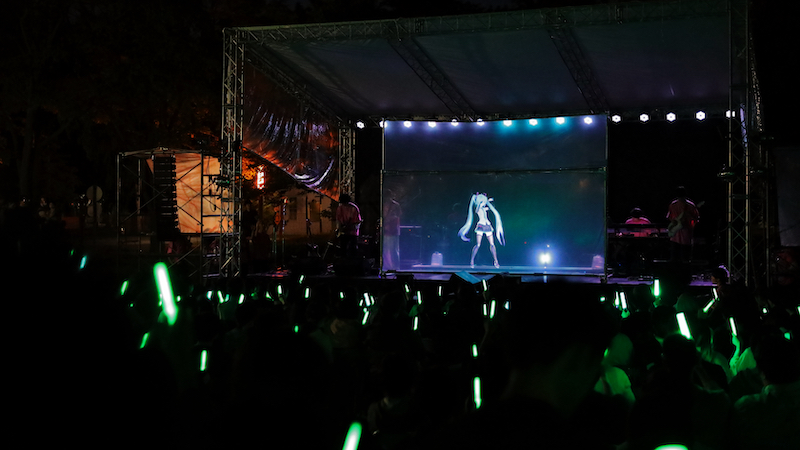
Non-fictionWhat elevates Miku and makes her significant in our cultural landscape is her accessibility. Unlike traditional celebrities, who, even if they want to be accessible to their fans, only have so much time and can’t be perpetually available, Miku is software that anyone can buy and use. It only costs $200 and doesn’t require particularly advanced technical skills. Most of the people who produce Miku music are self-taught. One of the enduringly popular things about the concerts is that everything you see essentially comes from fans – the music, costuming and dance routines are all drawn from the expansive ‘Miku community’, where the lines between amateur and professional are deliberately blurred by everyone involved. You’re as likely to hear a song produced through a record label as you are one that was popularised by YouTube.
You will be seen now
PoetryI saw a fin- ger loosen the zipper,the bag’s tan exterior animated by teeth. Beneath knuckle-white shades, faces surfaced–witnesses in a waiting room. Pareidolia or paranoia?Malice etched in putty. Everything...

A half-century of hatchet jobs
Non-fictionAuthors and publishers worry that bad reviews kill sales. I’ve seen no evidence that this is the case, but plenty that bad reviews distress and demoralise their subjects. Many people who care about literature endow criticism, and especially negative reviews, with magical powers. They hold dear the fantasy that if critics did a better job, if they were braver soldiers, the profound structural problems that bedevil Australian literature – books rushed to press, low pay, policy indifference, plummeting reading rates, crisis in higher education, not to mention the racism and the classism – might somehow disappear. A cracking review ennobles its subject with attention and consideration, but I’ve never seen one earn an author a higher advance on their next book or buy them more time for revision, let alone shift the federal arts budget.
