
Featured in

- Published 20250506
- ISBN: 978-1-923213-07-4
- Extent: 196 pp
- Paperback, ebook, PDF


Already a subscriber? Sign in here
If you are an educator or student wishing to access content for study purposes please contact us at griffithreview@griffith.edu.au
Share article
More from author

Little gifts of flowers
It’s unclear whether Boyd, who would have been two years old when Wilde was convicted and imprisoned for gross indecency, similarly literalised his homoerotic fantasies. Contemporaneous reviews of Brenda Niall’s 1988 biography, Martin Boyd: A Life, commend Niall, in a way that reveals the soft prejudice of the times, for how she handled the subject of Boyd’s sexuality. Paraphrasing Boyd’s family friends – who referred to Boyd, endearingly, as Floppy – Niall writes that Boyd was probably ‘too fastidious for casual sex, and with too strict a sense of honour to exploit the innocent, he probably repressed and aestheticized his sexuality’. This conclusion is buttressed by the conspicuous absence of the only work in Boyd’s catalogue that presumably possessed an unambiguously homosexual point of view, of which we know little except that there were flowers.
In a way that strikes me, again, as typically Australian, Boyd is slightly behind the times with his fin de siècle attitude towards classicism and homo- sexuality. His novels are uniquely appealing to me for the narcissistic reason that they are perhaps the only Australian books I can imagine myself having written. It’s why I find the correspondence about The Shepherd of Admetus so appallingly fascinating. I’ve read countless gay novels, by gay authors, in an attempt to discover my own writing. The author to whom I feel closest, by virtue of nationality, style and subject, wrote one such novel, and for all anyone knows, it might have been rubbish.
More from this edition

Scrolling to the end
IntroductionOur contemporary content malaise feels very recent, yet the twentieth-century media scholars Marshall McLuhan and Neil Postman predicted our technological capture decades before Mark Zuckerberg and his college roommates devised a neat way for their fellow Harvard students to connect online.

Björk in concert
FictionThe wind feels strange on his face. He hasn’t stepped outside in too long. He hesitates in the doorway. He really doesn’t have time for this. He needs to write that last chapter. He needs to finish what he has promised. What separates humans from everything else is our urge to create. He turns back towards his computer but then he is outside and locking the door and it feels like he has no agency over this. His body wants to go for a walk and so he must walk. He catches a glimpse of something bright poking up through the mulch at the base of a tree. A mushroom. Then suddenly they all come into focus. Mushrooms everywhere. Mushrooms on tree trunks like little shelves for fairy books, mushrooms in the mud and mushrooms in among the grass. There are even little net-like things around red stalks. Weird Cronenberg mushrooms, half fungus, half machine.
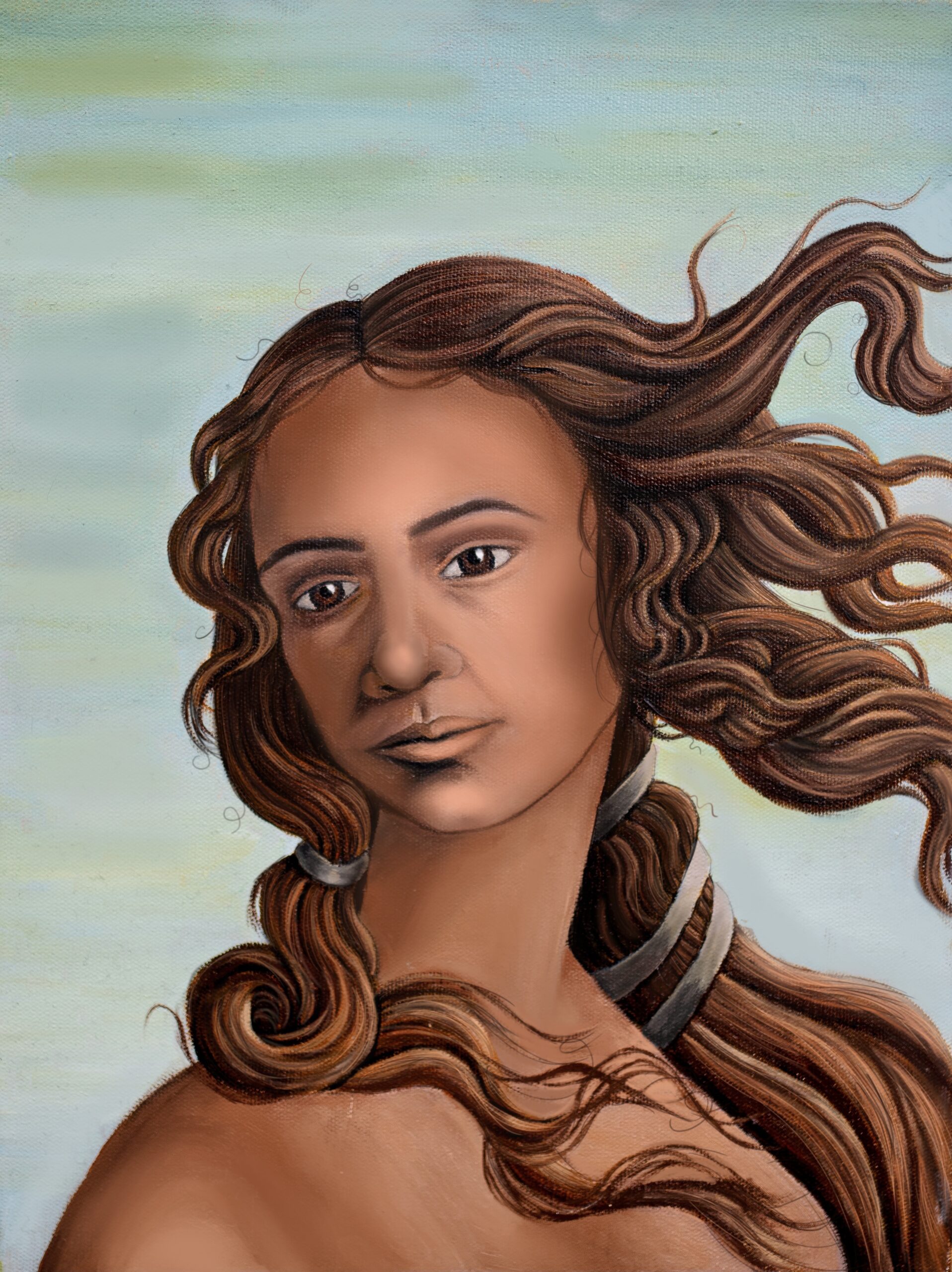
The art of appropriation
In Conversation When Brandi Salmon taught herself to paint as a teenager in country Victoria, she never imagined she’d grow up to be a full-time visual...
