
Journal
Articles

The motherload
I recently sent my best friend a document titled ‘The Motherload’: a manual explaining how to be me in the event that I die, am incapacitated or sent to jail for killing my husband. It includes gems such as the food preferences of each of my children, the sunscreen that doesn’t cause rashes and how often they need to see the dentist. The ostensibly trivial items on it are the ones that matter most – catering to kids’ idiosyncrasies makes for a happy family life.

A race to the bottom?
It seems increasingly inevitable to me that two markets will soon emerge from the literary sector: one market for cheap, AI-generated content and another for the current, traditional model of publishing. I believe that publishers must value both to be sustainable. In spite of the evolving marketplace, publishers still have an obligation to guide emerging authors, editors and publishers through the peaks and pitfalls of a career in a notoriously complex and veiled industry.
Talking about generations
Gen X is fed benign time-capsule material: curated accounts and BuzzFeed lists featuring feral perms, lethal playground equipment, rollerskates, cassette recorders, butt-faced Cabbage Patch Kids, View-Masters, Game & Watches and so on, while millennials enjoy montages of neon acrylic phones, Beanie Babies, butterfly clips, Tamagotchis, portable CD players and Polly Pocket.
Gutenberg babble
In his essay, ‘The dawn of the post-literate society’, British columnist James Marriott argues that the recent decline in literacy – and book-reading in particular – amounts to a civilisational crisis. That he does so on Substack, in X-friendly paragraphs that unfurl beneath headings such as ‘World without mind’, ‘The end of creativity’ and ‘The death of democracy’, is not in itself a reason to dismiss his argument. But nor is it an irrelevant detail.

Finer details
The team at GR HQ had some thought-provoking conversations while selecting the cover art for Griffith Review 91: On the Money. Of course, there are obvious symbols that convey this evergreen theme – bulging wads of cash, a bank, gold bullion – but these felt like low-hanging fruit. In the age of Amazon, online shopping and next-day delivery, how could we represent contemporary commerce?
Decayed words, decayed thoughts
Orwell observed that a kind of literary laziness had emerged among writers and orators of the time, whose articles or speeches contained pre-defined phrases, meaningless words and dying metaphors. He argued that this decayed writing produced a decayed thinking; as words lost their meaning, so too did their power to engage people politically.

My bookshelf contains multitudes
I recently had the joy of working in a bookshop for the first time in almost ten years, while also reading a lot more narrative non-fiction than usual. Walking around the aisles with piles of stock for shelving, I found myself interested in where non-fiction books end up on the shelves, and why.

Beyond brokenness
I’m convinced that, along with the unfinished claims of 1970s feminism, the long shadow of neoliberalism fuels artistic representations of maternal ambivalence. I have learnt that parenting, community-building and caregiving are not just magnificent but intellectually challenging and historically shaped in a way that I rarely see taken seriously in contemporary art.

The lemon tree, in winter
I couldn’t figure out why sending children out of reservations into dormitories was the right thing to do. To me, it felt like a repeat of them mission days – scars of assimilation woven and buried within the schooling system. Today, I find myself grappling with the younger version of myself who didn’t know how to stand up for herself and her Aboriginal and Islander friends more.

Double bind
Language is central to the way we experience the world and is how we interact with one another, share ideas and knowledge, understand history and patterns, and protest. It’s also how we understand our psyche. I deploy language daily in my therapy rooms to explore how people understand themselves and the world. Without speech, there is no collective; when democracy starts moving towards oppression, speech is always one of the first things to be policed.
Let’s talk about tax, baby
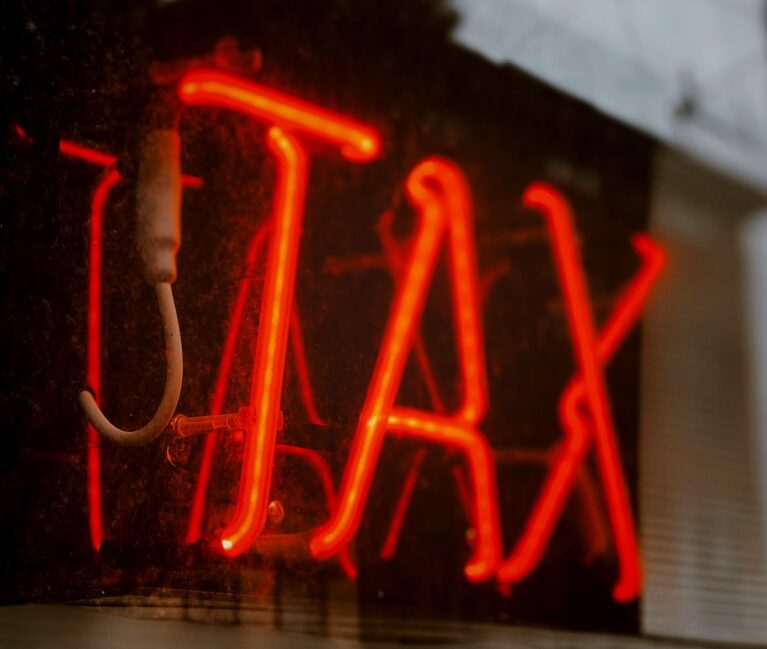
If I were a global supervillain intent on shoring up my ill-gotten gains, where would I hide the piece of the puzzle that could cause my downfall? As any keen reader of Greek myth or Nancy Drew knows, the best place to conceal something is in plain sight. The word ‘tax’ is the ultimate anti-clickbait; nothing is less likely to get the Average Joel to the barricades than a three-week conference on ‘progressive taxation for an inclusive and just social organisation of care’.

Back to the future
What I find most interesting about the work that’s starting to crystallise on UBI and similar programs is not so much that people choose to continue working in addition to receiving a basic, survivable income – that always seemed obvious to me – but that in almost every study, one of the benefits that accrues is, quite literally, a future.
