
Journal
Articles
Mirror rim
Selected for The Best Australian Essays 2015 I THOUGHT BATAVIA was the story I was carrying on my trip to...
From now on
AT HOME IN Melbourne, they play kick-to-kick wherever they can: in the backyard, the hallway, at the park, on...
The quiet slave
Episode One: Near MutinyIn 1820, Alexander Hare, the owner of a household of slaves and an increasingly controversial figure...
Nullius
Leavings I: 1928THE CLEARING IS unknown to her, a flat irregularity in a broad swathe of rocky ground the...
Contending with a blank page
TIM WINTON IS arguably Australia’s most widely read contemporary novelist. His books have been translated into eighteen languages, adapted...
High school sewing
Wincey – but really – wincey, a baby word from a nursery rhyme is what was doled out by...
The artlessness of internal travel
Going away enforced where I was.There was no here without there.The Canning River fed Bull Creekovershadowed by paperbarkswith its...
Deep: Indian Ocean view from the Blue Duck Café, Cottesloe
The sea rolls flat, pleasant and blue under a warm sun. In the distance, ships glide easy toward the...
Droughtbreaker
No sooner resolved neverto write another linethe habit of resolutionbeing so strong,the air turned suddenlysweet outside her window –the...
Land, glorious land
IN THE BEGINNING it is about land: enjoying, aggregating, owning, using, preserving, developing and selling land. Land is, and always...
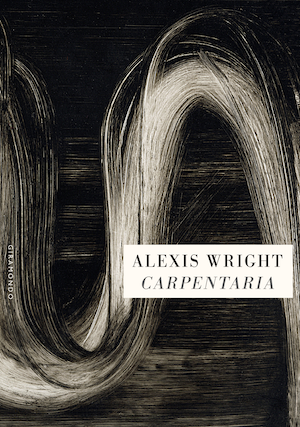
On ‘Carpentaria’, by Alexis Wright
Wright’s reflections on her own creative process show that in working on Carpentaria, she was keenly aware of the need to invent a way of writing that could embody both the negative effects of colonialism and her proud Aboriginal heritage.

Former glory
NOBODY PUT A ‘for sale’ sign in front of the only good building in town. Whoever had it on...
