
Edition 91
On the Money

- Published 3rd February, 2026
- ISBN: 978-1-923213-16-6
- Extent: 196pp
- Paperback, eBook, PDF
Money talks – but it doesn’t always speak the truth. It’s also far more than a medium of exchange and a store of value: money is a status symbol, a friendship destroyer, an opportunity creator, a psychological blocker, an obsession, a dream, a curse, an albatross and an elephant in the room.
And if money makes the world go round, it’s spinning us faster than ever these days. Do we stand any chance of bridging the wealth gap? How does money influence our behaviour? What part does it play in the erosion of democracy and institutional trust? Should financial literacy be taught in schools? And does anyone actually understand crypto?
This edition of Griffith Review follows the money to tally the past, present and future of our filthy lucre.
Edited by Carody Culver with contributing editor Daniel Nour.
Cover image: Peter Bakacs, 2×2 (2023), acrylic on canvas, 1,125 x 912 mm
In this Edition
Let’s talk about tax, baby
If I were a global supervillain intent on shoring up my ill-gotten gains, where would I hide the piece of the puzzle that could cause my downfall? As any keen reader of Greek myth or Nancy Drew knows, the best place to conceal something is in plain sight. The word ‘tax’ is the ultimate anti-clickbait; nothing is less likely to get the Average Joel to the barricades than a three-week conference on ‘progressive taxation for an inclusive and just social organisation of care’.
Back to the future
What I find most interesting about the work that’s starting to crystallise on UBI and similar programs is not so much that people choose to continue working in addition to receiving a basic, survivable income – that always seemed obvious to me – but that in almost every study, one of the benefits that accrues is, quite literally, a future.
Pay writers like politicians
When we talk about Australian books and writers today, we often find ourselves talking about money. Like patients with chronic illness, we’ve become adept at enumerating the symptoms of our malaise. We talk about broke writers and broke publishers and broke editors. Is anyone making any money? We talk about the cost of books and the cost of paper. We talk about writers’ incomes and the salaries of publishing staff. We talk about the cost of housing and university redundancies. There simply isn’t enough grant funding to go around. We talk about who can’t afford to write. We talk about the indie publishers selling out to multinationals because the margins are too tight. We talk about the market – the market for Australian literature that’s so small, even a prize-winning bestseller doesn’t bring financial security to its author. The market can’t be trusted with our national literature – unless what we want is self-published erotic fiction, which is apparently where the money lies. We talk about the obscenity of wealthy tech corporations shitting on copyright. If tech companies won’t pay writers, who else will?
Even when we’re not talking about money – when we’re talking about our hopes for a national literature, or whose stories should be told, when we’re talking about easy reading, or books that infantilise their readers, or how to safeguard freedom of expression, or the moral principles at stake in wholesale breach of copyright – our conversations are caveated and curtailed by the money question. At our most ambitious, we talk about how to pay writers a living wage.
No small change
As a 2022 industry survey showed, around 50 per cent of respondents – people who also worked in the literary sector – went to private school, compared with only 36.7 per cent of current Australian students. Considering private school numbers are now at an all-time high, the percentage for the total population would have been far lower when these graduates were entering the workforce. Put simply, these figures show the publishing industry is not representative of the Australian public.
The tale of the innocents
All women’s domestic labour is finite and takes a heavy bodily toll. Breastfeeding requires calories, sleep and rest; fatigue and illness can set in, lives can end, and there are only so many hours in a day. The difference now is that such reproductive work is assumed and silenced in a different institution: the atomised single-family home.
The cost of living
IT’S DIFFICULT TO know how to honour stories about a site that remains
vacant, its future as unanswerable as the past we can’t reconcile. In community
meetings, well-meaning
locals asked that we celebrate both histories, as if
they are two different things, while the cost of environmental remediation
inhibits both government and the private sector from doing anything. And
the site remains silent, unable to articulate what happened or how to move on.
Noticing teeth
TEETH ARE ONE of the most visible markers of poverty: structural circumstances that are individually borne. In an essay for Aeon, US journalist Sarah Smarsh calls them ‘poor teeth’. She writes: ‘Often, bad teeth are blamed solely on the habits and choices of their owners, and for the poor therein lies an undue shaming.’ And: ‘Poor teeth…beget not just shame but more poorness: people with bad teeth have a harder time getting jobs and other opportunities.’ In the age of ‘whitened, straightened, veneered smiles’, the distance between ruined poor teeth and healthy, wealthy teeth is growing.
Disturbing affections
PART I: POSSESSIVE RELATIONS Acquisition. In the movie American Psycho, the main character, Patrick Bateman – a yuppie serial killer with a passion for brutality – is in a nightclub picking up girls with his corporate finance buddies. A girl asks him, ‘What do you...
Operator, please
A 2024 website post from CHOICE confirms this trend: ‘In a survey of over 6,000 CHOICE supporters in May this year, 73% told us they had encountered sub-par service from a business in the preceding year, and 85% believed this assistance was getting worse.’
These numbers seem to indicate the growing distance that corporations are placing between themselves and their customers. If the invention of the call centre in the mid-twentieth century helped this phenomenon along, then the creation of AI chatbots has only accelerated the issue in an alarming way.
Gold standard
Not long after the 2018 Royal Commission into Misconduct in the Banking, Superannuation and Financial Services Industry, I attended a panel discussion that sought to consider its professional and ethical implications for bankers. Anna Bligh, CEO of the Australian Banking Association at the time, persistently used the #notallbankers hashtag, which was stretched beyond all rational use during the commission. Despite a #fewbadapples, she suggested, bank integrity was secure: Australians could sleep well at night knowing their money was safe.
Until then, it had never occurred to me that my money – such as it is – might not be safe in the bank. These institutions go to some trouble to present themselves as symbols of safety, stability and trustworthiness. For example, there was great excitement when the Commonwealth Bank’s vault – still one of the largest in the world – was hauled to Sydney’s Martin Place in 1926 by the twenty-five horses required to transport it. It was a public spectacle that demanded our trust in banking, saying look at the hefty measures the bank takes to protect your money. Banks are now more likely to flaunt their investment in cybersecurity, scam prevention and online fraud, like the ANZ Falcon® technology that ‘works around the clock’ in a way that’s ‘personal to each and every one of our customers’. The message is the same: sure, we have big bucks, but we use them to keep your money safe.
How meme coins explain the world
THE MESSAGE POSTED on the $TRUMP website on 12 May 2025 reads like the opening gambit of an internet scam: ‘Congratulations, if you’re in the top 220 on the leaderboard we will be contacting you in the next 24 hours. Check your inbox (and...
Uncanny virtue
I first heard Peter Singer speak at the University of Western Australia (UWA) in the summer of 2009. The subject was the ethics of what we eat, and the tone of the talk was open and generous. Some in the audience were hardcore animal-rights people, as one would expect at a Singer gig. But the philosopher’s message was that ethical eating is, in fact, a pretty complex matter, bearing not only on animal welfare but also on economic justice and the environmental impact of agriculture, and that what counted as ethical behaviour in one sphere was often difficult to reconcile with ethical behaviour in others. His advice was therefore to do what we could, advice I for one resolved to follow before hogging into the free wine and nibbles around the Beaux-Arts-style reflecting pool.
Splitting the bill
A couple of years ago, after too many years too casually spent as a casual academic, I went to work at a law firm. It was in need of a writer, and, for a steady wage, I was willing to pretend to be one. For a time, the change felt daunting, and I eased that feeling by making a mental note of its differences with my old workplace. At the firm, everyone was smartly dressed and spit-polished; at my university, there were professors who padded the corridors with rumpled hair and bare feet. At the firm, everything was urgent; at university, nothing ever was. The firm’s tearoom was stocked with gleaming coffee machines, bowls of fresh fruit and individually packaged Tim Tams; the only things stocked in the faculty tearoom at my uni were cockroach baits and dead cockroaches.
The ridiculous school
Here are some things I now know: that the school’s grounds, beyond those imposing gates, are large enough that they could comfortably contain at least three of my high school’s own in their entirety – and they include six separate cricket pitches. That there are staff employed to patrol the streets of the neighbouring suburbs in the mid-afternoon, purely to ensure those blazers are not taken off in public. That there are swimming trunks (and that is the word they use for them) as part of the school uniform – in the school’s colours and with its logo on one leg.
That the admission fee, each year, is equal to what I earn. (I am not, for the record, in any way involved in its payment.)
And also that none of this matters, not in the context of my family’s lives. I am, of course and for want of a better word, the stepmother to my girlfriend’s children, which is to say that my role is always supportive and not agential. I’m not the protagonist and do not want to be. The problem is that neither can I be antagonistic, nor should I.
I never thought that I would be here. Never imagined I might find myself driving through those massive gates on the occasional stormy afternoon and idling in a queue of European cars as the older boy swings his cricket kit onto my backseat (though I still curse those of their drivers who insist on trying to turn right when they return to the main road). Receiving the school’s monthly magazine with its thick, soft pages in my letterbox. Stitching name tags onto uniform trunks, the existence of which I couldn’t even fathom until last year. It is unsettling, to say the very least.
And I hate it.
The real deal
DURING THE FIRST month of my residency I knew hardly anybody in Hanoi. Although I told my friends and family in Australia that I was meeting cool people, making art and experiencing the ‘real’ Vietnam, I was usually lurking in the Old Quarter with...
This is my life
QUINN’S ON THE porch. I can see him over Mum’s shoulder through the smudged vertical strip of glass next to the front door. Golden porchlights flicker and zip with midges and moths. Occasionally, his shifting shadow cuts off the light. I’m sitting with Mum...
Piggy
‘Yes. Yes. I am ready,’ I said. Unsure of what I was getting ready for. Something good. Something inexplicable. Something only now and never again. It was the fire of the final time. THE WIFE TOOK her sweet time in the ensuite shower. Outside the bedroom...
The landlord’s son
THE LANDLORD’S SON arrived unannounced, just before dinner. Mia saw him from the window as he crossed the paddock from his own house. Passing the tank, he rapped his bony knuckles down the rungs. Keep an eye on the tenants, his father had told...
This woman’s work
Life seemed easier – in the Tampon ads – like go roller-skating or scale a mountain with a heavy flow – but she wakes up straight to the train – the plastic smile of productivity memes paywaving through the day – it’s cringe to...
Conditions of Entry
Thirty lines max, it says. Only twenty-nine left as some wag might have quipped but who’s counting? All bags must be opened for inspection. All poems disassembled and unpacked so as to demonstrate nothing untoward lurking in the subtext. No shirt no service. You, the poet, are responsible for your own baggage and semantic...
Spirit Mama Bali
for Dessi, Thinker Nails (Ubud) Spirit Mama Bali wears a wet shirt. Her honey amber coconuts are unrepentant, and the crescent moon of my nails is the elegant cummerbund round the waist of her women who laugh at my money behind my back. Spirit Mama Bali is in my...
Libretti
You spend your Centrelink payment on a dinner package to the opera. Madama Butterfly. You rent a suit, tie, waistcoat, black, black, black, starched white shirt. A man with black hair and white regrowth takes your measurements. He blushes when you ask him to...
Hello weary traveller
your coming was whispered to me, long-long ago my heart warms and sizzles to have you folded at my roots your arrival here was written when supernovas were waiting to be born which is to say, Ocean planned our symphony and Sky dreamt of many epochs like this one gather lemon...
Year of the Snake
celebrate the Year of the Snake with Penfolds! Marshall is marking this Lunar New Year with a special edition Emberton III speaker new skins, old ectotherms 年年 another flat chinoiserie to honour all asian cultures Allen’s are releasing the Allen’s Year of the Snake Lucky Snakes Alive! in 888g bags rrp $14.44 another tactless...
Shopping at Babel
All civilized states have considered it their primary duty to provide for equal weights, measures, and coins – REPORT FROM THE SELECT COMMITTEE ON WEIGHTS AND MEASURES (1862) We’re announced by a little bell as we enter. Behind the counter that guards the door – above ice creams...
Featured Contributors
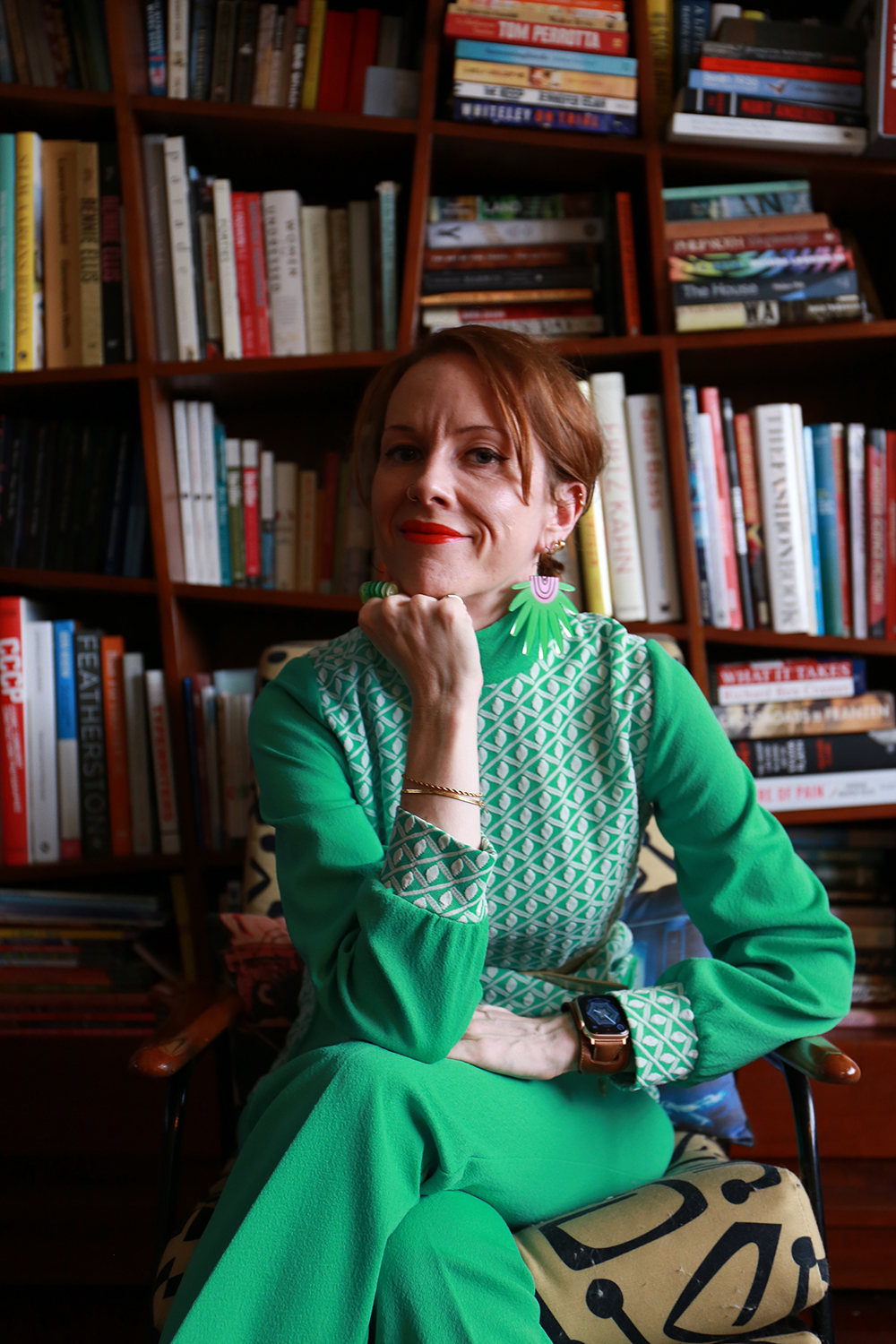
Carody Culver
Carody Culver is the editor of Griffith Review. She's also a writer and a literary interviewer. She was a contributing...

Daniel Nour
Daniel Nour is an Egyptian-Australian writer and journalist. His work has featured in The New York Times, SBS Voices, Meanjin,...
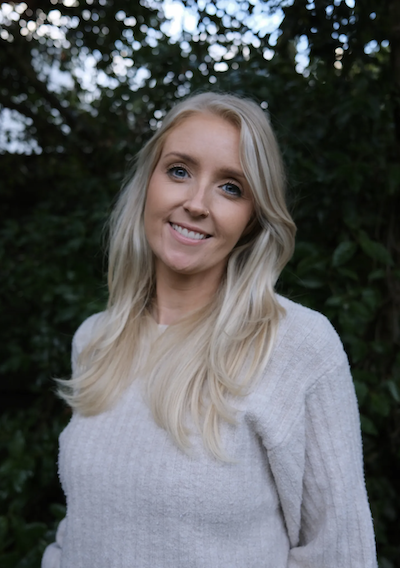
Emma Maguire
Emma Maguire is an Australian writer working across Tarndanya, Thul Garrie Waja and Gurrimbilbarra. She writes essays, criticism, short...
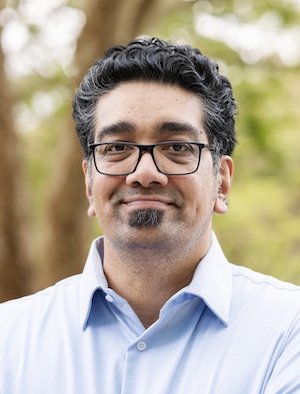
Chris Vasantkumar
Chris Vasantkumar is a Senior Lecturer in Anthropology in the School of Communication, Society and Culture at Macquarie University....
