
Featured in
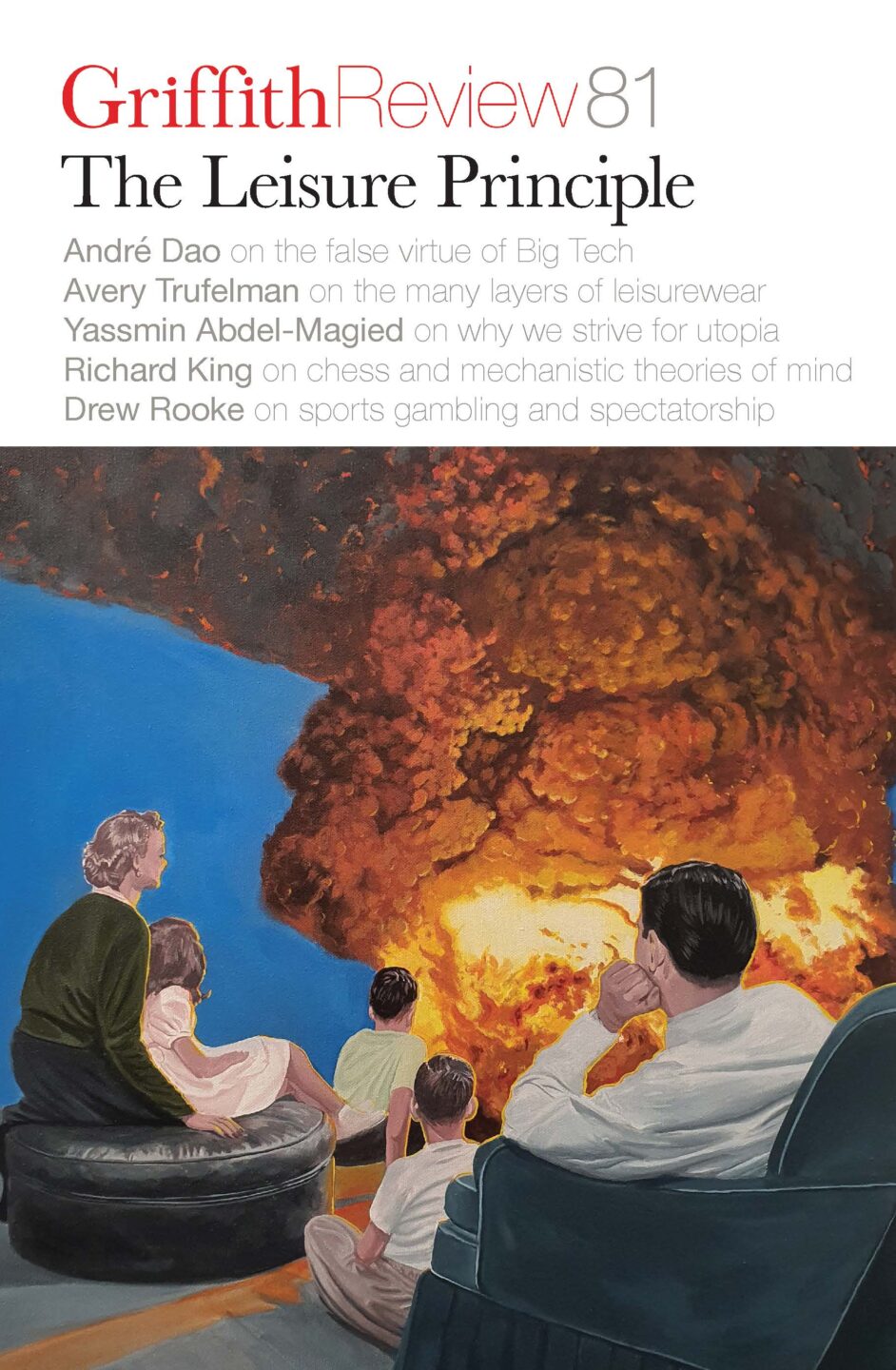
- Published 20230801
- ISBN: 978-1-922212-86-3
- Extent: 200pp
- Paperback (234 x 153mm), eBook
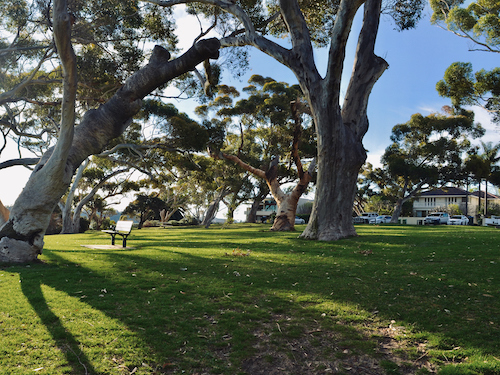
Glory to God for long weekends,
for lattes served by obsequious baristas,
sunnied eggs and bacon with the crispy ends,
for an empty park in front of the cinemas.
To she which gives us rain on shaggy lawns,
all glory given, by which we fail to set
the alarm, through sports drop-offs at dawn,
for hungover Saturdays, Fridays without regret.
Glory, glory to unexpected football
games telecast on free-to-air, for heirs
who suddenly decide to wash the car, for all
enlightenments filling each sudoku’s squares.
For golf, for ambling promenades, we praise
Her who gave weekends to punctuate our days.
Share article
More from author

The future
PoetryFor a moment he was given his future: a prophetic pulse racing to the horizon of his life and washing it stark and certain, the glacier of...
More from this edition

All work and some play
In ConversationI’m often hearing about odd jobs that musicians or performers had and how it’s tied to their identity. You read about Beat writers like Jack Kerouac and Neal Cassady, who really identified with blue-collar people and railroad workers. After Kerouac got infamous, or famous, he went off to be by himself in a cabin in the forest as a fire lookout. So he went into a very solitary existence, and I like that kind of thing...

‘A world we must defend’
Non-fictionSchools across Australia banned Pokémon in an attempt to regain control, but this only caused the franchise mania to intensify. Now Pokémon wasn’t just fun – it was also illegal, which meant it was dangerous, which meant trading cards on campus made you a risk-taker, which meant you were seen as fearless, which meant that you were dangerous.
Louche
Poetry On the bleached beachof café seats, he’s drenched, hairslicked, tarnished as tinespulled up from a shipwreck, savea naughty part:silver forelock a hookswaying as he...
