
Featured in
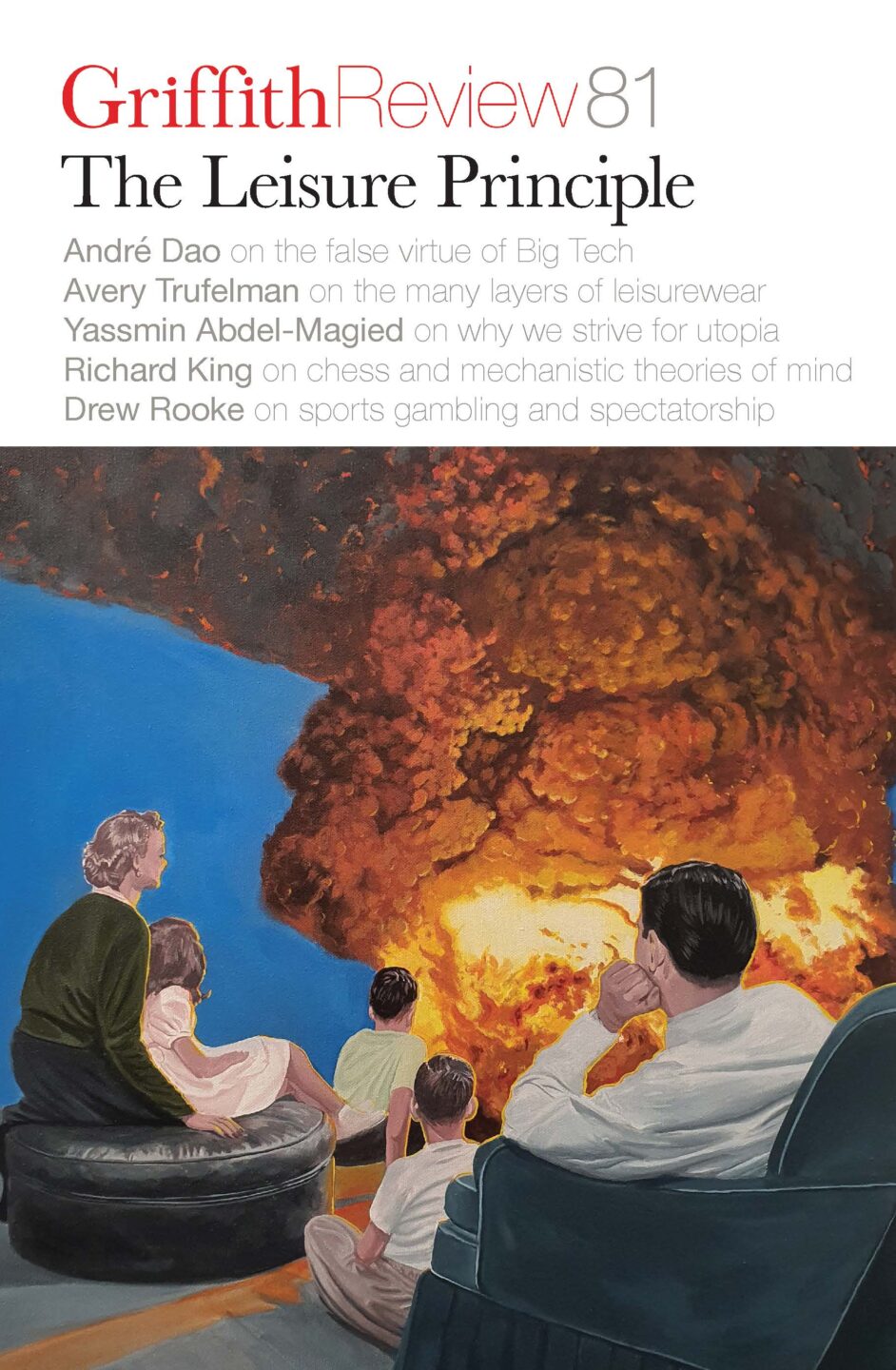
- Published 20230801
- ISBN: 978-1-922212-86-3
- Extent: 200pp
- Paperback (234 x 153mm), eBook

Already a subscriber? Sign in here
If you are an educator or student wishing to access content for study purposes please contact us at griffithreview@griffith.edu.au
Share article

More from this edition

All work and some play
In ConversationI’m often hearing about odd jobs that musicians or performers had and how it’s tied to their identity. You read about Beat writers like Jack Kerouac and Neal Cassady, who really identified with blue-collar people and railroad workers. After Kerouac got infamous, or famous, he went off to be by himself in a cabin in the forest as a fire lookout. So he went into a very solitary existence, and I like that kind of thing...

An idle moment
IntroductionIn 2008, Finnish performance artist Pilvi Takala embarked on an audacious project called The Trainee. For one month, she worked as a marketing intern at the global accounting firm Deloitte. Instead of carrying out the usual responsibilities expected of this role, Takala did…nothing.

Upping the ante
Non-fictionAs it turned out, Centrebet’s move online – coupled with the many other betting innovations it pioneered – led exactly to where Daffy hoped it would: a prodigious pot of gold. He says the company went from taking ‘fifty or sixty bets in one day’ to taking ‘five or 600,000 bets on a Saturday night from all over the world’. By the turn of the millennium, its annual turnover was in excess of $100 million and it had become – in the words of Piers Morgan, its then general manager – ‘one of the leading sports betting organisations in Australia, if not the world’.
