
Featured in
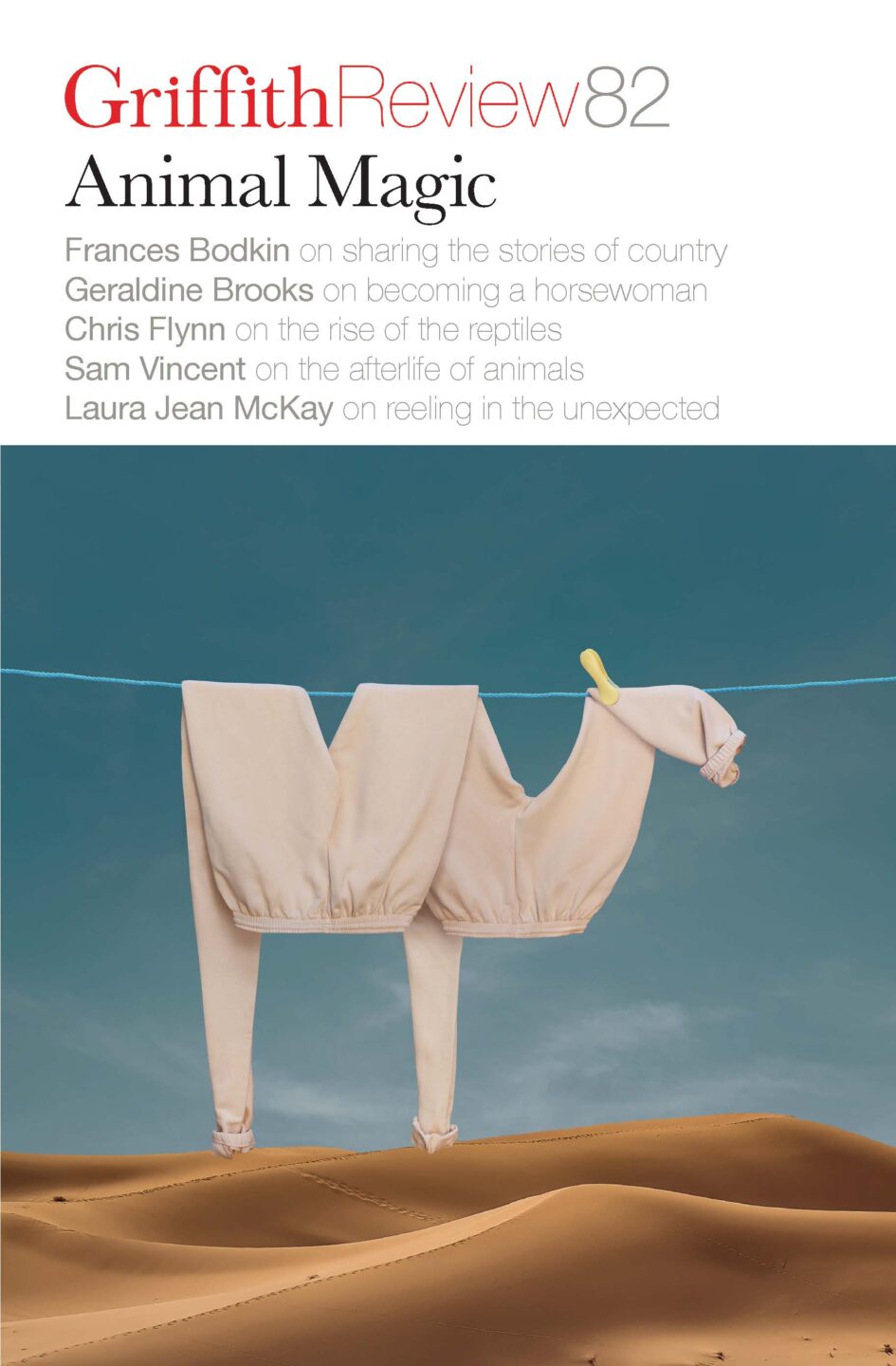
- Published 20231107
- ISBN: 978-1-922212-89-4
- Extent: 208pp
- Paperback, ePub, PDF, Kindle compatible

Already a subscriber? Sign in here
If you are an educator or student wishing to access content for study purposes please contact us at griffithreview@griffith.edu.au
Share article
About the author

Morgan Yasbincek
Morgan Yasbincek’s first collection, Night Reversing (1996), won the Anne Elder and Mary Gilmore awards. Firelick (2004) was shortlisted for the Victorian Premier’s CJ...
More from this edition

Before I forget again
Poetry I am a ceramic horse in kintsugi fields. Shards shred my tongue to gold rivers. Cracked and crazed – from fire gallops beast. Memory slips lapis lazuli. I break curses, gather spells. Nudge fresh letters in water troughs – watch words bob – shiny new apples to crunch.
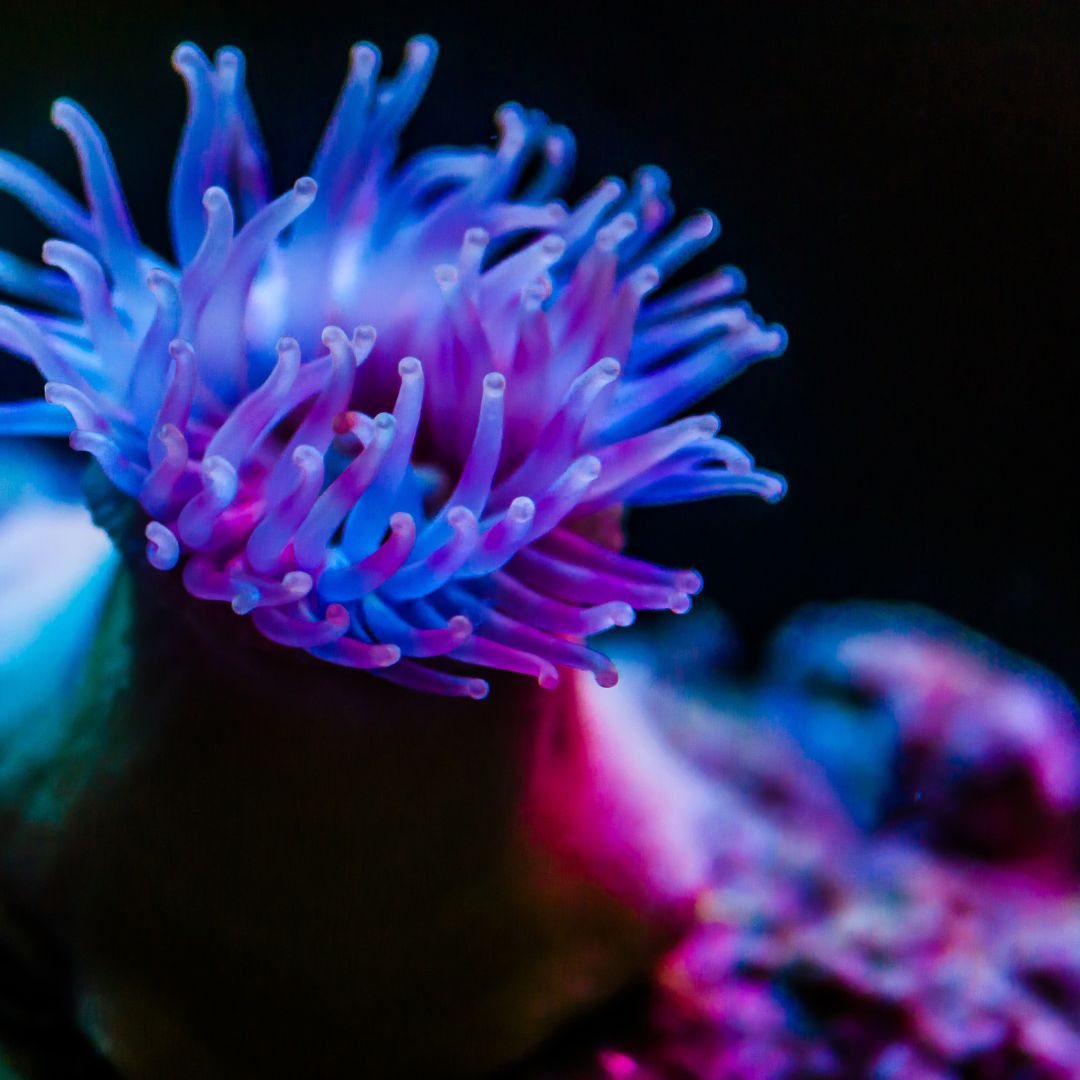
Anemone
Poetry Lady, in this heavy light you show tender: waving your insides outside, buffeted by the sea’s old heave ho. Nobody calls out medusa – but there’s a distinct...
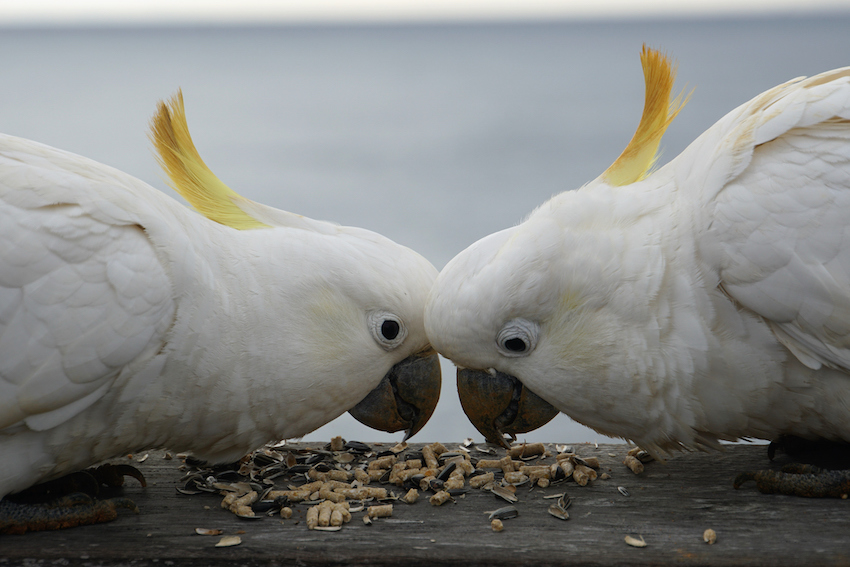
When the birds scream
Non-fictionI read books in which girls like me made friends with cockatoos and galahs, and my mum told me stories about my pop in Queensland who could teach any bird to speak and to whistle his favourite country songs. My favourite story was the one about the bird who used to sit on his shoulder while he drove trucks for work.
