
Featured in
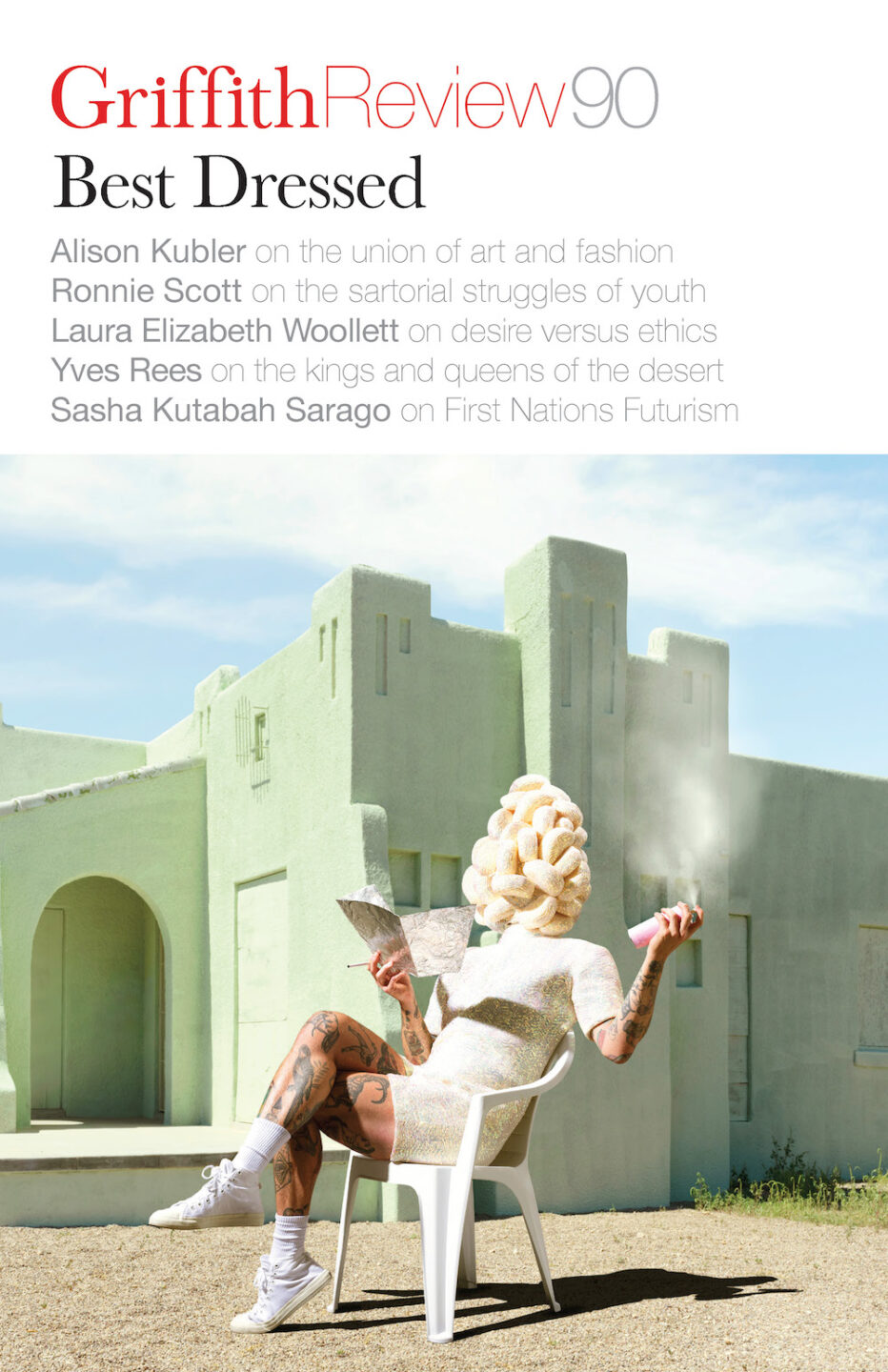
- Published 20251104
- ISBN: 978-1-923213-13-5
- Extent: 196pp
- Paperback, eBook, PDF
THE FASHION DESIGNER Bella Freud begins each conversation on her podcast, Fashion Neurosis – which has featured the likes of Zadie Smith, Lorde, Graydon Carter, Hanif Kureishi and many more artistic and cultural luminaries – by asking her interview subject to tell her about the first garment they wore that changed the way they felt about themselves. The responses are as psychologically varied as they are sartorially diverse: for musician Beth Ditto, the liquid eyeliner she was given when she toured with the band Sleater Kinney finally allowed her to achieve the ’60s cat-eye look she’d admired since she was a child; for actor Kristin Scott Thomas, the opprobrium she received as a girl for pairing a scarlet shirt with a pink skirt – an outfit she’d deemed a triumph until she went downstairs and was asked what she thought she was doing combining those colours – made her suddenly doubt her own judgement.
When I pondered Freud’s question myself, I remembered that when I was about five years old, my mother dressed me in a dapper little navy trouser suit for a day out with family friends. The kids of those friends, I noted with immediate and blood-chilling embarrassment, were dressed far more casually than I was; I was also beset by the destabilising and (to my five-year-old self) horrifying notion that wearing trousers meant I might be mistaken for a boy. I grizzled for the entire trip – embarrassed by the formality of my get-up and held hostage, or so it felt, by my mother’s outlandishly inaccurate idea of how I was supposed to present myself to the world.
These tensions between our inner and outer selves, and the layers of anxiety we add when we imagine other people’s (mis)perceptions of who we are because of what we’re wearing, are surely some of the most simultaneously beguiling and brutal aspects of fashion. The right outfit can drop the veil between who we believe ourselves to be and who we want to become; the wrong one can be like showing up in fancy dress and realising it’s not that kind of party.
THIS EDITION OF Griffith Review is about much more than what we wear – just as what we wear is about much more than stitching and cloth, or about those seemingly mundane factors – weather, laundry, mood – that shape our daily outfit choices. The essays, fiction, conversations and more (including a podcast you can access here) in Best Dressed go far beyond the wardrobe and the shop floor to unravel the connections between art and fashion; crack the secret sartorial codes of lesbian dress through the decades; discover the subversive power of a drag festival in the desert; explore the myriad cultural and personal meanings we ascribe to tattoos; unpack the complexity of our desire for a cult garment; unearth the hidden stories and histories of the people who make our clothes; interrogate the paradox of a profit-driven fashion industrial complex that caters to only one type of body; analyse the curious intersection between clothing and conservatism; assess the transformative possibilities of First Nations Futurism and digital fashion; and much, much more. I’m very grateful to this edition’s wonderful contributing editor, fashion writer and podcaster Maggie Zhou, who commissioned the poignant short story ‘Hat trick’ by the incredibly talented US-based writer Laura Pitcher. I hope you enjoy following the narrative threads of Best Dressed as much as the GR team has enjoyed weaving them together.
As for that trouser suit I hated so much as a child – it turns out my mother was onto something (not the first time I’ve had to make that admission). Decades later, in some kind of sartorial version of the enemies-to-lovers narrative, my favourite type of garment – the one that unfailingly collapses the barrier between the self I am and the self I want to be seen as – is a trouser suit.
Image: photogrammer 7 from Pixabay
Share article
More from author
Wanting it all
I’m really interested in why we want these things. I know I’m personally drawn to clever marketing – the kind that makes you think, ‘If only I had that thing, maybe then I’d feel complete’, or ‘Once I get it, maybe the wanting will stop.’ But, of course, once we’re in that loop, it’s never enough. As soon as the package arrives, we’re already craving the next fix.
More from this edition
That J-Lo dress
Non-fiction HAVE YOU EVER visited a museum, art gallery or very posh shop where you longed to touch the items on display but, for whatever reason...

Totentanz
Poetry We are loose now. We peel our skin veil by veil to what lasts longer. To the pulse of rib and knee and knuckle ...
Out of the closet
In Conversation Lesbian fashion historian Eleanor Medhurst has an eye for hidden style. After spending her university years discovering the many untold stories of lesbian fashion...
