
Featured in
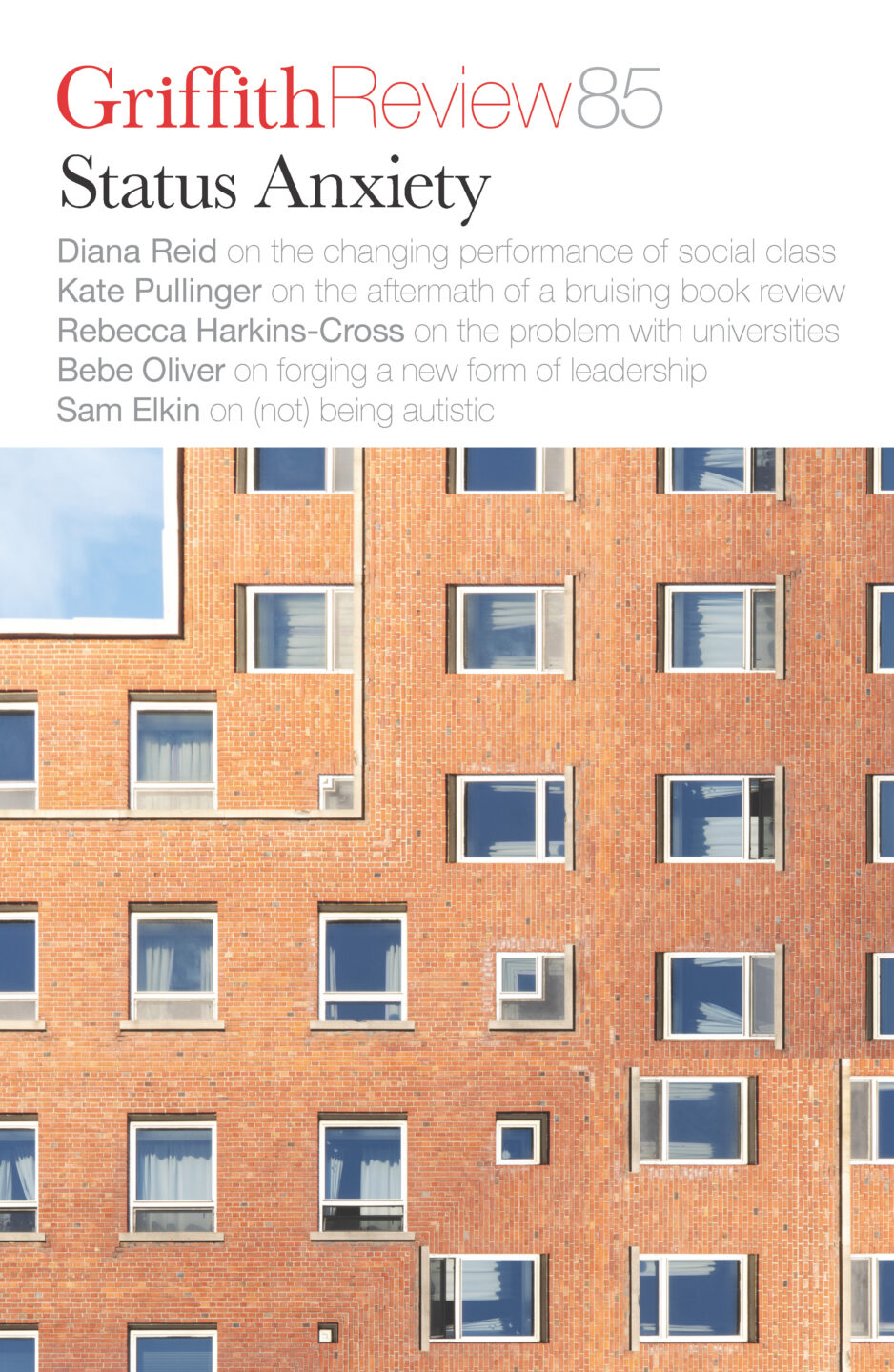
- Published 20240806
- ISBN: 978-1-922212-98-6
- Extent: 216pp
- Paperback, ePUB, PDF

Already a subscriber? Sign in here
If you are an educator or student wishing to access content for study purposes please contact us at griffithreview@griffith.edu.au
Share article
More from author
The future is hackable
Non-fictionDeepfakes point to a future that is simultaneously euphoric and apocalyptic: philosophers have positioned them as ‘an epistemic threat to democracy’, journalists have called them ‘the place where truth goes to die’, futurists have portrayed them as the digital harbinger of a mass ‘reality apathy’ in which even video will be a lie.
More from this edition

When adults are at risk
Non-fictionOne significant subset of our modern adult-safeguarding environment is elder abuse, which we know is a significant and under-reported problem. In 2021 the Australian Institute of Family Studies released the results from the first-ever broad survey of elder-abuse prevalence in Australia. This showed that 14.8 per cent of adults aged sixty-five and over had suffered abuse in the previous twelve months. Importantly, only a little more than one third of people who experienced abuse sought help.

The Gordon cult
Non-fictionFrom a modern perspective Gordon makes an odd choice for a national poet, since he wrote only rarely about the country that embraced him. He set many of his popular verses in England and studded the others with the classical references familiar to an English gentleman. Yet before the passage of the 1931 Statute of Westminster – or, more exactly, until similar laws passed through the Australian Parliament in 1942 – Britain retained the legal right to determine foreign relations for the Australian Commonwealth. Accordingly, prior, during and for some time after the Great War, respectable Australian nationalism generally manifested as Empire patriotism.

Drowning in a puddle
Non-fictionThe thought of being accepted is terrifying when you’re so used to not being accepted. You expect the worst because the worst is what you’ve become accustomed to. The people in that meet-up group will become your closest friends for the next year. You’ll come to understand that they worry about the same silly little things you do. But those silly little things aren’t so silly and they’re not so little. We just designate them as such because that’s how we’ve been taught by some of the people around us – who expect us to behave in the exact same way they do. But life just doesn’t work like that. Different experiences create different strengths and weaknesses in all of us.
