
Featured in
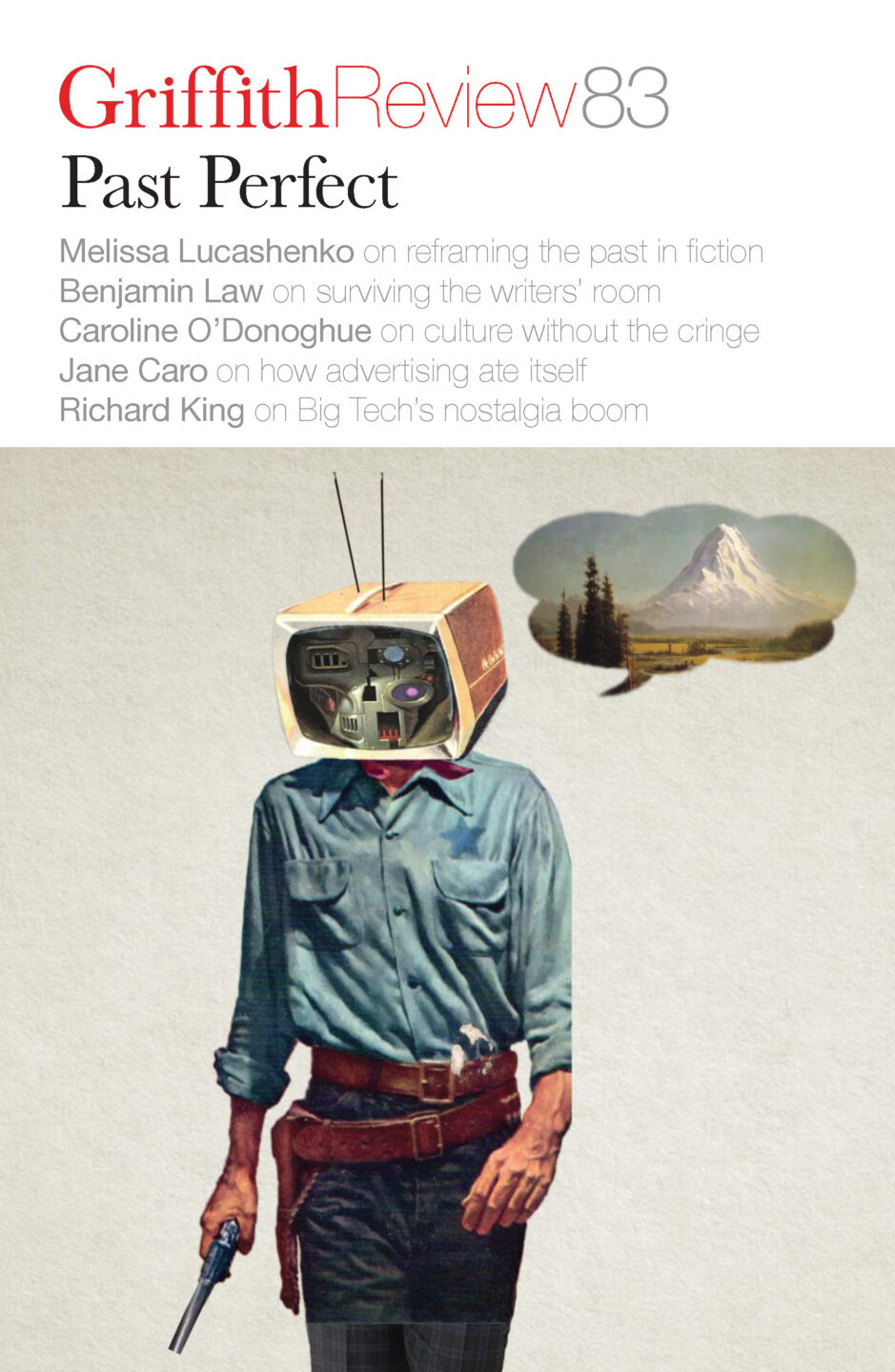
- Published 20240206
- ISBN: 978-1-922212-92-4
- Extent: 204pp
- Paperback, ePub, PDF, Kindle compatible


Already a subscriber? Sign in here
If you are an educator or student wishing to access content for study purposes please contact us at griffithreview@griffith.edu.au
Share article
More from author

My tiny green teacher
In June 2025, I was one of the many people emotionally wounded by a viral video clip of a little puppet named Tiny Chef (affectionately known as Cheffy) receiving some bad news. I hadn’t heard of this character and his playful children’s show, but the clip had a profound effect on me. It depicts a more potent vulnerability than many human skits achieve.
More from this edition
Glitter and guts
Non-fiction RIGHT NOW, I am obsessed with the past. My debut novel is finished and ready for publication, and I am wrestling with the fear...
Always was, always will be
In ConversationIf Aboriginal people are all dead, you don’t have to negotiate a treaty with us and you certainly don’t have to go around feeling guilty about stolen land and stolen wages and stolen children; the subjects of that injustice don’t exist anymore if you choose to believe that we’re dead or all assimilated, which isn’t the case. It’s a very practical kind of assimilation strategy.

The kiss
FictionThe name, when it came, sounded as if it had been uttered by somebody else. The man’s look shifted from one of mild affection to puzzlement. ‘Excuse me?’ He was still smiling, but it was a different kind of grin – the type of smile people offer a stranger who begs them for spare change.
