
Journal
Articles
Herbert or Harry?
While living creatures also die, go extinct and at times evolve into something else entirely – just as the built environment eventually disappears – it seems a stretch to suggest that the significance of other creatures depends only on our relationship to them – on what they provide for us, whether as resources or a source of personal awe and emotional resilience.
Mourning in a time of planetary crisis
As species disappear and climate change accelerates, a small but growing group of activists, artists and writers across the world is embracing mourning as transformative ethical and political work. Their approaches are wide-ranging, from public funerals and vigils for departed species to acts of civil disobedience that take the form of mass ‘die-ins’ representing the extinction crisis.
Bucket of water
When clients were brought to Australia, they were held in hotels or detention centres. Detainees were allowed to see external psychologists in visiting rooms in the detention centres. The rooms were stark and grey with bright, white lighting. I filled out an online application form to visit one of my clients. It asked me to list the items I wanted to bring with me, and how I intended to use each of them.
Old feelings, new appetites
Suddenly, my body was allowed to be big, weary, bed-bound and gorged. It was to eat readily, rest gladly, leak chaotically and swell without objection. For close to ten months, it was to be spared anorexia’s vicious rules. As I approached the end of my body’s heavy sabbatical, I felt nervous.
The knitting
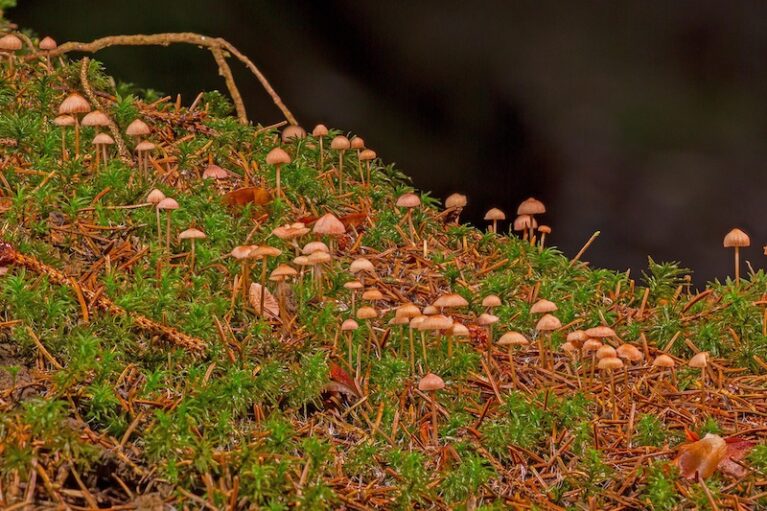
The spores that caught and coupled. The filaments that grew, the hyphae that became the sum of our parts. All of it powered by water, powered by oxygen, powered by sugars, nutrients, deaths, resulting in bodies rotting in the ground. We spread out, touching the soft new roots of trees, entering them. Connecting them. A knitting.

Blaming the pastries
Contemporary life constantly offers us the illusion of control – many of us can access whatever we want whenever we want it at the click of a button. In reality, though, we lack control over so many elements of our lives. Since it can be painful to think about that, we make ourselves forget.
From the new world
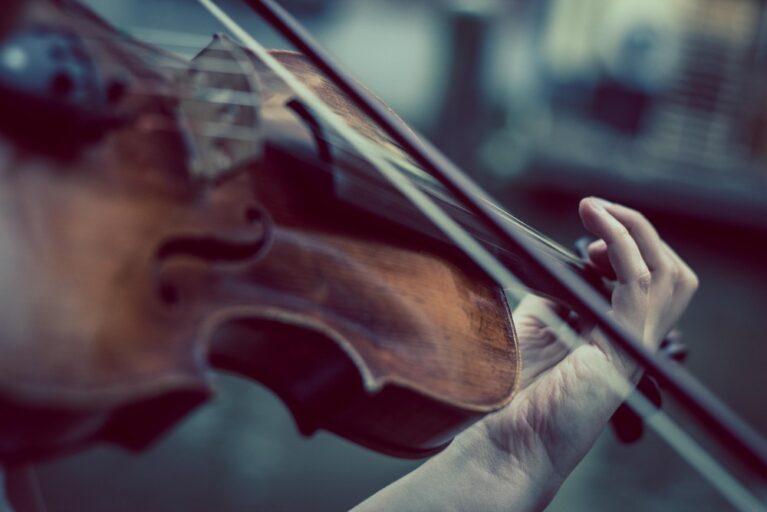
The first time I played Dvorak’s New World Symphony, I couldn’t believe the sheer power of inked shapes on paper. Breathing into the first note with eighty other musicians; the swelling fortississimo crescendos of pure angst; traversing stories inspired by communities borne from diaspora and unbelonging. Nothing I’d ever done had felt so real.
Final five days
We sent Red off to school on Tuesday, Wednesday, Thursday – but we had to ask him to say farewell, to be ready for her absence, just in case. Every day. To bid your dying sister goodbye, each morning, and then go into the arms of your friends – who didn’t know.
Encircling the flames
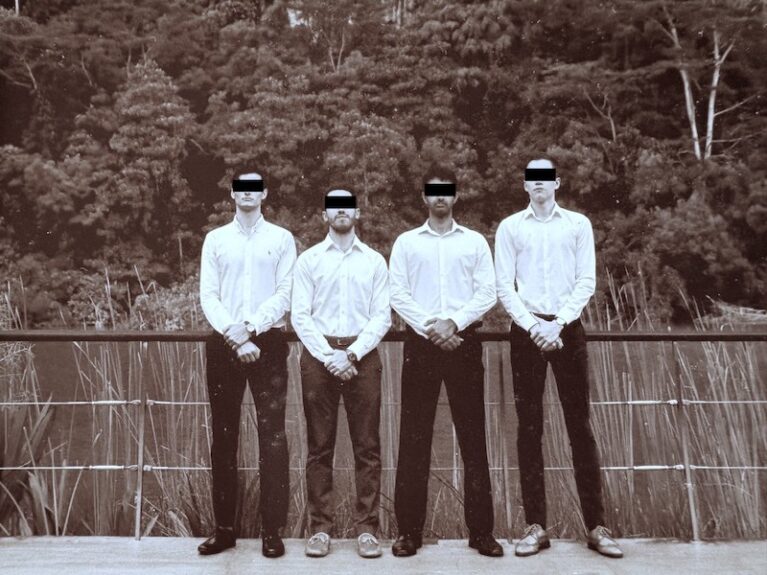
I was seventeen. I didn’t own a passport. I’d never been on a plane. The extent of my ‘cultural exchange’ was one Toorak party where, reciting Hamlet’s first soliloquy, I tried to woo the private schoolgirls before they realised ‘this too too solid flesh’ belonged out near Dandenong.
After leaving high school, my friends and I started tutoring the kids in the years below us and advertising our classes on Facebook. It was a cash job, quick but consistent, and we mucked around all holidays in the state library. In January, I was shortlisted for an interview with Yale-NUS.
Ten minutes before the Skype call, I looked up the college on Wikipedia. It had already admitted national athletes, professional actors and entrepreneurs. In the interview, I said I’d started a tutoring company, that my co-founders and I wanted to make tuition accessible to public school students, that building something new was incredibly rewarding. ‘Just like,’ I said, ‘how rewarding it will be to build the Yale-NUS community.’
To this day, I’m unnerved by how well I sold myself. But to the admissions team of a start-up college, selling was as natural, and as satisfying, as taking a shit.
Australia’s lost literary sector
As I’m writing this essay, at the start of 2026, nearly every arts, cultural and literary organisation in Australia is in some sort of trouble – whether at the hard-but-ticking-along-if-everything-stays-equal end of the scale or the other extreme: a not-sure-how-long-we-can-keep-going-like-this existential crisis.
The limits of authenticity
It was as though the genuine bid towards a more inclusive literary culture had led to the commodification of identity instead. It became clear that any broader interest in identity withered beyond the initial question of representation; I discovered I’d been naively unprepared for what adopting the term ‘Asian Australian writer’ meant.
Little gifts of flowers
It’s unclear whether Boyd, who would have been two years old when Wilde was convicted and imprisoned for gross indecency, similarly literalised his homoerotic fantasies. Contemporaneous reviews of Brenda Niall’s 1988 biography, Martin Boyd: A Life, commend Niall, in a way that reveals the soft prejudice of the times, for how she handled the subject of Boyd’s sexuality. Paraphrasing Boyd’s family friends – who referred to Boyd, endearingly, as Floppy – Niall writes that Boyd was probably ‘too fastidious for casual sex, and with too strict a sense of honour to exploit the innocent, he probably repressed and aestheticized his sexuality’. This conclusion is buttressed by the conspicuous absence of the only work in Boyd’s catalogue that presumably possessed an unambiguously homosexual point of view, of which we know little except that there were flowers.
In a way that strikes me, again, as typically Australian, Boyd is slightly behind the times with his fin de siècle attitude towards classicism and homo- sexuality. His novels are uniquely appealing to me for the narcissistic reason that they are perhaps the only Australian books I can imagine myself having written. It’s why I find the correspondence about The Shepherd of Admetus so appallingly fascinating. I’ve read countless gay novels, by gay authors, in an attempt to discover my own writing. The author to whom I feel closest, by virtue of nationality, style and subject, wrote one such novel, and for all anyone knows, it might have been rubbish.
