Obstacles to progress

What's wrong with Tasmania, really?

Featured in

  • Published 20130305
  • ISBN: 9781922079961
  • Extent: 264 pp
  • Paperback (234 x 153mm), eBook

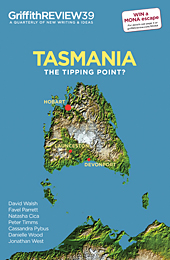
FOR MOST TASMANIANS a darker reality lies behind the seductive tourism brochures showcasing the state’s pristine wilderness, gourmet-magazine articles celebrating its burgeoning food culture, and newspaper stories gasping at a world-leading art museum. Tasmania ranks at the bottom among Australian states on virtually every dimension of economic, social, and cultural performance: highest unemployment, lowest incomes, languishing investment, lowest home prices, least educated, lowest literacy, most chronic disease, poorest longevity, most likely to smoke, greatest obesity, highest petty crime, worst domestic violence. It seems not to matter which measure is chosen, Tasmania will likely finish last.

Why Tasmania is such a long-term under-performer, and what might be done to improve it are important questions not only for Tasmanians, but also for the nation as a whole. In fact, it can be argued that what’s happening in Tasmania is not an exception but a microcosm for a major part of Australia; it is already typical of non-metropolitan regions and might represent more of Australia’s future. One advantage in Tasmania, however, is that because it is both a ‘region’ and a state, data and other information are available that allow us more clearly to see patterns that remain buried among bigger aggregates in other states, which elsewhere combine the big cities with non-urban regions into a comforting average.

Already a subscriber? Sign in here

If you are an educator or student wishing to access content for study purposes please contact us at griffithreview@griffith.edu.au

Share article

More from author

A new globalisation

EssayWHEN THE DEEPEST economic crisis of the past fifty years finally ends, a changed world will be left in its wake. Capitalism will still...

More from this edition

Across the Bass Strait

FictionMum was sitting by herself on a bench attached to the wall of the ship under a Perspex roof. We sat next to her holding on to the bottom of the bench. I told Mum that I had been sick and she wiped my forehead and cheek and said, 'I'm sorry. I'm so sorry,' and it looked like she was crying. She said it was just the sea spray and the cold. And it was cold. It was freezing and the wind cut into my back like I had no skin at all. I could hear the water crack against the ship, feel it hit then hear the spray shoot up. Only I couldn't see it. I couldn't see anything past the light cast out on the deck. Out there the world was raging in the blackness.

Censored conversations

MemoirA DOG runs up to my husband on a windswept beach on Sunday morning. Tess is a Jack Russell cross, caramel and white and...

Stay up to date with the latest, news, articles and special offers from Griffith Review.