
Featured in
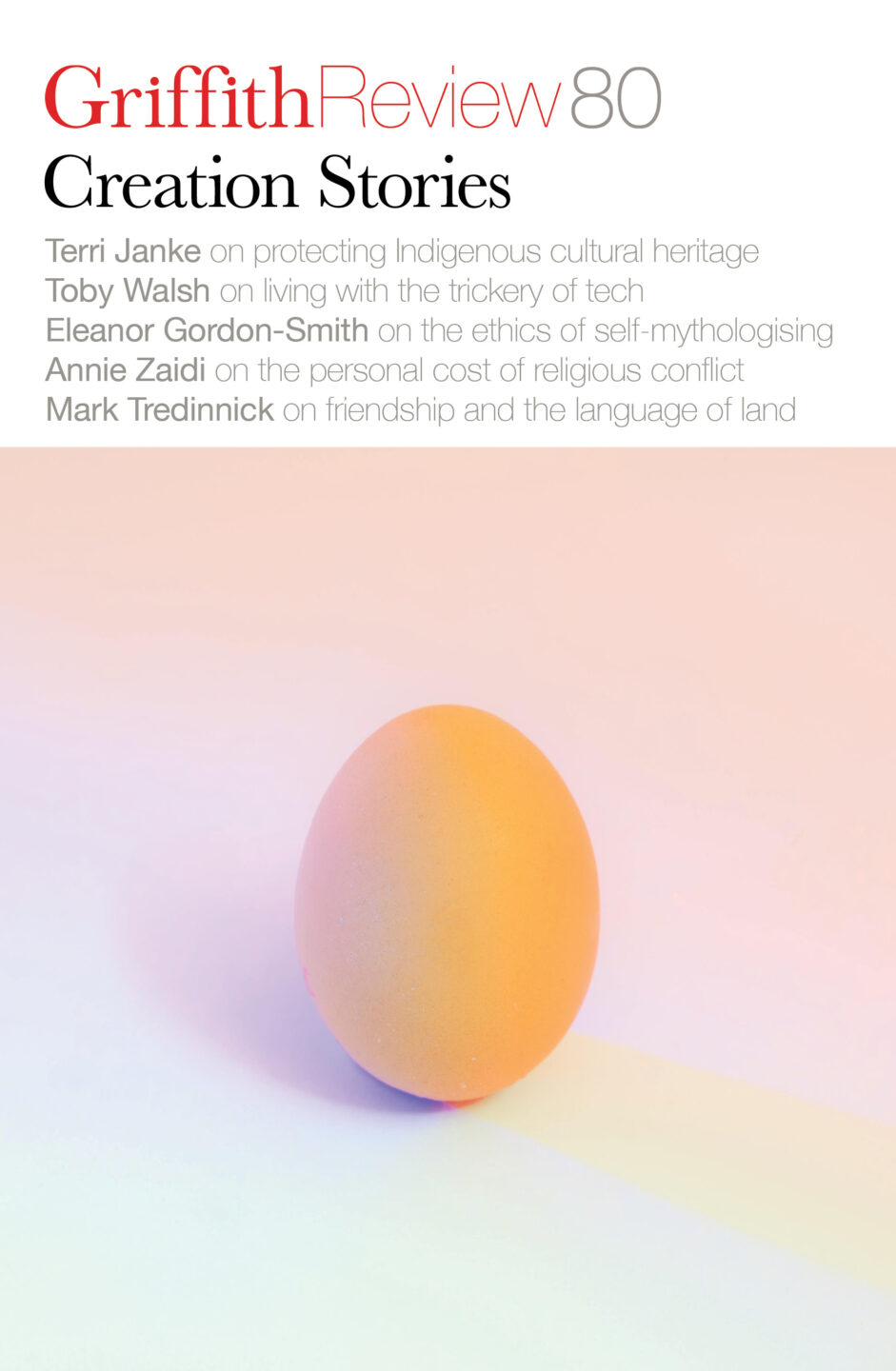
- Published 20230502
- ISBN: 978-1-922212-83-2
- Extent: 264pp
- Paperback (234 x 153mm), eBook

Already a subscriber? Sign in here
If you are an educator or student wishing to access content for study purposes please contact us at griffithreview@griffith.edu.au
Share article
About the author
George Cox
George Cox has lived and studied on the land of the Wurundjeri and Boonwurrung people of the Kulin nation since 2013. His poetry has...
More from this edition

Medea – towards the end
PoetryShe wanted to confuse the staff and brings in a pebble from the garden as suggested, placing it into the pocket of the man in the next room.
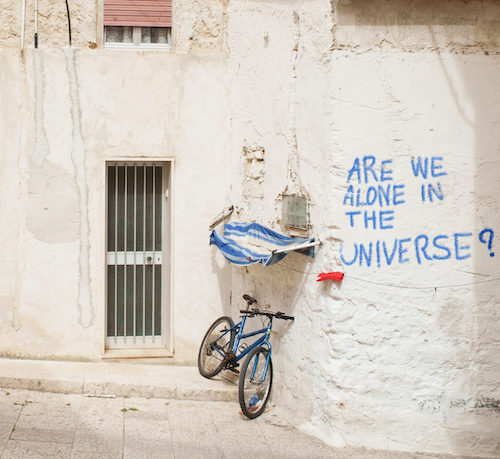
On the forging of identity
Non-fictionThe night Sartre spoke in Paris can be seen as a hinge in time, the moment when modernity and its focus on individual identity came to the fore after the destruction of the old order. We are still living on the far side of the door Sartre pointed us through. Of course, modernity had a thousand authors. It was the product of billions of lives lived in close proximity. But Sartre, to me, best articulated a modern creed of what it means to be human.
Antecedent
PoetryBetween one end of the gap and the other the gravity of our gaze can but scratch like banksias at your fingertips before starlight splits the present across his teeth into pearl and lime stanzas.
