
Featured in
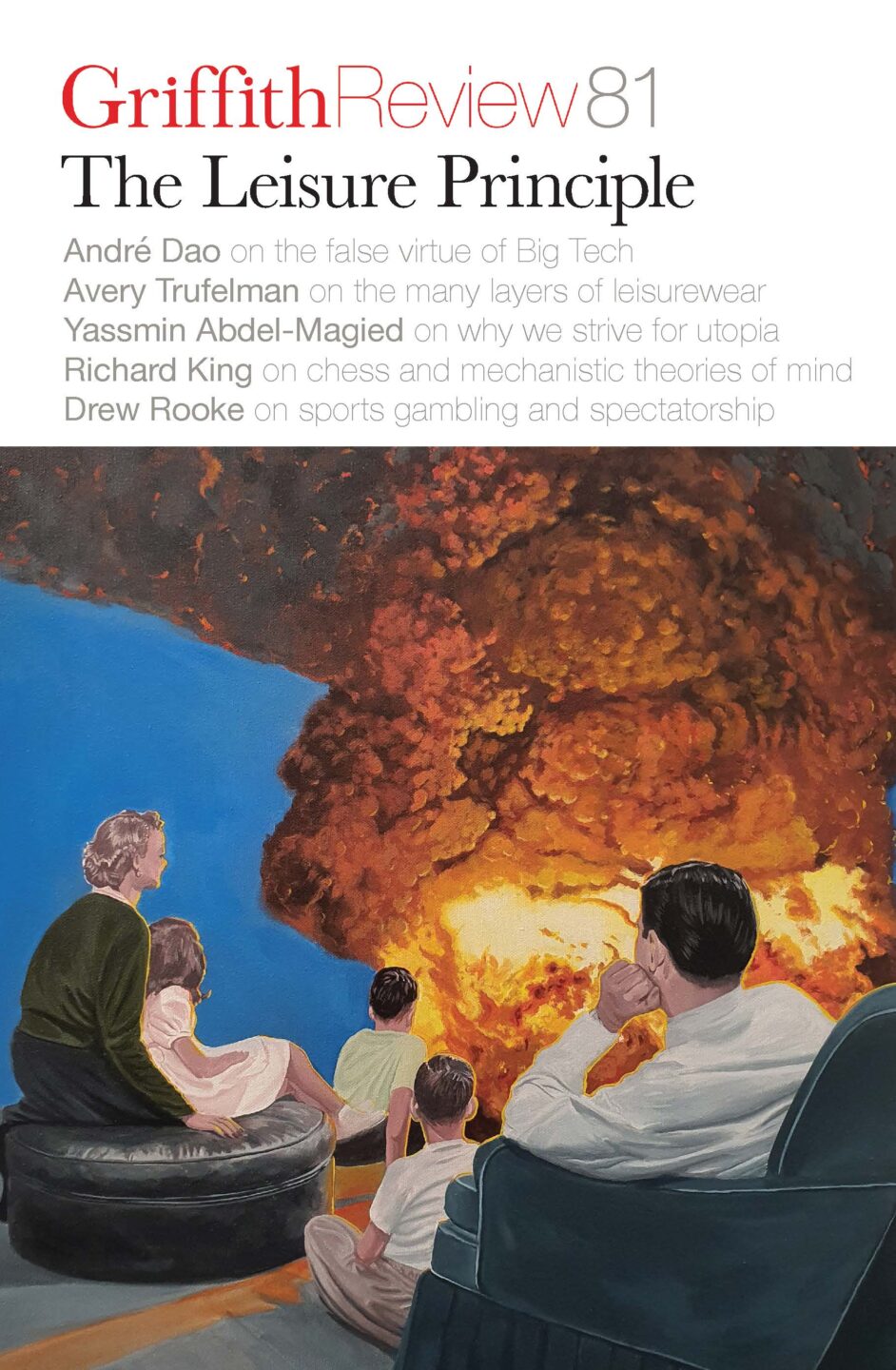
- Published 20230801
- ISBN: 978-1-922212-86-3
- Extent: 200pp
- Paperback (234 x 153mm), eBook


Already a subscriber? Sign in here
If you are an educator or student wishing to access content for study purposes please contact us at griffithreview@griffith.edu.au
Share article
About the author

Emilie Collyer
Emilie Collyer lives on unceded Wurundjeri Country. Her debut full-length poetry collection, Do you have anything less domestic? (Vagabond Press, 2022), won the inaugural...
More from this edition

The rise and decline of the shopping mall
FictionPerhaps it is instructive to consider how archaeologists of the future may conceive malls. How might they seem, these empty labyrinths – like rituals that had to be endured in order to receive goods and services? As great monoliths, colosseums constructed for our entertainment? As places of worship? Or perhaps malls will seem more like pyramids do to us: mysteries to be unravelled when the tracks of global trade and communication have faded...

The geography of respect
Non-fictionStarting in 2019, Parks Victoria closed or restricted access for climbers to much of Gariwerd-Grampians while it assessed cultural heritage and worked with Traditional Owners and conservation experts to develop the Greater Gariwerd Landscape Management Plan (GGLMP). These closures drew strong reactions from many climbers. They saw Parks Victoria’s actions as impinging on their rights, and its apparent focus on climbing as a risk to cultural heritage and environmental integrity as overblown.

History in Sid Meier’s Civilization VI
Poetry Because they spawn near each otherdiscover one another’s dog-scoutsSparta and Gandhi are contemporariesthe Eurotas river and the Gangesmuddying into the Indian Ocean, barbariantriremes appearing...
