

Welcome to GR Online, a series of short-form articles that take aim at the moving target of contemporary culture as it’s whisked along the guide rails of innovations in digital media, globalisation and late-stage capitalism.

Religion as resistance
In their youth, my parents participated in the anti-apartheid movement, attending meetings and outlawed protests. From birth their lives had been prescribed by the apartheid regime, from the suburbs they could live in to the beaches they could swim at to the benches they could sit on; there was little it saw fit to leave unregulated. Both of their families had been forcibly relocated from District Six when it had been reclassified as a whites-only area. They attended Coloured schools, where they were taught by both white and Coloured teachers. At one of these schools, my teenaged mother challenged a teacher for making a racist comment and subsequently chose to leave the school when they backed the teacher instead. My father’s father was a Shaykh, his uncle an eminent Islamic scholar known across both the Cape and wider South Africa.
Theirs was a small, tight-knit community in which everyone knew everyone else. They had in-jokes and made darkly humorous attempts to cope with the difficulties of life… They married exclusively within the community or sometimes to those classified as Asian; to have relationships with a white person would have contravened a piece of legislation called the Immorality Act. In many homes people gathered regularly, particularly on Thursday nights ahead of the holy day of Friday, to make dhikr, melodic remembrances of Allah. These Thursday night gatherings were known as gadats and were typically accompanied by a cardamom-spiced milk drink known as gadatmelk (translated literally as ‘gadat milk’). It is said that the melodies of gadats were born from slavery, disguising religious practice as mere singing to the ears of their masters.
Land, sea and sky
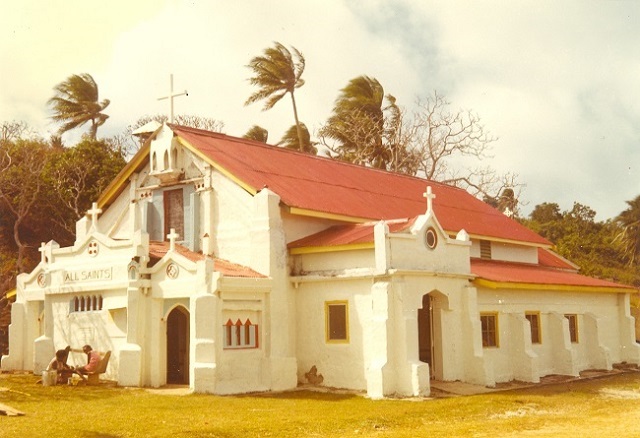
Foreigners who tried to anchor at Erub Island generally risked being beheaded. But Dabad told his warriors not to touch these men. ‘He’s telling them not to touch these people or he will have their head and no one wanted that so they just stopped there,’ says Pastor Gebadi. ‘Finally, the peace came about and they accepted the Bible and put their weapons aside.’
This was Zulai Wan, the Coming of the Light, or the coming of Christianity to the Torres Strait.
A cynic’s guide to unbelief
When I was a little girl, my parents would scold me with scripture. ‘Sita,’ my mother would say, ‘where there is love, nothing is too much trouble and there is always time,’ which was her way of telling me to stop whining. If my brother and I would fight, she would say: ‘So powerful is the light of unity, that it can illuminate the whole Earth,’ as though our altercation over the TV remote was the reason for ethnic tensions in Kosovo. My father was the same, always on about justice and mercy and truth. The Most Great Sin in our house was backbiting and gossip. ‘Thou shalt see with thine own eyes and not through the eyes of others,’ he would say, ‘and shalt know of thine own knowledge and not through the knowledge of thy neighbour.’ Needless to say, my breaking news – that Jessie Stevens told me Marjory Klimt was pregnant to Scotty Graft and her parents were making her drop out of school – was not welcome at our dinner table.
Feeling our way to utopia
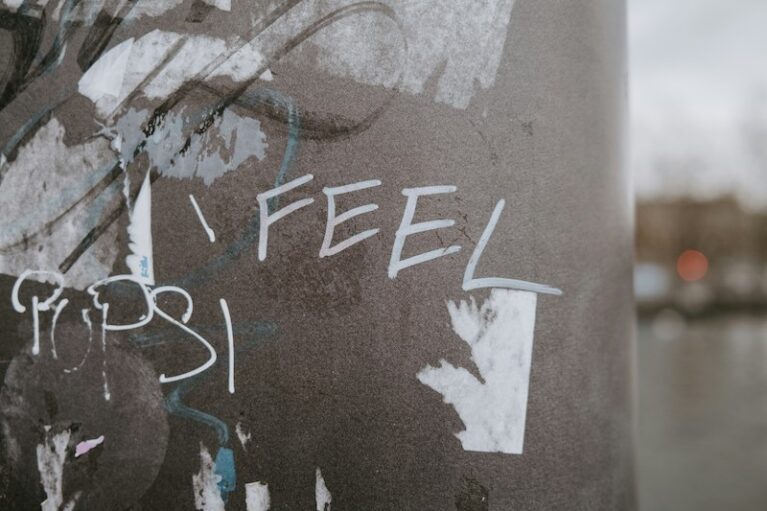
Today democracies around the world are being voted down by electorates looking for right-wing authoritarian leaders who will fire up their grievances, insecurities and disappointments – who will gladly target the ‘elites’ and enact something like the ‘general will’ instead of prosecuting the greater good.
But it’s not only right-wing extremists who have embraced the politics of feeling, sensibility and blame. Increasingly those who consider themselves left, progressive and tolerant spend a great deal of time assigning culpability to ‘the privileged’, a conveniently vague catch-all category, when they would be better off considering pragmatic class issues and promoting practical reforms that will work for the whole of society. When the sensibility-rich slogan of ‘who’s to blame?’ outguns ‘how do we fix this together?’, society is in big trouble.
I am reminded here of the moment in Saul Bellow’s novel Herzog when the eponymous hero, surveying the wreckage of twentieth-century dictatorships, remarks: ‘Sentiment and brutality, never one without the other, like fossils and oil.’
It’s certainly hard work finding leaders who are prepared to lead by sense and not sensibility these days. In fact a quivering alertness to sensibility is very much in the minds and hearts of the men and women who run Australia. Politicians, business leaders, vice-chancellors, political parties and publishers are all too eager not only to listen to the feelings of their most emotion-led constituents but also to appease and placate whoever complains loudest.
Gay saints
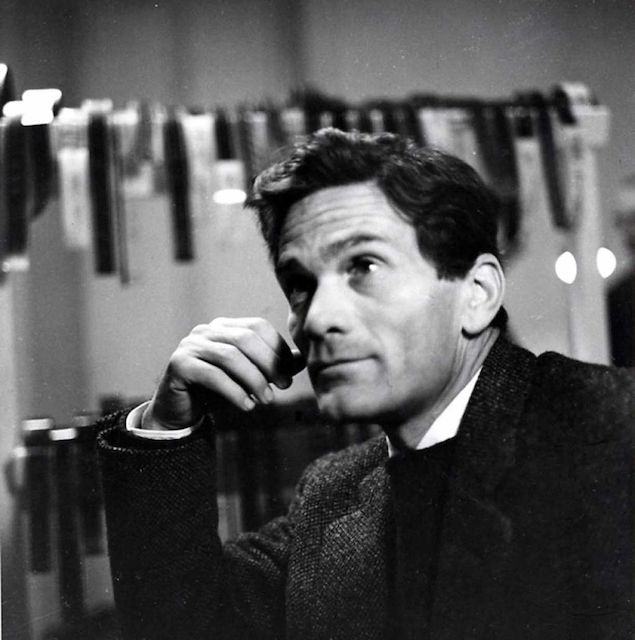
Frescoes are cinema avant la lettre, or at least the tech. Wall spanning, the Renaissance frescoes anticipate not only the magnitude and dynamism of cinema but the possibilities of the camera to manipulate the eye. For Pasolini, cinema is essentially oneiric; key narrative developments hinge on dreams, as in Accattone, not because they are shortcuts to the interiority that cinema otherwise denies but because films themselves are dreamwork, beholden to dream logic. In the written Gospel According to Matthew dreams are especially prominent, the otherwise gnomic character of Joseph receiving no fewer than four nocturnal communiques from God. To dream, then, is to be most open to communion with the supernatural, the sacred and the divine.
The streetwalking sequences in Pasolini’s second film, Mamma Roma (1962), typify both his understanding of films as dreams and his conflation of the sacred with the profane. Striding through an open-air brothel, Anna Magnani’s Mamma Roma is trailed by a procession of johns, imperiously indifferent to their presence as she soliloquises divergent scraps of autobiography. The transition from realism to dream logic is seamless – her separate accounts of her erstwhile marriage explicitly contradict one another, leaving the mystery of her son Ettore’s father unresolved.
Girls to the front
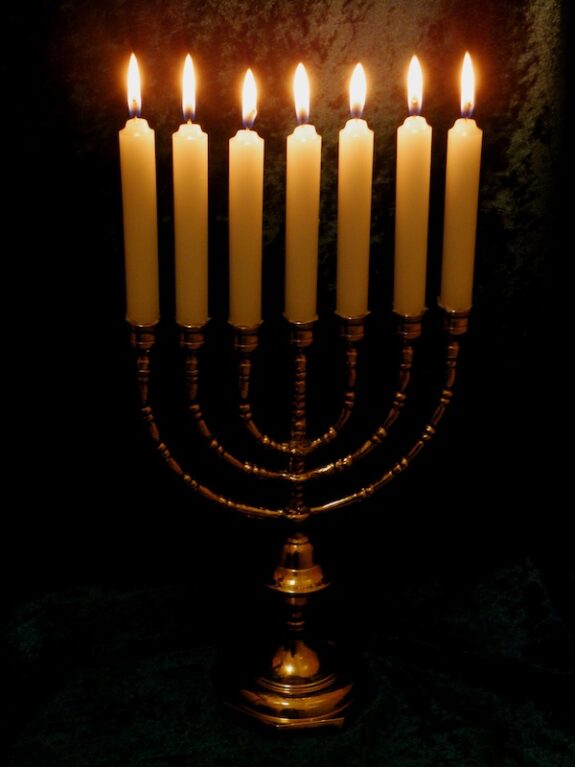
If there are no women in leadership in a synagogue, many of us don’t bother to come. Or if we do come, we know there’s no real point joining a board or committee – our opinions count for less. And this means that Orthodox Judaism risks losing a new generation of Orthodox women – women like me, who would never accept equivalent lack of opportunity and education in our professional and personal lives.
Mustard seed
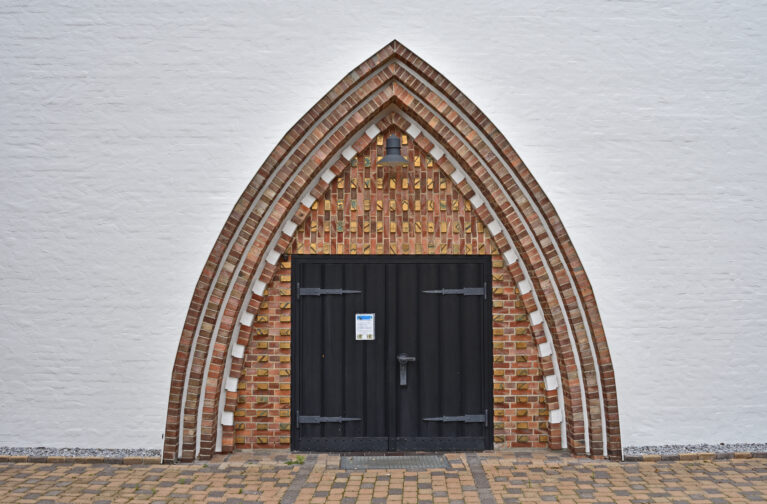
There are others like me, those who have, in faintly euphemistic terms, left the church, what we might otherwise call the spiritually unmoored, though we’ve invented specific words for them: lapsed – adjective, mildly noncommittal, perhaps only temporary; apostate – noun, sharper, less impassive. But whatever you call us, no matter the nomenclature, we’re now foreigners, I believe, in one place or another, still too much of this to be that, betrayed by something like a subtle accent, a vowel bent out of shape, if you watch or listen for it closely enough.
Dominion
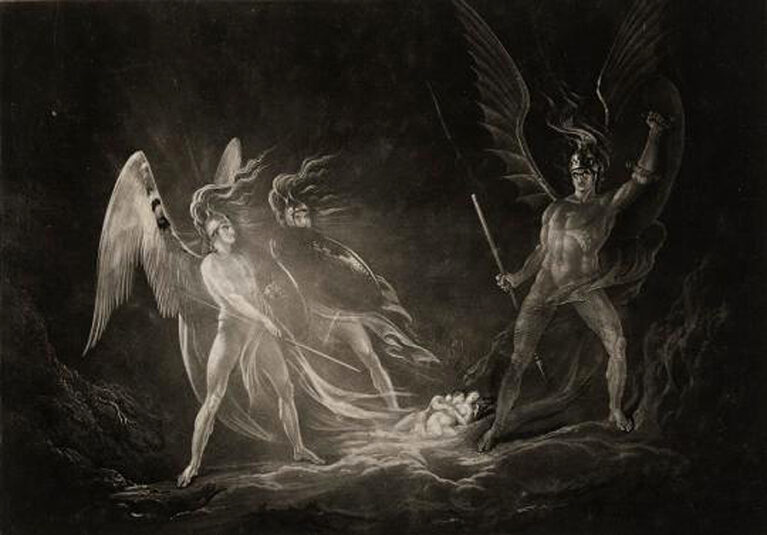
My disquiet over the influence of the religious right in Australian politics is entirely a product of my upbringing. My parents, for reasons of circumstance and naivety mostly, found themselves enmeshed in a religio-political group called Logos Foundation in the 1980s. Logos has the dubious honour of trying, but failing, to bring Christian reconstructionism into mainstream politics. The Foundation was ‘the political arm’ of the Covenant Evangelical Church (CEC) – ‘the spiritual arm’ that subsumed the Pentecostal church my parents attended on Sydney’s upper north shore.
Under a spell
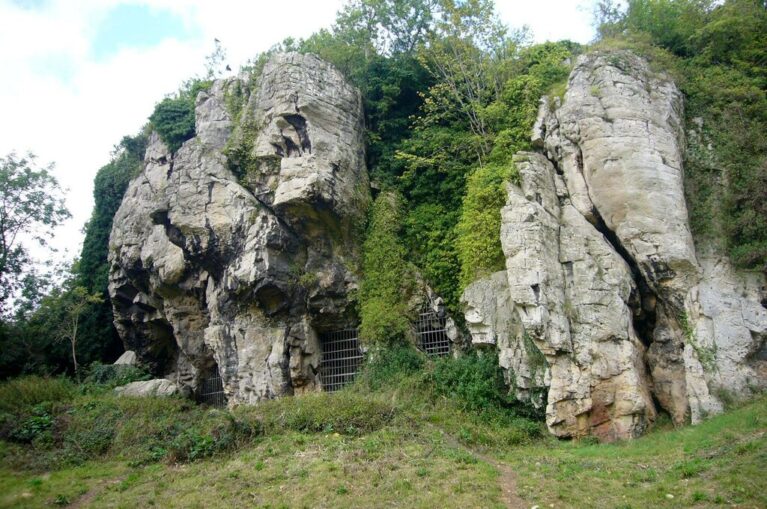
We’re in Creswell to see the anti-witch marks. Known more formally as apotropaic marks, they are shapes, symbols and letters carved into caverns and stables and homes and churches. It is widely accepted that they were believed to protect against not only witches but anything supernatural and nefarious. The marks date most often from the sixteenth to eighteenth centuries, coinciding with the height of the witch-hunts that saw thousands of people, mostly women, executed throughout Europe.
Apotropaic marks consist of curving lines known as daisy wheels and hexafoils. Their mechanism of protection works to trap demons in the stone by tricking them into following the lines, around and around, for eternity. Sometimes they are Marian symbols, made up of ‘M’ or ‘V’ or ‘A’, to invoke the Virgin Mary. Other apotropaic marks are even more basic. They can be in the form of a burn mark to prevent a fire taking hold. They can be found above the stall of a prized horse, in cellars, on lintels, mantels, doorways, windows.
Apotropaic marks are a sort of magic that lingers. Entwined so closely with domestic spaces, they are frequently overlooked.

Auburn Falls
Auburn Falls is important; it hums a harmony that resonates within your body. Being here today, feeling the vibration of the racing water up through the rock into my body, feels like a pilgrimage. My eyes track my five niblings and I wince. A whisper inside me: it should be six. Another first. First Christmas without Akel. First New Year. First time at Auburn Falls. Wait, did he ever get to see this place? His sick little body may not have made the walk. Surely someone carried him here just once? Or is it one more thing our baby will never get to do?

Five million years on the right side of history
Whether ‘Anthropocene’ is confirmed as the title of our present remains to be seen. And yet, while few agree on what defines our epoch, there is a general sense that it should be defined; that correct periodisation will help us fix the mess we’re in; that even if those with power aren’t listening to the scientists and the critics, someone else is.
Into the void
The singular achievement of mass politics was allowing otherwise powerless individuals a greater say in how society was ruled. It gave ordinary people the kind of status that hitherto they could hardly imagine. Its withering away, therefore, has allowed those in society whose status has always been higher to assert their interests more fully. Business and the wealthy are no longer forced to make big compromises to accommodate the interests of those below them in the social pecking order. For example, trade and financial liberalisation policies have permitted many companies to shift production, and even some services, offshore to capitalise on lower labour costs, weakening unions’ bargaining power considerably. Many lower paid workers have been pushed into insecure, low-paid jobs with poor conditions, a transformation justified by political and economic elites as contributing to greater economic ‘efficiency’ and labour market ‘flexibility’. Owners thus pocket a greater share of the economic pie, while workers’ incomes often stagnate or even decline in real terms, causing wealth inequality to rise steeply...
