
Featured in

- Published 20241105
- ISBN: 978-1-923213-01-2
- Extent: 196 pp
- Paperback, ebook, PDF
Already a subscriber? Sign in here
If you are an educator or student wishing to access content for study purposes please contact us at griffithreview@griffith.edu.au
Share article
More from author

Tokyo driftless
I attempt to read a Murakami book, The Wind-Up Bird Chronicle. I have only read Norwegian Wood because people who are into Murakami tend to be annoying. The book is about an unemployed househusband to whom strange things happen. I stop reading it. Since moving to Japan with my husband for his job, I have mostly read Australian fiction and Dickens. The most celebrated Japanese novels available in English tend to be about alienated people with mental health issues.
More from this edition
A cynic’s guide to unbelief
Non-fiction THE TITLE OF this article is misleading – because I don’t know anything. This is important to note in case you are here thinking you...
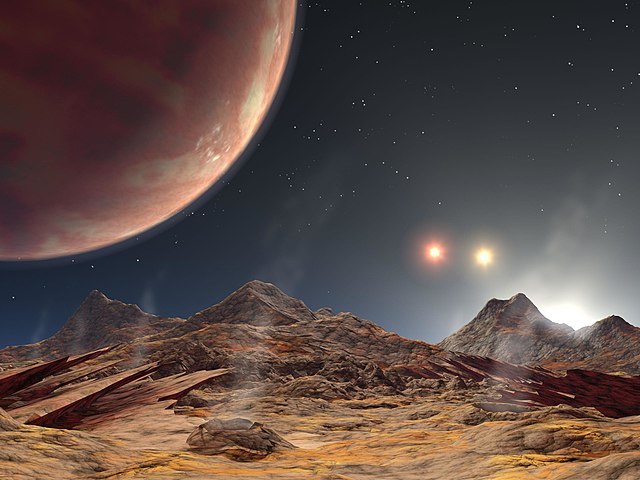
Staying faithful to Earth
Non-fictionIt is a startlingly new discovery that there are more planets than stars in our galaxy. Even if early astronomers (like Kepler) intuited that other suns must have planets, we didn’t have definitive proof until very recently that our solar system is not unique in consisting of planets orbiting a star. The first exoplanet was confirmed in 1992; the first exoplanet around a star similar to our sun was discovered in 1995. The latest count is over 5,000 and growing. Discoveries have stacked up so fast that astronomers and astrophysicists who used to know each individual exoplanet by name now say it’s impossible to keep track of those that exist in just one small part of the Milky Way, with thousands more expected to be found in the coming years.
Believe it or not
IntroductionCultural critic Chuck Klosterman reminds us that ‘any present-tense version of the world is unstable. What we currently consider to be true – both objectively and subjectively – is habitually provisional.’
