
Featured in
- Published 20220503
- ISBN: 978-1-922212-74-0
- Extent: 264pp
- Paperback (234 x 153mm), eBook
Already a subscriber? Sign in here
If you are an educator or student wishing to access content for study purposes please contact us at griffithreview@griffith.edu.au
Share article
More from author
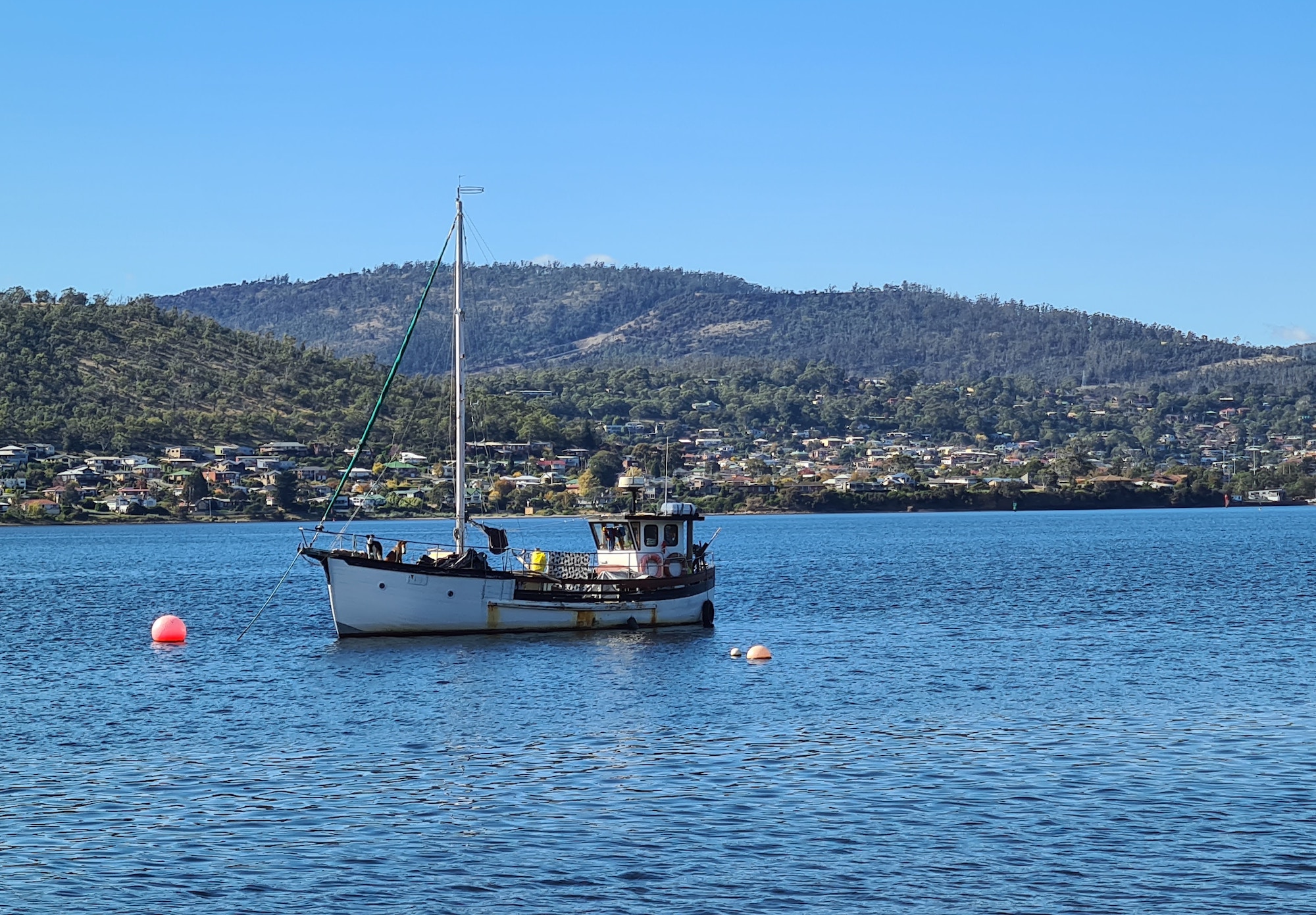
Across the Bass Strait
FictionMum was sitting by herself on a bench attached to the wall of the ship under a Perspex roof. We sat next to her holding on to the bottom of the bench. I told Mum that I had been sick and she wiped my forehead and cheek and said, 'I'm sorry. I'm so sorry,' and it looked like she was crying. She said it was just the sea spray and the cold. And it was cold. It was freezing and the wind cut into my back like I had no skin at all. I could hear the water crack against the ship, feel it hit then hear the spray shoot up. Only I couldn't see it. I couldn't see anything past the light cast out on the deck. Out there the world was raging in the blackness.
More from this edition

Leading down south
MemoirWe were using the Italian station as a jumping-off point to inspect some of the nearby stations – the German Gondwana Station and, for the first time, the Korean Jang Bogo Station, as well as China’s temporary station on the site of the proposed new Chinese station planned for Inexpressible Island in Terra Nova Bay. This is a truly remarkable part of Antarctica...

Among ancient moss forests
Essay IT WAS FEBRUARY 2022 when I started writing this essay, and I was returning from three weeks in Antarctica. As we flew back to...

Buried treasure
ReportageOver the entire 800,000-year record, atmospheric carbon dioxide has never peaked over 300 ppm. For all of human history, it sat around 275 ppm until about 200 years ago, when we began to dig up and burn coal to fuel the Industrial Age. In 1950, it punched through the 300-ppm historic ceiling. In mid-May, as the forests of the Northern Hemisphere dropped their leaves, the planet exhaled atmospheric carbon dioxide at a new daily record of 421 ppm.
