
Featured in

- Published 20241105
- ISBN: 978-1-923213-01-2
- Extent: 196 pp
- Paperback, ebook, PDF


Already a subscriber? Sign in here
If you are an educator or student wishing to access content for study purposes please contact us at griffithreview@griffith.edu.au
Share article
More from author
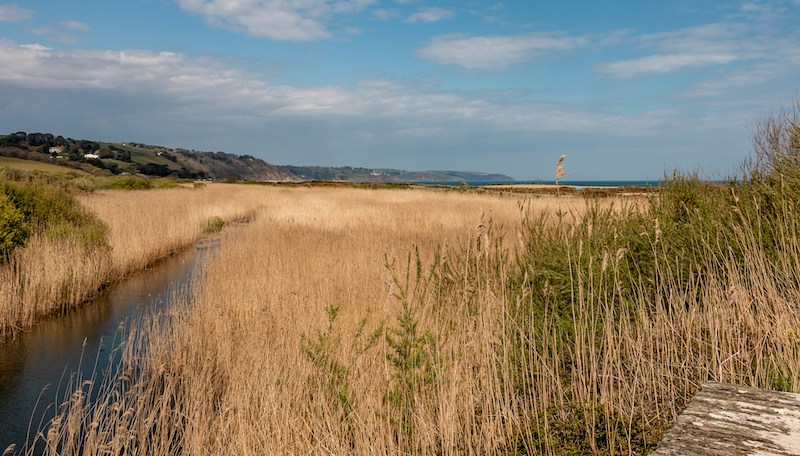
Slapton Sands
You’ll also find a Sherman tank overlooking the water. Stay with me.
Slapton Sands is not that easy to get to if you don’t have a car – the nearest railway station is Totnes, a three-hour train ride from London, and from there it’s a bus to Kingsbridge and another to the Sands. When you arrive, you’ll find that the beach is actually made of pebbles, but that’s not important right now.
You’ll also find a Sherman tank overlooking the water. Stay with me.
Slapton Sands is not that easy to get to if you don’t have a car – the nearest railway station is Totnes, a three-hour train ride from London, and from there it’s a bus to Kingsbridge and another to the Sands. When you arrive, you’ll find that the beach is actually made of pebbles, but that’s not important right now.
You’ll also find a Sherman tank overlooking the water. Stay with me.ON THE SOUTH coast of the United Kingdom, in the county of Devon, there’s a triangular sprawl of land that juts out into the English Channel. At its southern tip lies the wealthy sailing town of Salcombe, where a latte costs as much as it does in Shoreditch, and in peak season you’ll queue down the cobbled street for half an hour to get it. Approximately thirty miles up the coastline, there is one of Devon’s most deprived conurbations, Torquay, which sits at the heart of an area known without irony as ‘the English Riviera’. Halfway between the two is Slapton Sands.
Slapton Sands is not that easy to get to if you don’t have a car – the nearest railway station is Totnes, a three-hour train ride from London, and from there it’s a bus to Kingsbridge and another to the Sands. When you arrive, you’ll find that the beach is actually made of pebbles, but that’s not important right now.
You’ll also find a Sherman tank overlooking the water. Stay with me.
More from this edition
Dominion
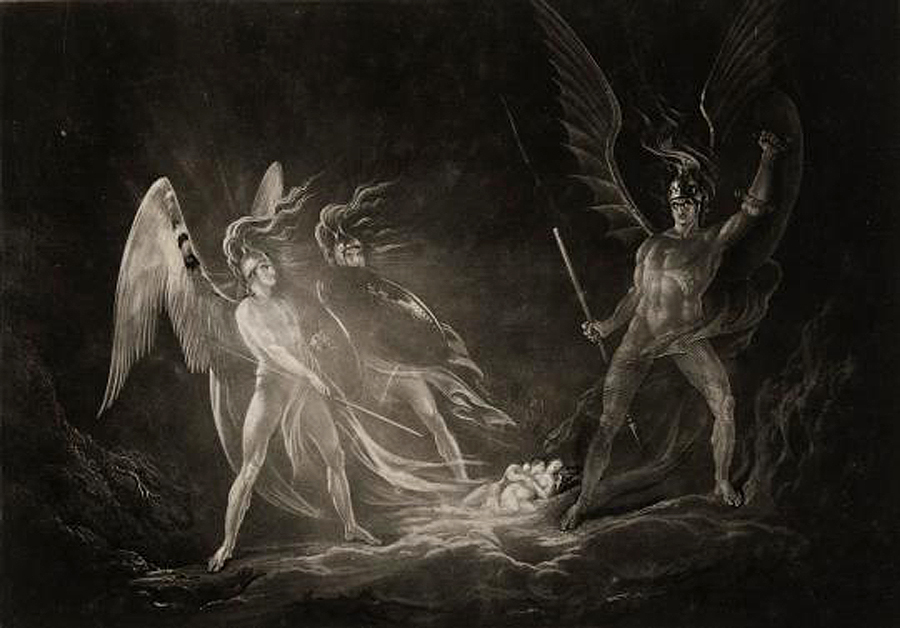
Non-fiction GILEAD MEMES, PLUCKED from the TV series The Handmaid’s Tale, have become a reactive go-to for expressing horror and disgust at the disintegration of...

Adventures in the apocalyptic style
Non-fictionIt's easy to laugh at preppers, dismissing their ideas in the process. It’s also easy to adopt the prepper worldview wholesale, and make fun of everyone else – all those sheeple – for not seeing what a mess we’re really in. It’s harder, but ultimately more productive, to see prepping as a complex, contradictory response to the multiple crises the world is facing. Prepping is more than just a freakshow, although it is that. And prepping is more than a useful instructional manual, although it is that, too. Neither wholly reasonable nor wholly ridiculous, prepping culture is a vivid and alarming reflection of a contemporary Anglophone culture that exists in a state of perma-crisis and can find only simple answers to wicked problems.
Staying faithful to Earth
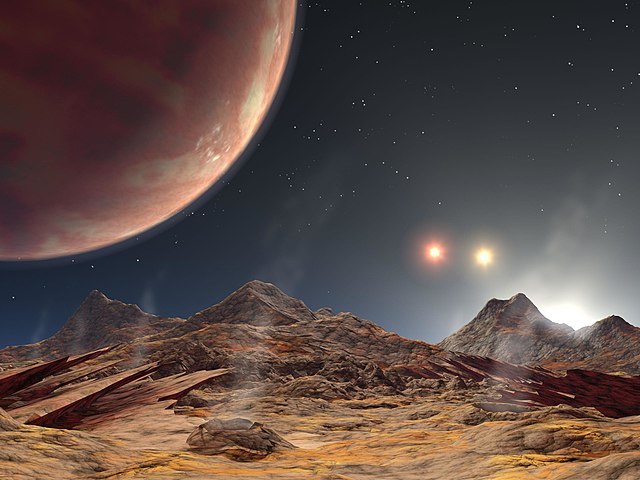
Non-fictionIt is a startlingly new discovery that there are more planets than stars in our galaxy. Even if early astronomers (like Kepler) intuited that other suns must have planets, we didn’t have definitive proof until very recently that our solar system is not unique in consisting of planets orbiting a star. The first exoplanet was confirmed in 1992; the first exoplanet around a star similar to our sun was discovered in 1995. The latest count is over 5,000 and growing. Discoveries have stacked up so fast that astronomers and astrophysicists who used to know each individual exoplanet by name now say it’s impossible to keep track of those that exist in just one small part of the Milky Way, with thousands more expected to be found in the coming years.
