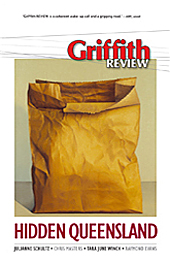
My Queensland – This is not for you

Featured in

  • Published 20080902
  • ISBN: 9780733322839
  • Extent: 296 pp
  • Paperback (234 x 153mm)

Recently a woman of my acquaintance, a woman who writes but is not, she insists, ‘a writer’, helped me to see something I could not recognise, though I have encountered it again and again since I came to Queensland. When I first fled north, I thought – perhaps naïvely – that in Queensland nothing was hidden. People’s bodies were always partly on display; their shady pasts – both personal and political – were worn with a certain kind of pumpkin-flavoured pride. Rakish, casual, be-thonged and benighted: here, everything was on display, everything could be bought and sold. It was a land of strip clubs and real estate, of glitz and glamour and shonk. It was the beginning of the ’90s: the age of grunge, when Queensland’s writers – led by literary lights such as Andrew McGahan and Matthew Condon – rolled the state’s great, white underbelly into the light and let it burn.

Perhaps I was stunned by the glare of that whalish belly. Prudishly southern, I thought there was nothing else to reveal, or at least nothing significant. But as any magician, writer or politician knows, the dramatic revelation of one secret is a flourish that can conceal a thousand others.

Already a subscriber? Sign in here

If you are an educator or student wishing to access content for study purposes please contact us at griffithreview@griffith.edu.au

Share article

About the author

Nike Bourke

Nike Bourke is a writer and writing mentor. Her publications include The Bone flute, The True Green of Hope and What The Sky Knows...

More from this edition

A never ending hoax

PoetryFor many years after the Second World War, even into the 1970s, there were rumours circulating in Brisbane about a writer who might have...

Not just good girls

EssayWomen in public life in Queensland experienced criticism and ridicule that was sharper and more personal than that directed to their male counterparts. They were often said to have abandoned their rightful roles as wives and mothers, were accused of being too noisy, too silent, too dumb, too much of a smarty pants. It was suggested that wealthy women had a ‘silver spoon', while the few working-class women who struggled into the ranks above were said to lack grace and class.

Stay up to date with the latest, news, articles and special offers from Griffith Review.