
Featured in

- Published 20250506
- ISBN: 978-1-923213-07-4
- Extent: 196 pp
- Paperback, ebook, PDF
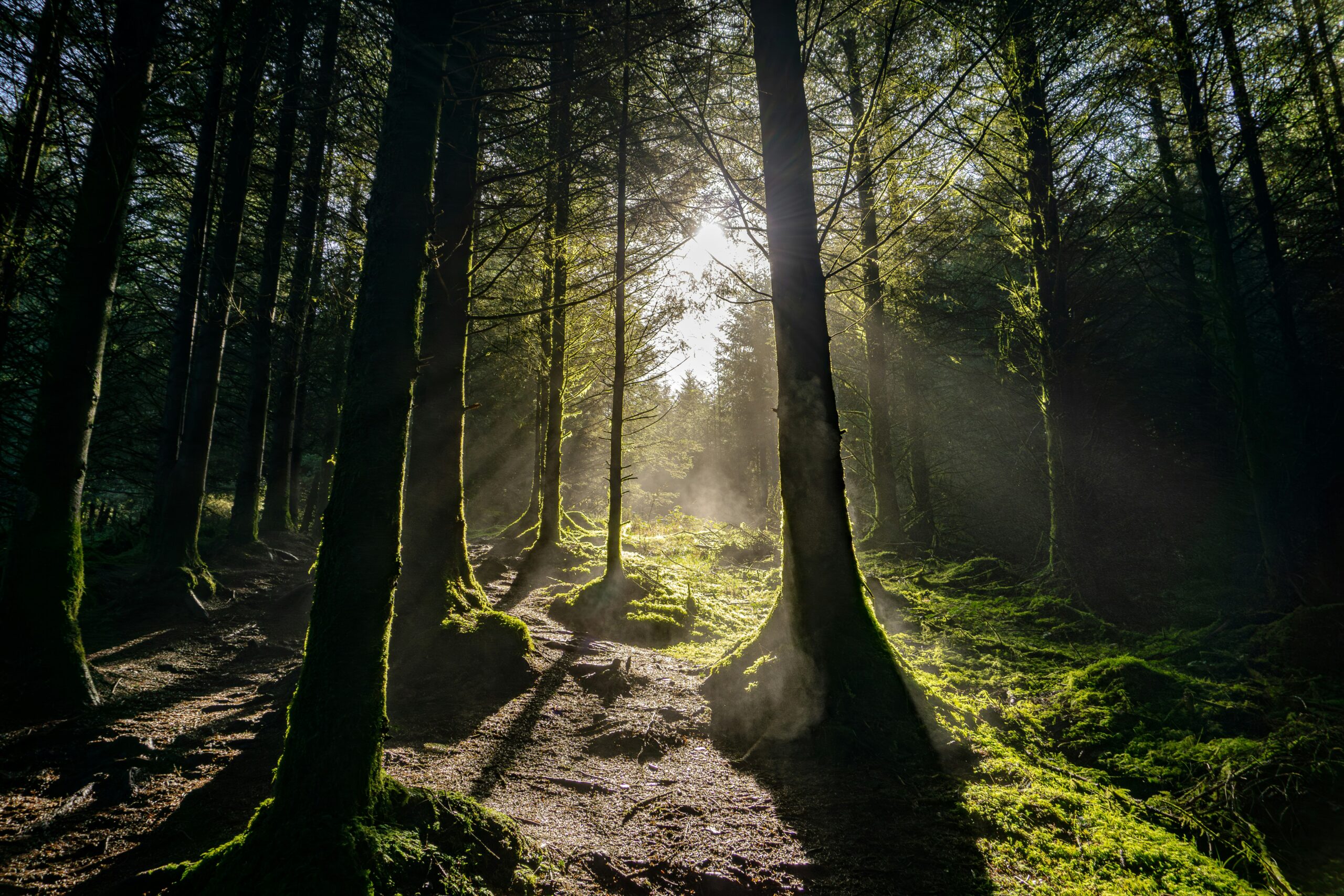
I WAS IN Brisbane to launch my first novel. I had wandered about all afternoon, neglecting my preparation for the night’s event at Avid Reader bookshop. I was walking up Grey Street in the shade, hiding from the notes in my journal, when I stopped outside the museum. There: a T-Rex, mottled green, ten metres tall, looming over the glass barrier and the sago palms. A little boy climbed up her legs, pounding her plastic thighs with his tiny hands. I took a photo of the dinosaur because it made me smile.
I ignored the messages on my phone, those acerbic responses from my friends to a new review of my novel. Someone at Meanjin had panned the book and its ‘literary’ author. I worried everyone at Avid Reader would have seen the review before hearing me speak. I feared that I had finally been found out. The critique had saturated my thoughts, making my novel feel tired and limp; on the day of my launch, all I wanted was to forget about myself and my ‘flimsy’ book.
I saved the photo of the dinosaur, put my phone away and wandered into the Queensland Art Gallery. I found myself alone in the first room with Shigeo Toya’s Woods III. There: a copse of wooden pillars, thirty of them, evenly aligned in five rows. Each pillar was nearly equal height, a foot taller than me, intimidating, as if staring me down. Each tip was unruly and striking, whittled and carved, like gnarly carbuncles had grown out of the wood, but each base was as square and as solid as the last. Together, the pillars were both uniform and distinct; they were prehistoric and contemporary.
I stepped into the copse. The shadows of the pillars slipped over my shoulders like branches in a breeze. I had stepped onto another planet, treading through these alien faunae, eyes widening with naive pride as if I were the first to find these wonders. As I walked through the copse, the view between the pillars began to contract, merging with each of my steps, aligning and realigning, twisting whatever sense I could make of them. I stroked the closest splintery tip; my hand withdrew, trembling, from the hard warped wood to my soft smooth cheek. The verticality of the sculptures mirrored my own. I inhaled. The spaces between my vertebrae opened. I mirrored the height and reach of the sculptures. I found myself ascending. I even tiptoed. The art had activated something in me; my eyes had been opened by these thirty gorgeous phalli.
High in the corner of the room, a large convex mirror showed the back of the copse. It was the same mirror they’d hang at the bend of a bike track, to show if other cyclists were coming around the corner. But who was coming? Ah! Here were only more unmoving pillars. Woods III left the sensations of stillness and of approach. I experienced the work as a kind of encounter. I recalled a line I had long since buried: Today, I met some trees.
TEN MONTHS EARLIER, I had lived in the hills of Killea. I had wanted to write about horses, so I had flown into Dublin, taken a bus for two hours across Tipperary County, and lived for seven weeks with Lynn Kirkham.
She was rail-thin, almost sixty, with long knotted dreadlocks and a demonic sense of humour. To me, she was the love child of Philomena Cunk and Captain Jack Sparrow. To her, with my full beard and dark eyes, I was ‘another shivering Syrian refugee’. She was an artist, a witch, a hippie and a host to 300 volunteers across thirty years who had come to fill the summer before university, or who wanted to learn English, or who, like me, were doomed in some way.
‘I just light my candle,’ she said at our first dinner, leaning into the burning wick of a taper, her skin stretching over her skull, ‘and see who wanders in out of the dark.’
She lived alone with five horses, five dogs, three cats, three geese and two ducks. She had escaped Manchester under Thatcher, gone off the grid in Tipperary and never returned. She said mass suicide was the only answer to climate catastrophe. She was the most interesting person I had ever met.
Before dawn, I would write. By daybreak, I would find a pair of wellies and then muck out the stables, wheeling huge barrows of horseshit across her yard to a pile the size of a fire truck. There was little time to rest. The stove needed to be fed, constantly, with bricks of peat to keep the house warm. The horses needed to be given hay five times a day. The geese needed guarding from the foxes. I learnt to care for animals, to give them my attention. Some days, we would cut willow from the trees on a farmer’s property, rolling it in bundles to use for Lynn’s sculptures, sneaking through the flooded fields as the clouds devoured the hills above us. At night, I slept. On the weekends, I walked home from the village, guided by starlight, sweating under my enormous yellow raincoat, and made some calls. When I relayed my new life to a friend at an arts residency, he sat up in his studio and said, ‘It sounds like you’re really living. Fuck. You’re really, truly alive.’
And panting at the top of that hill, my calves stinging from the climb, my shoulders aching beneath a backpack stuffed with the week’s yoghurt and bread, I felt my mind empty. It was simple. To be alive meant having a stove burning at home, a hot-water bottle under my blanket, a new notebook at my desk. That was all. No need for all the analysis and self-doubt. But if I had come all this way to learn how to live, what kind of death would be waiting when I left?
I told Lynn that I had written my first novel while working a corporate tech job on Wall Street, that I would write in the morning and get paid to play Mario Kart in an office all day, and she said, ‘Oh, you poor, poor lad,’ as if I had contracted a common venereal disease. She insisted that every euro she had ever made, she made with her hands – and what hands: thin and gnarly, streaked with black paint from her ironwork, nails as hard as talons, veins slithering up her fingers, lines of dirt buried like sediment in the rivers of all her ancient wrinkles. She was commissioned to sculpt intricate willow animals for roundabouts and parks. She stole scrap metal and welded it into expensive ornaments the size of car doors. She had taught herself the tin whistle and played in pubs throughout the counties. Though her shelves were filled with books, she owned not a single word of theory; she had no need for explanations or academia, living only to create. In her twenties, she had chosen to live entirely off her art and was honouring this uncompromising ideal for the rest of her life.
SHE NEVER HID her poverty. When we first met, she drove me through the hills in her dirty green van, its busted doors held together by pink strings she saved from the hay bales. The thresholds in her house were bordered by tea towels to stop the cold. The black mould in my bedroom had been hidden behind the wall heater. She turned the roofless cowshed into a bathroom, bathing in the frigid January wind. She owned another house, bought years before with an ex, who refused to move out or pay a single euro for the mortgage. The bank sent her notices, but she dropped them on the stove.
I would worry for Lynn. Her dark moods could last for days. I heard her howling in her study. Sometimes, after mucking out the stables and feeding the horses, I would come into the kitchen for breakfast and note the heavy silence, wondering if, in the night, she’d finally had enough and slit her wrists. Or maybe some hidden illness had finally done her in; she was the sort of woman who would hide her cancer until the very end.
One day, halfway through my stay, she returned to the house after teaching a weaving class and said, ‘Alright, lad, I’ve got some good news.’ A wealthy collector had heard about her work; he loved horses and could pay a fortune for her sculptures. I told her, ecstatically, that I would do all of tomorrow’s chores, that she should get ready for her big meeting without worrying about the house. She ran a bath. The next morning, she rumbled through the hills in her run-down van, on her way to aristocracy.
I had learnt, from the journey of my first novel, that it took only the endorsement of one powerful person to bring the unruly into the world. As I squelched through Lynn’s muddy fields, watching the horses at play, I thought of her on the artist’s way.
She returned after dark. ‘Today,’ she said, ‘I met some trees.’ She had a great smile on her face. I lit the candle and served her some pasta. ‘Alright, lad,’ she said. ‘Let me tell you, he was really quite the toff.’ She told me he was bombastic, air-headed, the kind of man who was always explaining how to live. She had followed him around his estate, letting him lecture her about the art he acquired, the taste he had developed, the gallerists he knew. ‘He was so dull,’ she said. Abandoning the meeting, she had left this aristocrat in his kitchen to walk by the field and the ornamental pond. ‘I wandered along,’ she said, her face glowing like a ten-year-old riding a horse for the first time, not a sixty-year-old with her home and body falling apart, ‘and I turned the corner and I met some trees.’
As she described the oaks and willows, I left the table and dumped my plate in the sink. I was furious. For all her freedom, she was really a child. For all her complaints against her ex, and the illnesses of society, and the banality of art culture, she was her own worst enemy. Alright, lad. I went to bed and left her humming in the dark.
TODAY, I MET some trees. I turned from Woods III and found the wall text by the door. The panel listed the materials – lumber, ash, synthetic polymer paint – and the 1994 purchase by the Myer Foundation. But dominating the wall, extending further than anything on the panel, were the interpretations: ‘What is left of a civilisation in the wake of a disaster’; ‘the archaeological sensibility of excavation’; ‘themes as they relate to creativity, time and the natural and constructed world’. I huffed, then turned back to the copse, which was looming in the gloom over my shoulder. Woods III was arresting yet calming, a licence to wonder and awe. What use was this clean text, and its wordy explanations, beside these inexplicable sculptures?
In apophatic theology, we can speak of God only in terms of what cannot be said; we must go via negativa. To Maimonides, to speak of transcendence is to speak until language fails. Woods III, material yet unknowable, this invitation to transcend, could only be spoken via negativa. What use would Toya have for some academic explanation?
It was past four. I had two hours until the book launch. I should have been preparing, memorising the notes in my journal, finding some way to contrast the unsettling horizon of Melbourne with the enchanting hills of West End. Maybe I could quote one of Malouf’s essays on Brisbane. Maybe I could point to Browns Plains and Greenbank on a map of the outer suburbs. Instead, I found the photo of the dinosaur, saw her impossible hulking figure, and sent it to some friends.
I WALKED PAST the State Library and into the Queensland Gallery of Modern Art. On the second floor, I turned towards a video installation and met not the art, but the wall text. The panel was huge, unseemly, like a garage door at the front of a garish Mirvac house. The text described the installation as a way to ‘examine the social and structural hierarchies and categories’. Behind the panel, a series of projections showed CCTV footage from a skyscraper in Mumbai, produced by the CAMP Studio. Having understood Bombay Tilts Down, I turned to the videos, glanced at the scenes of blue tarpaulin and monsoon rain, and moved on.
Because of the wall text, I understood the art; because I understood the art, I had no reason to linger. I was in control. Each work was framed by the text, packaged by the interpretation.
Art historian Tony Bennett describes the influence of art museums across the past 200 years. ‘Ideally,’ he writes, ‘they sought…to allow the people to know and thence to regulate themselves, to become, in seeing themselves from the side of power, both the subjects and objects of knowledge, knowing power and what power knows, and knowing themselves as (ideally) known by power, interiorising its gaze as a principle of self-surveillance and, hence, self-regulation.’ The same control I felt in seeing these CAMP Studio installations I use on myself; this controlled movement only makes me more controllable.
BY THE FINAL fortnight, life in Killea had lost its charm. The days were exhausting. The sun never shone. I slept through dawn, avoiding my writing desk. I tired of the ammonia stink from the pissy stables. There was dirt in everything – in my underwear, in my food, even in my books. I hated finding slugs in the cats’ bowls, ducks in the bathtub, the barrows tipped in the mud by the horses. ‘You’re only so tired,’ said Lynn, ‘because you’ve lived your whole life inside.’
Her presence was unrelenting. Her contempt towards men, vaccines, windfarms and bottled herbs had lost all substance. In every busted fence post, in every pile of rusted metal, I saw her dour soul. I saw the consequences of her total freedom. I ate dinner as quickly as possible. I rode out to the village and spent the days in Templemore Town Park, reading in An Teampoll Mór with my back on the gravestones until it was time to go home.
In my last week, she took me sightseeing. ‘I know you’ve always wanted to see the real Ireland,’ she said. As we drove through Mountshannon and around Lough Derg, I imagined the day when the bank would come for her in Killea. I pictured the property developers who would follow, smoothing that hillside into a pristine garden, installing water heaters, raising internet towers to beam 5G into every renovated room. They could host weddings, corporate retreats, offsites for tech companies. One day, the new owner, giving a tour to a bridal party, would point at the cow shed and rue those farmers of yesteryear. He would mock those skint fools who imprisoned their cattle in a roofless shed all through the winter.
Lynn stopped at Cnocán an Chraoi woods to break up the drive. There were beech trees, hazelnuts and sparrowhawks. But as we fumbled open the busted door of the van, I saw only the future: the arrival of the contemporary world, the onset of Lynn’s extinction. Back in Killea, when she offered to cook some venison, I lied and said I was too tired for dinner. I lay in bed checking my flights to Heathrow. I wanted to be in London. I wanted to go to the cinema.
‘Of course she’s into conspiracy theories,’ I explained to my friends. ‘When you leave society so young, and subject yourself to poverty for thirty years, you have to convince yourself of how rotten the system has gotten.’ Another interpretation: ‘It’s easier to blame the dairy farms and the Ukrainians than to accept you can’t handle your money.’ And: ‘She says she doesn’t want her work in a gallery, but I doubt her work is good enough for that anyway.’
On our last morning together, Lynn drove me to the train station. She parked in the sun to warm the van. She thanked me for staying through the worst of the winter, congratulated me on my forthcoming novel, asked if I would please stay in touch. ‘Of course,’ I said. Then she hugged me and I felt every bone beneath her coat. ‘I get nervous about missing trains,’ I lied, one last time, before disentangling myself from her and waiting in the empty station.
I REALLY HAD to get ready for my launch.
Sitting by the gallery escalator, I opened my notebook and found the quotes from Castro (‘I worry about going down; I worry about going under’) and Larkin (‘Beneath it all, desire of oblivion runs’). Some lines later, I had written: ‘My novel is my attempt to go under (Australia?) and to love this oblivion.’
I turned to the front of the book and found the earliest notes from my time with Lynn. ‘From the hills of Killea,’ I had written. Then followed, after my departure to England, a quote from the apocryphal Gospel of Thomas: ‘Whoever searches must continue to search until they find. When they find, they will be disturbed; and being disturbed, they will marvel, and will reign over All.’
I remembered how, after escaping Killea, I had shaved, showered and finally made it to London. I had walked across the Thames and seen Othello at the Globe. I had wandered into Tate Modern, astonished at the scale and audacity of the Turbine Hall, and met an enormous blue and black sheet. There: ten storeys high, undulating in the breeze, swaying languidly to its own hidden rhythm, it looked like folds of skin, like the salvaged scales of a sea monster. As I neared The Wall, I saw it had been made of tiny fragments, no bigger than a thumbnail, each a liquor bottle top, stitched together one by one with metal rings. Standing at the base, I had craned my neck to behold the whole – those thousands of little pieces El Anatsui had used for his one great art. I was disturbed. I did marvel.
I remembered all the children sprawled beside me on the floor of the Turbine Hall. One boy had his hands in his mouth as he stared at The Wall. A girl rolled over, peering at the sheet from upside down. And I remembered the adults, standing in one line across the hall, reading the didactic text with great care and focus, clutching their tote bags, notebooks and audio guides. There they were, digesting this interpretation; their digestion was almost audible.
‘The majority of people,’ Lynn would say, ‘don’t know how bloody daft they are. All this beauty, around us all the time, and they can’t see a thing.’
I CLOSED MY notebook. Her words had echoed around the world, meeting me here in Brisbane. I peered up the clean silver teeth of the escalator. I felt dismayed. What has happened, in all these years of civility, that we’ve lost our means to see? These ever-growing wall texts, in so many chic galleries around the world, only affirm our training, reinforcing the MFA and PhD, every sanitising statement of purpose. No doubt we digest the text to seem intelligent, but with such an intelligence comes a kind of manners, a ‘self-regulation’, to borrow from Bennett, a stiffness born of our controlled gaze.
For so long I had been trying to perfect a reading of my work – and for whom? I saw myself walking into an enormous machine, a processor that funnelled to the galleries and bookstores, the panels and radio shows, the same slick machine I had spent my life admiring, that we have all been taught to regard so seriously.
Really, making art should remind us that we are more than our intellect, that we are more than our thoughts. Creativity should corrupt our productive morality, our righteous claims to knowledge. We need to remember how much awaits outside our understanding. And so we need pure artists, their obsessions, their liveliness, their total debauchery. We need real beauty. We need milk that tastes like real milk. But, like every child forced to grow up, we nurse on this meek strain of self-seriousness, and our art becomes this too.
I LEFT THE walls of text and stepped outside the gallery. Squinting before the scooters and the skyscrapers, I found myself rehearsing my anecdotes and introspections – my novel’s origin story of impermanence, the written word as an archive to what’s lost, the use of a polyphonic novel to achieve some semblance of a collective consciousness. I found myself hoping to be intelligent, thoughtful, insightful. I had to be careful not to badmouth Melbourne, lest the bookstore audience, like the Meanjin critic, sniff me out as a bullshit Australian.
And I knew I would become my own fucking wall text. I was good at it. I could become my own curator. For the first time in many months, I missed Lynn. Of course. I needed her to laugh at me, to roll her eyes at my toffishness, to remind me to be playful and irreverent. The weight of my longing, so heavy it seemed immovable, turned into a kind of mourning.
I remembered our trip across Ireland and our stop at the Cnocán an Chraoi woods. Lynn had parked the van, released the dogs and stepped off the trail and into the ferns to find a place to piss. Solemn, aching silence. Then everyone relieved themselves, seven bladders emptying at once. ‘That’s good craic,’ said Lynn. She skipped back to the trail and her dogs ran circles around her boots, growling and fighting, twenty paws churning the dirt into brown clouds beneath the beeches. Her shadow fell on those clouds, shimmering and expanding, and her soul leaked into the world. She danced along, singing some Irish ditty, and hauled the stacks of bound willow deeper into the van to make more space for the dogs. There: the purest artist I have ever met.
As I exhumed these buried memories, these sweet scenes from the road to Killea, a water dragon appeared on the lawn. Perhaps he had always been there and I had only just discovered him. The lizard stood on his hind legs, basking in the grass, eyes twitching. He was only the size of my shoe. The sun lit up every one of his scales.
I was glad to have met this water dragon, who had no interest in me, turned as he was in the direction of Grey Street, and the State Library, and further south to the hulking dinosaur whose green scales were lit, surely, by the same setting sun. Two dinosaurs in one day. In the mind of a child, this little lizard heard the old dinosaur’s roar and longed for her power, her freedom, her outsized life. He longed to retrieve her from extinction.
But the day was over. I found a Lime scooter, fastened my helmet and loaded the directions to the bookstore in West End. I ought to smile tonight. I ought to be presentable. The lizard scurried away, fleeing across the lawn and into the wind, one distant wind that beckons but a few of us, alive and free, the dirty and the doomed.
Image credit: Eva Darron via Unsplash
Share article
More from author
Encircling the flames
I was seventeen. I didn’t own a passport. I’d never been on a plane. The extent of my ‘cultural exchange’ was one Toorak party where, reciting Hamlet’s first soliloquy, I tried to woo the private schoolgirls before they realised ‘this too too solid flesh’ belonged out near Dandenong.
After leaving high school, my friends and I started tutoring the kids in the years below us and advertising our classes on Facebook. It was a cash job, quick but consistent, and we mucked around all holidays in the state library. In January, I was shortlisted for an interview with Yale-NUS.
Ten minutes before the Skype call, I looked up the college on Wikipedia. It had already admitted national athletes, professional actors and entrepreneurs. In the interview, I said I’d started a tutoring company, that my co-founders and I wanted to make tuition accessible to public school students, that building something new was incredibly rewarding. ‘Just like,’ I said, ‘how rewarding it will be to build the Yale-NUS community.’
To this day, I’m unnerved by how well I sold myself. But to the admissions team of a start-up college, selling was as natural, and as satisfying, as taking a shit.
More from this edition

Very online feelings
Non-fictionIn 2013, the Oxford English Dictionary declared ‘selfie’ its word of the year, and Twitter later declared 2014 ‘the year of the selfie’ after the term was mentioned more than ninety-two million times on the platform – a twelve-fold increase from the previous year. It was in this context that influencer selfies provided templates and scripts to spur more consumption and more desire, taking commodification of the body and the self to the next level. For instance, influencers popularised a whole ‘science’ around how to craft the most desirable faces through cosmetics and surgery, how to perform authenticity through ‘casual selfies’ that felt extra sincere but that also required extra behind-the-scenes effort, and how to assuage tensions arising from accusations of excessive plastic surgery and ‘fakery’. Selfies were reclaimed, transformed by their creators from expressions of mere vanity to useful tools of subversive frivolity. Influencer couples also sold us benchmarks of romantic perfection through carefully orchestrated couple photographs, love declarations on social media and ‘rules’ about how to be the perfect partner.
When the ships become water nymphs
Poetry Swans that are almost swans, sharp-tongued fruits, mocking sheep farmers whose faces grow woollen, dancers at the bush-doof manic to their portable generators – changes come swift...
A half-century of hatchet jobs
Non-fictionAuthors and publishers worry that bad reviews kill sales. I’ve seen no evidence that this is the case, but plenty that bad reviews distress and demoralise their subjects. Many people who care about literature endow criticism, and especially negative reviews, with magical powers. They hold dear the fantasy that if critics did a better job, if they were braver soldiers, the profound structural problems that bedevil Australian literature – books rushed to press, low pay, policy indifference, plummeting reading rates, crisis in higher education, not to mention the racism and the classism – might somehow disappear. A cracking review ennobles its subject with attention and consideration, but I’ve never seen one earn an author a higher advance on their next book or buy them more time for revision, let alone shift the federal arts budget.
