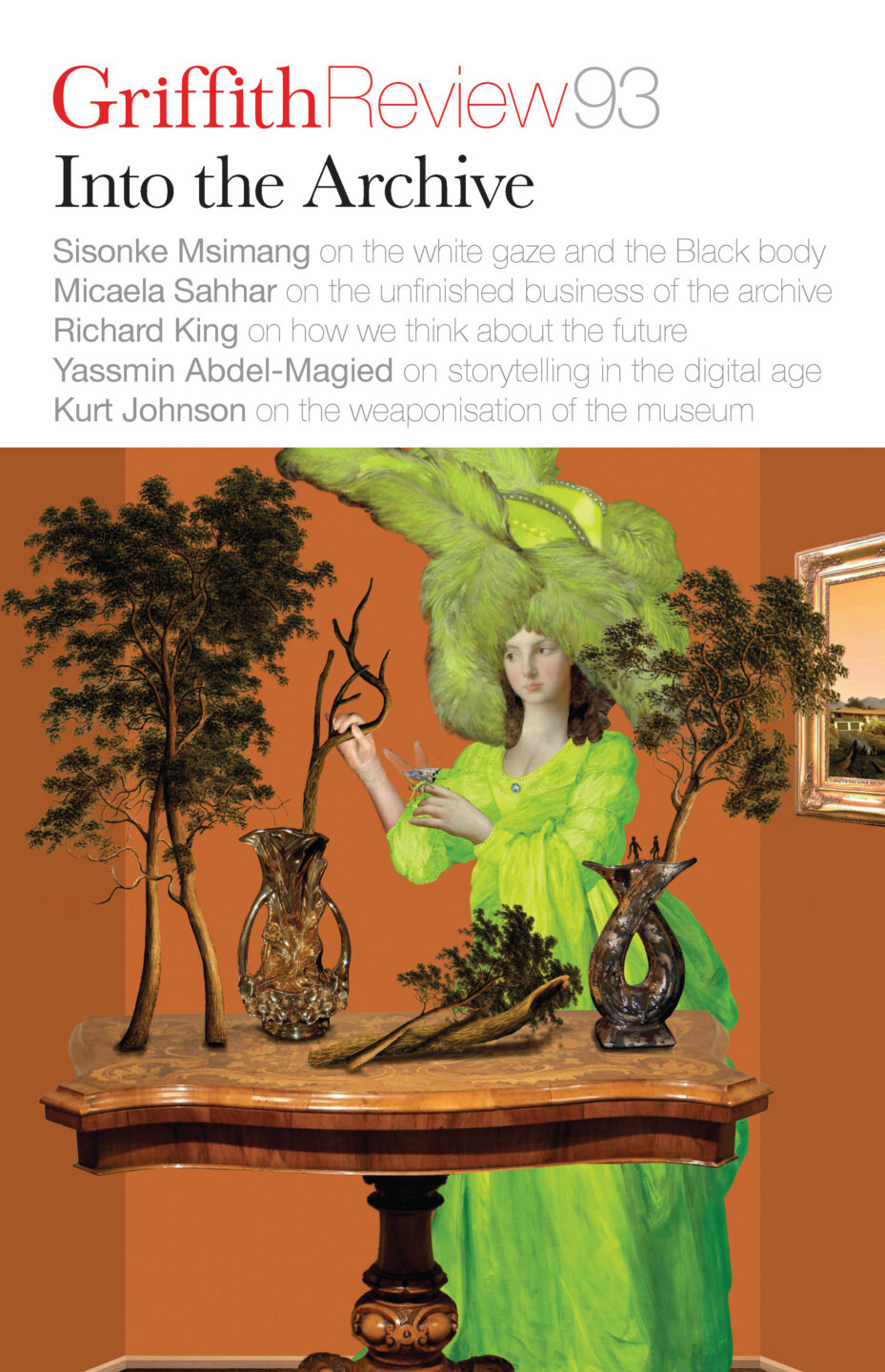
The museum of the future

Utopian visions, transformative dreams

Featured in

  • Published 20260804
  • ISBN: 978-1-923213-22-7
  • Extent: 196pp
  • Paperback, eBook, PDF

IT IS, TO say the least, an odd-­looking building, its entrance hall an eccentric meld of nineteenth-­century municipal grandeur and twentieth-­century future schlock. While the plate-glass roof is reminiscent of the (now long destroyed) Crystal Palace in London – home to the Great Exhibition of 1851 – the atrium is in the ‘blobitecture’ style: a vaguely fin-­shaped steel-­and-­glass mesh fed by a swirling external staircase. This central ‘Pod’ comprises three levels: a gift shop (Ground Level) selling Futurismo postcards and eggtimers in the shape of Minkowski’s light cone; a play area (Level 1) where industrial tubes squirt squealing children into pits of plastic balls and toddlers rock tamely back and forth in Jetsons-­style flying cars; and a café (Level 2) selling little bags of lollies purporting to be three-­course meals in pill form. Set out in a fan around the Pod are the porticoed entrances to the museum’s three sections: the Marinetti, Hegel and Benjamin wings.

The Museum of the Future is not a futuristic museum – a museum as it might look in, say, the twenty-­second century. It is a museum devoted to the idea of the future: to the future’s past, in other words. Its exhibits are evidence of a remarkable, and peculiarly human, ability: to speculate on what tomorrow might bring. With its steampunk aesthetic and friendly staff (kitted out like the Maschinenmensch in Fritz Lang’s 1927 Metropolis), the Museum of the Future is a testament to the human imagination, no less so (indeed, one could argue slightly more so) for the fact that it is entirely a figment of mine.

Already a subscriber? Sign in here

If you are an educator or student wishing to access content for study purposes please contact us at griffithreview@griffith.edu.au

Share article

More from author
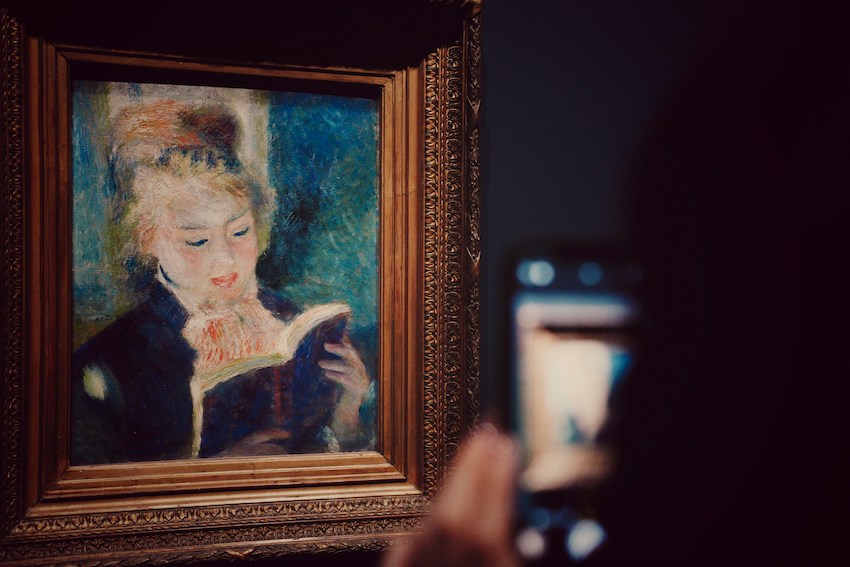
A picture of someone with a smartphone taking a picture of a classic portrait depicting a woman reading.

Gutenberg babble

In his essay, ‘The dawn of the post-literate society’, British columnist James Marriott argues that the recent decline in literacy – and book-reading in particular – amounts to a civilisational crisis. That he does so on Substack, in X-friendly paragraphs that unfurl beneath headings such as ‘World without mind’, ‘The end of creativity’ and ‘The death of democracy’, is not in itself a reason to dismiss his argument. But nor is it an irrelevant detail.

More from this edition

Foxola

Poetry It isn’t small – a medium size female and no plaything. To reduce, make diminutive as panting with heat, potential of storms, build up to cross any human space...

(re)Verbing the archive

Non-fictionNan was born in a flood of galahs. Red-­dust crested Country. Fresh bila coat-­the-­tongue Country. No white linens, many ghosts Country. Where girls grow, rough...

Death of the ornithologist

Poetry The wind was shunting a heavy storm, with her binoculars she searched for him along the cliffs, he was still tracking petrels and albatross, his red...

Stay up to date with the latest, news, articles and special offers from Griffith Review.