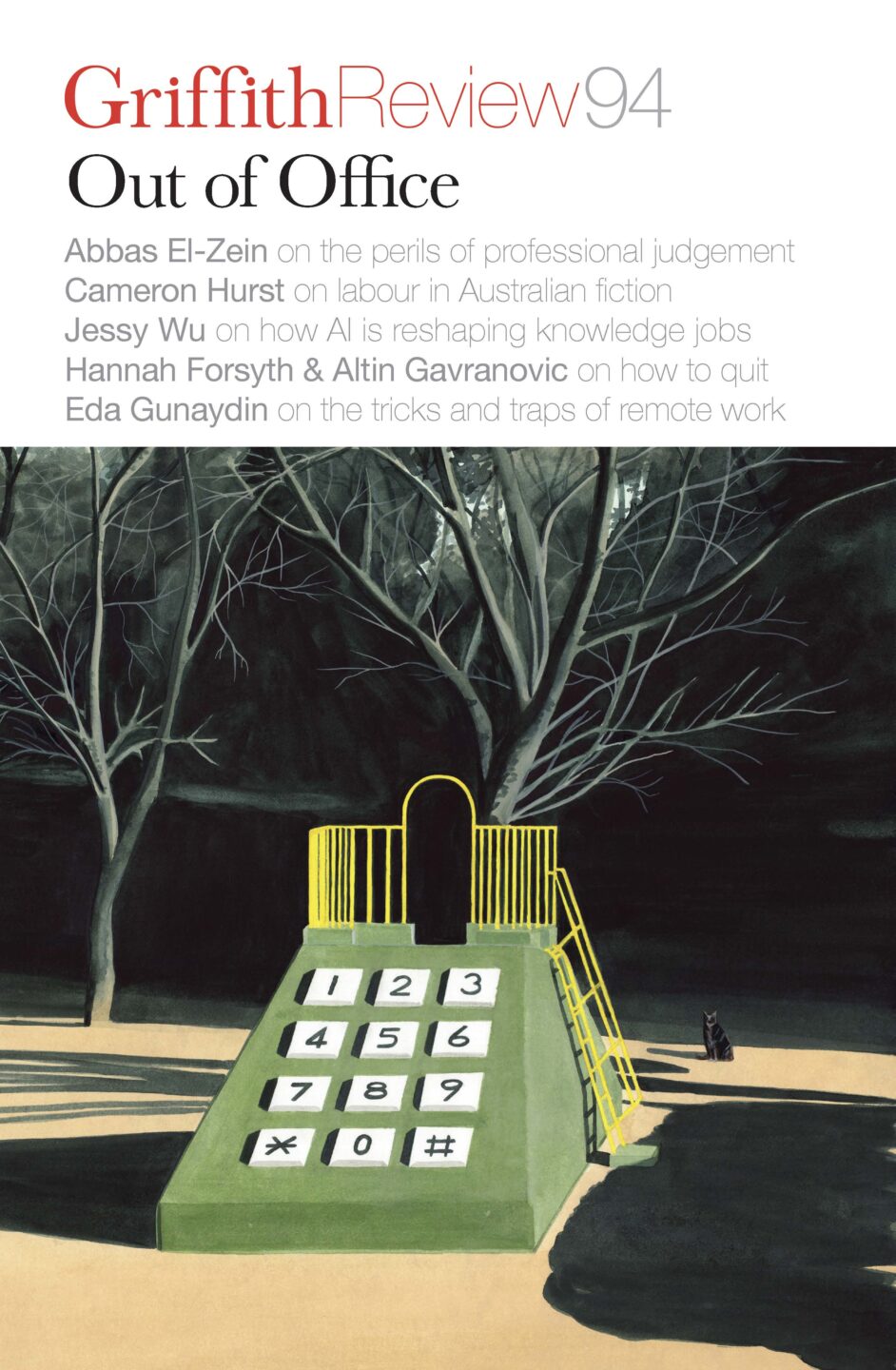
Your life’s work II

The false promises of working from home

Featured in

  • Published 20261103
  • ISBN: 978-1-923213-25-8
  • Extent: 196pp
  • Paperback, eBook, PDF

I’M CURRENTLY IN Burnout Recovery. What this means is that I hurt myself working too much or too hard – although the worldly evidence for either of these claims is scanty. Recovery looks, at the moment, like the lifestyle I lived when we were first driven into our homes during Covid. I go to bed at strictly 10 pm, hugging a weighted animal, and I wake up when my body wakes me up (at 3 am, then 4 am, then 5 am). I work on the couch or in bed. My key outing is the one-hour-long walk that I take every day, tracing the same path down the Cooks River, waving my outstretched arms in little circles to reconnect with the present moment – dissociation, which has always been a skill of mine, has become my primary mode of being, and makes me feel foreign in my own skin. I try to focus on noticing my envi-ronment, scanning for things I find interesting: runners with strange gaits, grandparents pushing their grandchildren on a swing set nearby, gnarled branches and the canopies of trees. The first time I try to train my attention in this way, I have to give up instantly because there isn’t anything that I like: I can’t, through sheer will, see things that I find horrible as beautiful instead. I gaze at rotting logs, crushed leaves, and think, it’sallsoawful.I take to wearing sunglasses both indoors and outdoors, pleading migraines – in reality, I can’t stand to look at the world at the moment.

Later, I take mercy on myself and downgrade the task from ‘What am I interested in?’ to ‘What do I see?’ It takes me six weeks to stop, finally, and take one measly photograph of a stray keyboard key, a small yellow thing in the environment that pokes out in a bed of leaves, washed up from the river onto the concrete path by recent rain. I have taken to describing my new lifestyle as ‘Doing Covid II’.

Already a subscriber? Sign in here

If you are an educator or student wishing to access content for study purposes please contact us at griffithreview@griffith.edu.au

Share article

More from author
Handmade transcendence

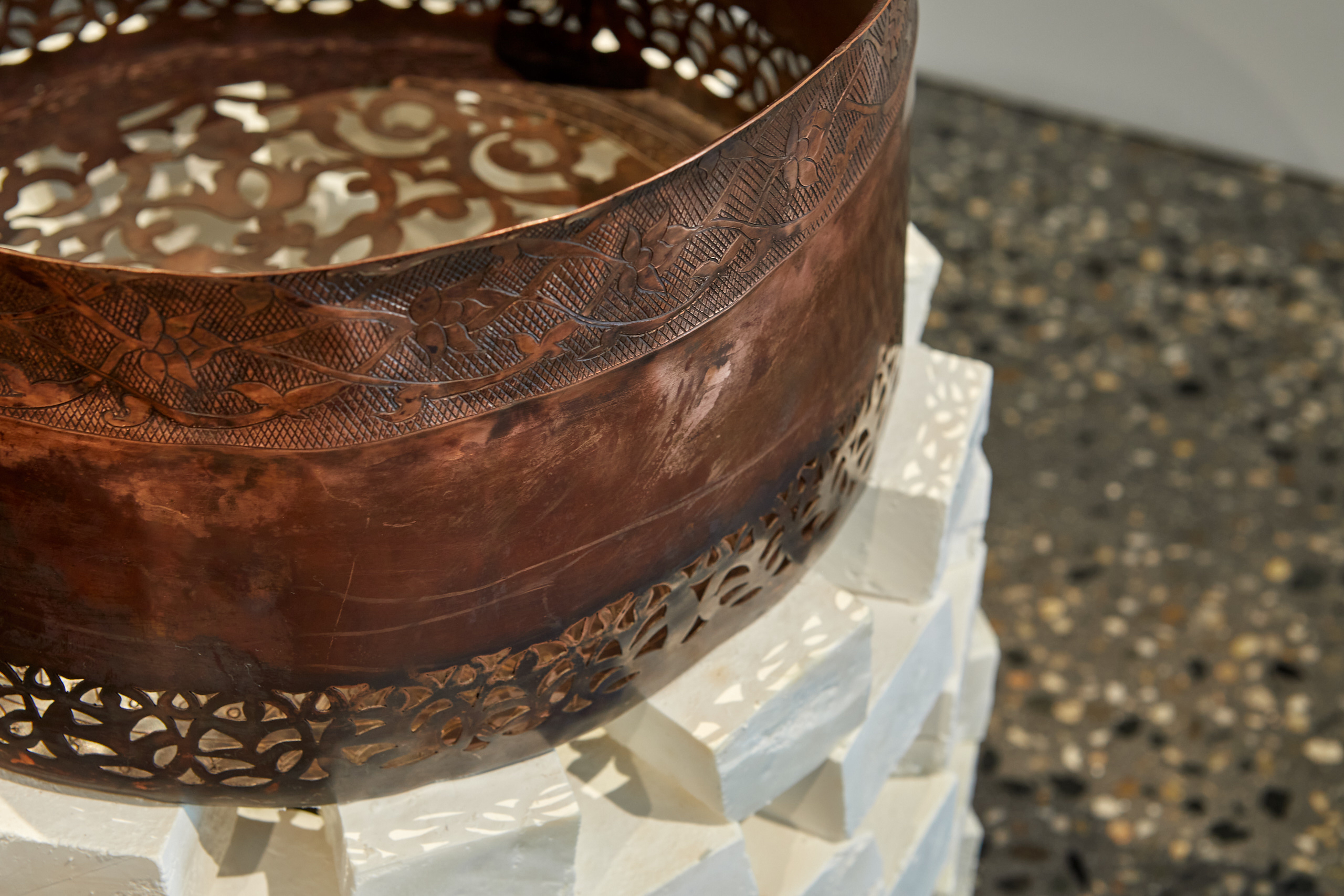
Multimedia installation artist Shireen Taweel knows that copper often finds its way into objects of ritual. It adorns places of worship in the mosque; it fuels sites of public cleansing and sociality in the hammam; and it provides the vessels of eating and drinking via cookware. Copper is ubiquitous in the rites that bring humans together, worked and processed through collective labour.

More from this edition

Judgement calls

Non-fiction No one is responsible for his acts, no one for his nature; to judge is tantamount to being unjust. This applies as well when the...
Mouse jiggler

Non-fiction THE TITLE OF the job listing was as vague as it was long: Senior Policy and Project Officer, System Design Reform, Acute and Community...
Cut flowers

Non-fiction The action in this story takes place shortly after the author was catapulted from his bicycle face-first into the road. He fractured both his...

Stay up to date with the latest, news, articles and special offers from Griffith Review.