
Featured in
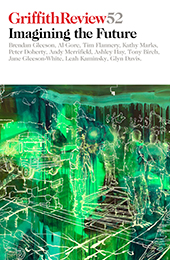
- Published 20160503
- ISBN: 978-1-925240-81-8
- Extent: 264pp
- Paperback (234 x 153mm), eBook
Already a subscriber? Sign in here
If you are an educator or student wishing to access content for study purposes please contact us at griffithreview@griffith.edu.au
Share article
More from author

Blue crane
FictionListen to Inga Simpson read ‘Blue crane’. THOSE FIRST WEEKS Sally walked the beach, it went unread. She saw only a scallop of yellow sand edged with dark...
More from this edition
Living with complexity
EssayBIOMEDICAL RESEARCHERS LIKE me probe the mechanistic basis of health and disease. In a long career working at the discovery end of the spectrum,...
Time travel
IntroductionTHE ABILITY TO travel through time in our minds, to inhabit re-created pasts and imagined futures, is arguably one of the defining characteristics of...
Accommodating new perspectives
EssayTWO POWERFUL AND contradictory images come to mind when I’m asked to reflect on my experience of attending the United Nations Climate Change Summit...
