
Featured in
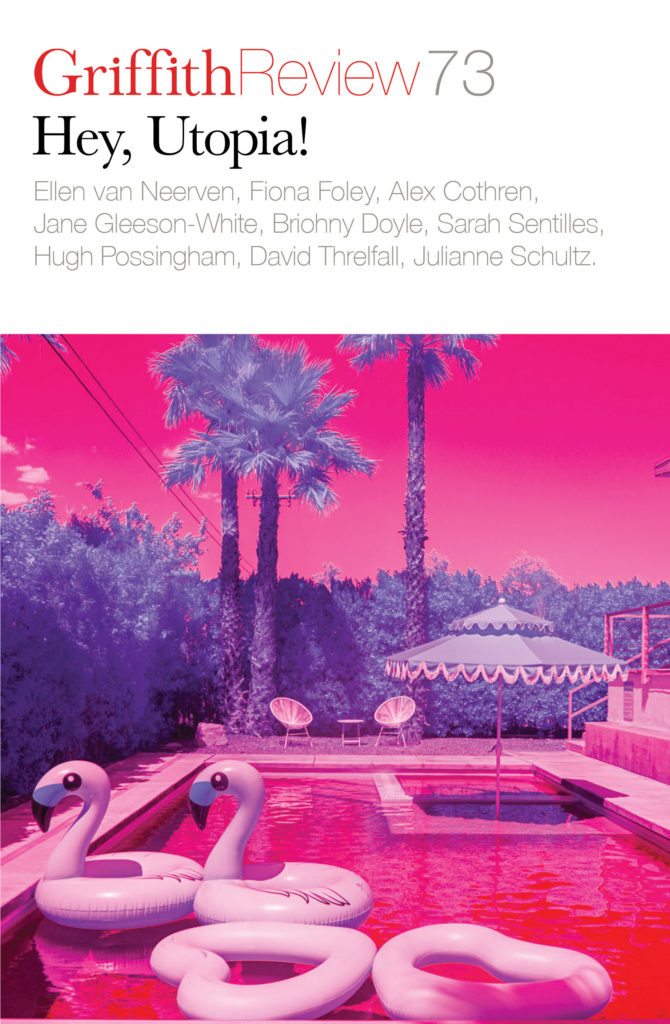
- Published 20210803
- ISBN: 978-1-922212-62-7
- Extent: 264pp
- Paperback (234 x 153mm), eBook

Already a subscriber? Sign in here
If you are an educator or student wishing to access content for study purposes please contact us at griffithreview@griffith.edu.au
Share article
About the author

Andrea Black
More from this edition

Erasure
EssayIt was thanks to a series of deliberate decisions made during the nineteenth century that women’s critical labours were designated ‘unproductive’ and simply wiped from view. Key to these erasures was Alfred Marshall, the revered father of neoclassical economics, who advocated strict limits on women’s choices lest they behave selfishly.
Exploding time past and time present
Picture GalleryTHE VERY IDEA of stepping back in time as a Badtjala woman is a utopian thought. Back in time the Badtjala people traversed to...
2029 Headlines
PoetryNew Victorian State Bird Symbol Announced Venice Hotel Owners Sell Up National Cancer Detection Implant Program Rolls Out The Anti-Robot Movement Gains Celebrity Support 60% of Australian Families...
