
Featured in

Please note that this piece includes Kala Lagaw Ya, as well as language pertaining to identity that may be sensitive to Aboriginal and Torres Strait Islander readers.
Nanu Gaamu
from 3.57 am to 6.32 am you sit in my consciousness
so i walk with you for hours in the morning time
and hours in the dark
i feel the walking contradiction is more than a poet today
i enjoy stumbling
but it’s tricky to balance
on the spectrum ya know
kayib nguzu gaamu kikirmika uthuuyi gamungu zilayma
/
MY WRITING EXPERIENCE started when I was seven years old. I drew pictures of my favourite memories in and around Bamaga. In the summer seasons, us kids would be beneath the big mango tree after school until sunset, thumbs puffed up from hours of marble competitions, feet covered in red dirt, laughing and arguing in the afternoon heat. In cooler months, we’d turn to the cotton tree, cracking open its pods and using the seeds to mark out Xs and Os on the grid we’d drawn on the ochre-covered ground.
My love for storytelling started early, but it took a long time to share my vulnerability. I began sharing my poems after I learnt to write my language and came to learn the power of each word. For example, ‘kayib nguzu gaamu kikirmika uthuuyi gamungu zilayma’ can be explained in plain English as ‘I can’t sleep because I am not feeling well’, but the literal meaning is ‘today my body sore, my sleep is running away from my body’. Because of its structure, written Kala Lagaw Ya (typically translated into English) has been recognised by English speakers as a version of poetry. To me, my language is more than a version of poetry. Its rhythm and flow and beauty are the very foundations that have created poetry as we know it today.
Google said
you start at chest, throat and stomach
often with the heart you may tighten
because the stomach linked the gut feeling
to wake my body
you thrive in secrecy
so I told my sisters about you
when my eyes wake with my body
my nieces laugh me through self-compassion
when I catch myself happy, I say to Sani
‘Gee I wonder what it will take
to prove I am only human?’
LIFE WASN’T EASY growing up. It started off hard and only got harder. My mother gave birth to me on 22 April 1991 in an old Queensland Health building once used to treat tuberculosis patients. It was also used for birthing on the Thursday Island reserve. This was a state-controlled facility that had full control and ownership over my family and every other Indigenous family and community. They called us ‘aborigines’ or ‘natives’, because that was the colonial law (when I write ‘they’ in this context, I am referring to white settlers and their state institutions). Some of my families were later referred to as Islanders. The old tuberculosis centre was the only location in Zenadth Kes and the Northern Peninsula Area that provided maternity services. They even conducted tests on ‘natives’ to see what type of animal species we derived from. They shipped us around the country like ‘animals’.
In Bamaga, I was raised in a suburb called ‘white man town’ (which is how it’s still referred to today). My childhood home was located on Sebasio Street near the hospital, government school and police station. These locations also had boundaries indicating where my family or other Black people were permitted and forbidden from by law. My maternal grandmother attended the Coloured School on the Thursday Island reserve and my paternal grandmother attended Cowal Creek Mission School in Injinoo.
As a child, I enjoyed spending time with my grandmothers. We would garden or look for wild yams. Some enslaved groups on reserves and missions like mine were encouraged to promote the paradise imagery of lush villages and tropical islands. As a child raised in the ’90s, I was issued a Queensland birth certificate with only two parents named. The state didn’t write down all my mothers’ and grandmothers’ names. Colonial structures believe a child is only raised by two people.
Lak
Ama ngayka yamuli kedha ngay ina hospitalnu wara nguzu ngoenakaapu kikirmika
Ah f I said – so
Ngath nguzu kuthayg yathuran kedha Ama na kikirmika
Kayib nguzu gaamu dhaydhami zagethka. Nguzu mina ubiginga zagethka.
Lak mura thonarnu ngalpun kazil umlumayk a?
‘LAK MURA THONARNU ngalpun kazil umlumayk a?’ poses the following question: is it all the time that our children will face death? This is the thought and feeling I am constantly left pondering. Why are our children taken from our mothers? Why are our children in state custody? Do we get a choice? The rate of preventable deaths in Bamaga has significantly increased and I think about what this really means for me, nguzu apuwal, nguzu kayadhal a nguzu babthal?
Last year, Ama had to go to the Princess Alexandra Hospital to get an ECG test done on her heart. I told my younger sibling Sani that Ama’s heart was not doing well. On that day, I noticed how my body became too weak to function. Women in my family are constantly in fight or flight mode. This is becoming particularly evident as my family discusses strategies to navigate the health system for Aka..
Since 4 May 2024, I’ve been turning to Kala Lagaw Ya to move through life and the emotions that come with it. It’s through writing Kala Lagaw Ya, as the words find their way naturally onto paper, that I’m able to pull apart and understand the grief and frustration at living in a world that is actively working against me. And in doing so, the words help me hear what I’m carrying. Most mornings before 7 am, I write down how I’m feeling. Some days the emotions return in the same vein, especially when the grief is tied to state violence or to the disappearance and removal of our children. Since 29 January 2026, nights have been endlessly long for my kind hearted nephew, Jake Sebasio.
WRITING GIVES ME the power to transform the colonial settler narrative written for me (the racialised assumption and notion that ‘natives are unlovable and uncaring’). Writing reminds me why I shouldn’t fear my language too, in spite of the old colonial notion that ‘Islanders’ speaking their language are criminals or evil. Every Thursday at 7 pm, I sit at the dinner table with my cultural parents, ready to hear and analyse the sound theory of Kala Lagaw Ya. That time has become our weekly writing circle where Awa creates beautiful poems and Ama, a phenomenal woman, transcends her story with Sani and I writing alongside them.
We read each other’s weekly pieces, offer critique and give suggestions in Kala Lagaw Ya, Yumplatok and/or English. Most sessions, Sani and I are gifted an abundance of knowledge, complex sounds, spelling and grammar that deepens our worldview. We often don’t need to explain everything in detail. English has a way of overexplaining what is simple. My poetic expressions stem from existing in a world where I feel a deep sense of peace in Kala Lagaw Ya.
NESCAFE MIXED WITH Devondale milk settles into the metal brackets of my braces. The white woman seated in the row behind me on the Dash 8 aircraft talks as if her existence is all that matters and her life takes priority above everyone else’s. She retells the story that most white nurses tell in terms of how inconvenienced she feels to have to be in a remote Indigenous community with limited access. Her white fragility is clear as day while she complains:
Finishing grad school has been difficult. I want the contract work on Thursday Island, but I got Bamaga instead. I mean, it’s totally fine, everything is paid for, I get free housing and I can save a heap of money to travel but more importantly also put aside money for my mortgage.
Thursday Island hospital is the preference for white nurses working under the Torres and Cape Hospital and Health Service as the perks include financial bonuses and cute photos holding ‘native babies’. Aboriginal communities are considered less favourable due to prejudiced settler misconceptions about ‘aggressive natives in the wild’. The white nurse continues to talk alongside locals who hear her as clearly as I do. I was thinking at the time, ‘Gee, locals have no choice but to live in areas with no network coverage, overcrowded housing and ongoing economic disadvantages.’
As the plane hums beneath me, I think about how many of our stories are carried like this, in transition, in movement and in the spaces between home and obligation. Every trip to Bamaga feels like a reminder of how frail my families have become under the weight of systems that were built to extract from us, – systems that continuously attempt to erase our existence. I watch the coastline disappear under the clouds and wonder how many more of our Amas and Akas are constrained by everything they hold in their bodies.
There is a heaviness that comes with knowing that care is expected of us long before we are ready and long after we are exhausted. But there is also strength in care. The kind that is passed down without ceremony, through stories, through Kala Lagaw Ya, through the way we show up even when we are hurting. Writing in Kala Lagaw Ya has become the only place where I can slow down enough to understand this. It holds me in ways English never has. It gives shape to emotions that feel too tangled to speak aloud. This means that my language and culture doesn’t erase emotions but answers them. I carry all this with me all while Kala Lagaw Ya allows for grief to be met with love.
This essay was commissioned and edited by Contributing Editor Jasmin McGaughey, thanks to funding support through the Copyright Agency Cultural Fund.
Image credit: Jan Kahánek via Unsplash
Share article
More from author
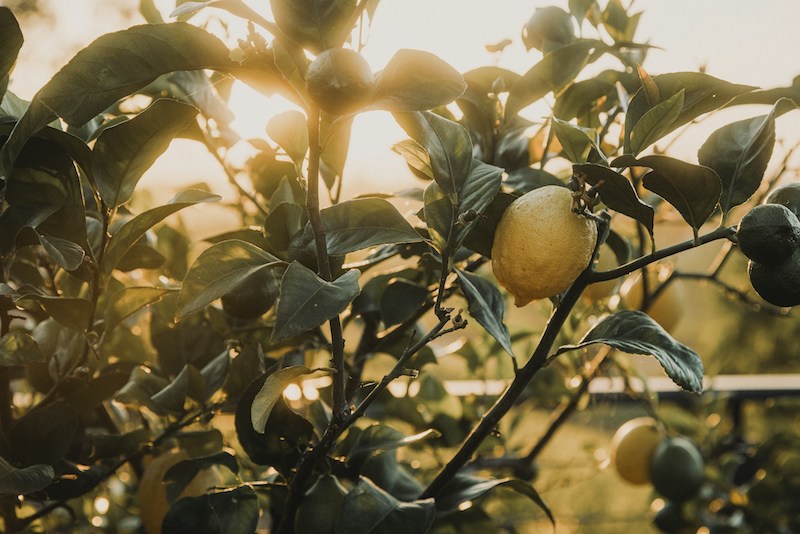
The lemon tree, in winter
I couldn’t figure out why sending children out of reservations into dormitories was the right thing to do. To me, it felt like a repeat of them mission days – scars of assimilation woven and buried within the schooling system. Today, I find myself grappling with the younger version of myself who didn’t know how to stand up for herself and her Aboriginal and Islander friends more.
More from this edition
