
Featured in
AROUND TEN YEARS ago, I was obsessed with longform improv theatre. Growing up, I idolised the performers on Whose Line Is It Anyway?, so when I saw an ad for weekly improv classes I didn’t hesitate. Performance wasn’t entirely new to me. One of the ways I got used to socialising as an autistic child was through acting classes. Being someone else always made it easier to talk to other people.
The classes were nothing like the quickfire, shortform improv games I’d loved from TV. They focused on twenty-minute longform shows comprising scenes that shared a common theme. The improv company had their own theatre in which they taught five days a week and held shows four nights a week. The program consisted of five levels across five terms. Each term was eight weeks long. At the end of term, you were graded with a pass or a repeat. To pass each level you had to perform in an end-of-term show and have attended at least two shows during the term. I attended every performance. I watched the experienced performers improvise and studied their skills and choices. I saw ninety-six shows during the eight weeks – more than all my co-students combined.
After nailing level one (the basics) and level two (character-based improv), I was told that I had to repeat level three (the game of the scene). The friends I’d made over the past sixteen weeks moved on and I was held back to repeat the same coursework with new people. My heart broke; my ego shattered and disappointment drowned me. But if there’s one thing you need to know about me it’s that I’m powered by spite and the urge to prove to others that they’ve underestimated me.
IN JUNE 2025, I was one of the many people emotionally wounded by a viral video clip of a little puppet named Tiny Chef (affectionately known as Cheffy) receiving some bad news. I hadn’t heard of this character and his playful children’s show, but the clip had a profound effect on me. It depicts a more potent vulnerability than many human skits achieve.
The scene opens with Cheffy cleaning up around the house before receiving a phone call from the TV network that airs his show. He excitedly rambles about ideas for new episodes until he’s interrupted and told that his show has been cancelled. ‘But we won an Emmy,’ he whimpers. In the mind of any creative, a prestigious award such as this should carry some weight and shield them from the threat of cancellation. Unfortunately, in a world where production companies value profit over any sort of social credit, this is sadly not the case. The investors must see that little number grow! And with Nickelodeon’s parent company having been bought out and merged, cuts were made to make those investors happy. Cheffy was one of many casualties – passion and quality be damned.
The little man begins bargaining for the show’s life and for the jobs of all his ‘fweinds’. But, as is the case with giant corporations, it doesn’t matter. They don’t see the people behind the show, just the number that creating it subtracts from their almighty profit. With a defeated ‘I understand, I love you too’, Cheffy hangs up and tries to continue with his cleaning before bursting into tears.
SIX MONTHS AFTER being told to repeat level three, I became eligible to audition for a house team in the theatre ensemble. At this point, I’d spent 768 hours watching improv shows, trying to analyse as much as possible to mimic what the experienced performers were doing.
Through the plethora of behavioural therapy I’ve had to assist me in hiding my neurodivergence, I knew that masking my true self made me more palatable to the general public. I took on extra improv training through special one-off workshops and working with private coaches to prepare for the audition. A lifetime of experience had shown me that I needed all the help I could get if I wanted to be accepted. Time is a circle, and I was reliving my childhood – taking acting lessons to learn how to best fit in. I put in the extra work to act like the performers I admired and to hide the methat people weren’t fond of. I kept my diagnoses to myself and I didn’t mention my cultural heritage. I’d seen both those parts of me mocked on stage, so I decided that hiding them would give me a better chance of fitting in and succeeding.
After the audition I was feeling confident. That is, until a couple of hours later, when I received the email that I hadn’t made it onto the ensemble. As a consolation prize, I was put into a ‘development team’ to continue training weekly and performing once a fortnight. The news was bittersweet. I was sad that I’d been left behind by my peers again, but my development team was determined to prove that we belonged in the big leagues. We performed every show like our lives depended on it and built up a bit of a fanbase for our absurd sense of humour. My audition shortfall seemed to be working in my favour. Suddenly, I was performing with people who would take my strange suggestions on stage and run wild. When the next auditions came, my entire team was promoted to a full house ensemble team…except for me. I went into another development team.
After feeling sorry for myself for a week, I got back into making the most of what I’d been given. Determined to reach my goal of making it to the house ensemble, I decided to save up enough money to go to the US, where I could spend several months studying improv at prominent institutions in New York and Chicago. I felt undesirable as a performer and self-conscious about my strange choices that defied the patterns I’d been told to follow. Training in the US would make me undeniable. It had to.
CHEFFY’S VULNERABILITY WON the hearts of millions. Social media was rife with people laying down their lives for the enthusiastic little cook. Nevertheless, Cheffy fell into a depression that was shared over the internet through a series of short skits that perfectly captured the perverse requirement to pretend we’re okay when we’re struggling.
While teaching a life-writing class, I fell down one of my trademark rabbit holes and shared my many failures from primary and high school English classes. I told my students that these convinced me I was an idiot – incapable of achieving the career I dreamt of. Then, I told them about the first time I asked a girl on a date before crawling under a bush to cry (she’d said yes but I was so overwhelmed that I needed somewhere to decompress). This was my way of encouraging my students to be open and brave when writing memoir.
During the class discussion that followed, one student shared how impressed they were with my sincerity and how they felt that the pressures from social groups and social media meant they couldn’t act that way. ‘We just have way too much judgement in our generation from so many angles,’ they said. ‘We have to keep how we really feel hidden if we don’t want to be ostracised.’ I decided to introduce the class to Tiny Chef. The videos weren’t amazing examples of how to write, but they were memorable examples of vulnerability and honesty. In student surveys, the writing exercise that came out of that class was specified as a highlight of the semester.
IN THE US, I immersed myself in the methodology of improvised theatre and deepened my understanding of humanity and performance. The improv company in Australia wanted me to be able to identify what the strange thing was in each new scene and then play around that. Being neurodivergent, everything feels strange to me. I struggled to notice the things that my peers found strange. While the other performers would rally around the game of a rat working in a bakery so it could steal cheese, I would be distracted by the image of the big puffy hats bakers wear in cartoons. I was aware that I’d be the only one who found that simple idea funny, so I’d devolve to the types of humour I saw more experienced improvisers use (mostly of the crass variety). That type of performance was hit-or-miss. In my training at the premiere improv school of Chicago, I learnt the art of being in the moment rather than constantly looking for the ‘game of the scene’. My peers in Chicago were the first improvisers to learn about my culture and my neurodivergence. Rather than being treated as jokes, those factors were just small parts that made up the characters I played.
Despite how much I’d learnt in the US, my anxiety was through the roof. I felt like my peers in Australia would expect me to have massively improved. It tore away the fun of performing for a bit, as I was so conscious that my improvement as a performer wasn’t in the style that the Australian theatre worshipped. I had learnt to be present in a scene, but this theatre prioritised finding the game and playing it. They may as well have been asking me to do aljrahbra (I can’t do aljrahbra – I can’t even spell it). It wasn’t until the next round of auditions that I regained my confidence by finally giving in to a mantra I had grown to love in Chicago. You’ve got everything you need the moment you step onto the stage. Just be.
After the audition, several of the other participants congratulated me on my performance and said they were certain I would make the house ensemble. Their certainty empowered me. It felt like I had finally put in enough work to earn myself a spot.
That was the last time I performed at the theatre. I didn’t get a place on the house ensemble and I didn’t get another place on a developmental team. They had to make room for new people in the developmental program and encouraged me to retake some classes with them at a discounted rate before trying again in six months.
I loved improv theatre; it just didn’t love me back.
THE FIRST TIME I saw Tiny Chef’s cancellation video, it touched something in me. It felt like a lesson I needed a decade ago. Cheffy lost his TV show despite being popular and critically acclaimed enough to win an Emmy. I missed out on making it into the theatre ensemble I craved despite all my hard work. Cheffy released a viral video that depicted how the cancellation affected him. I quit doing improv to focus on my writing. Masking my neurodivergence at the theatre led to burnout, so I made a conscious decision to quit masking in my writing – to quit trying to be something I wasn’t. Instead, I decided to write in an unmasked way – to prioritise my own sense of authenticity above trying to succeed or please others. If this meant misunderstandings or presenting myself in an embarrassing or cringe way, then so be it.
Sometimes the things we want most just aren’t for us, no matter how badly we think they are or how hard we try. This isn’t an isolated feeling – most of us will experience it at some point. Cheffy reinforced that being open and honest about that disappointment is relatable. I couldn’t express this through my improv, but I can do it in my writing. I’ve noticed how this makes others want to support me because they can see themselves in my vulnerability – in my story.
Cheffy gave me the framework to talk about disappointment. Discussing the death of a dream is fucking difficult. For years, I didn’t know how to discuss walking away from something I cared about so much. Cheffy’s vulnerability made me feel less alone. It made me realise how important it is to share these kinds of experiences with others. In a world where we’re urged to only showcase perfection, Cheffy highlights the importance and solidarity that comes with showcasing our vulnerability.
Now, grab a pitchfork. There’s a network executive to skewer in the name of a sad, unemployed puppet.
Image credit: Felix Mooneeram via Unsplash
Share article
More from author
My body is the gallery – enjoy the exhibition!
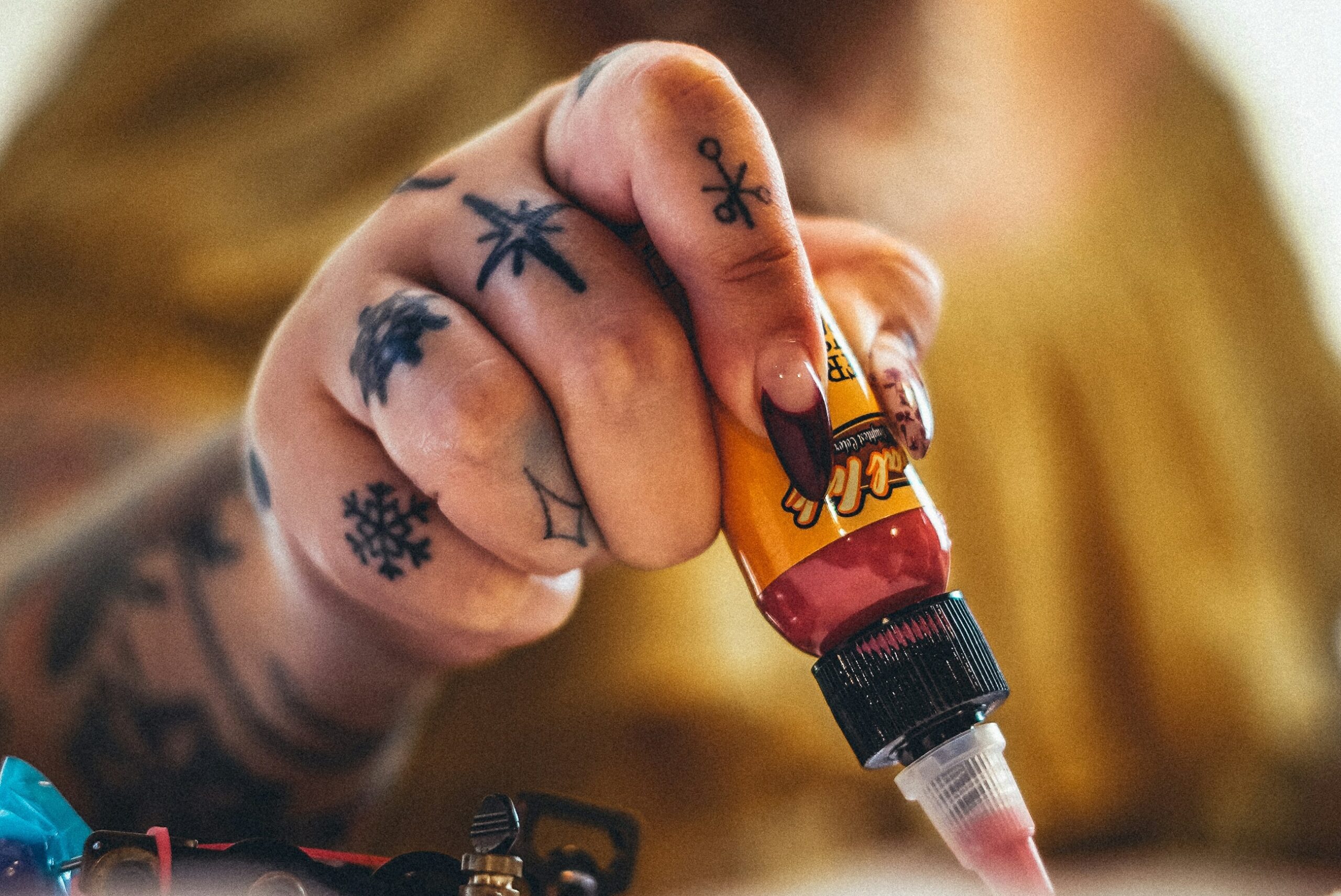
CELEBRITY CULTURE HAS slowly eroded the negative connotations associated with tattoos. In the ’80s, punk and heavy-metal rockers used body art to cement their anti-consumer images into mainstream minds. Since the turn of the century, reality TV shows including Miami Ink and Ink Master have accelerated the normalisation of tattoos. Now, partly thanks to social media, tattoos have become another kind of commodity to show off to the world. Outside of the job stoppers (hands, neck, face), tattoos can be seen on lawyers, corporate drones and even White House staff.
But tattoos have always been more than fashion statements. They connect people to subcultures. They express commitment to particular ideals and fandoms. They’re the ultimate form of self-expression. Even a tattoo you get impulsively can make a statement. Tattoos become stories shared at social gatherings. Icebreakers to get the conversation going when you meet someone new. Gruelling, painful rituals that highlight how strong the human spirit can be. Dedications to a belief or a thought or a love that you wish to always be reminded of. Signifiers of who you are.
More from this edition
