
Featured in
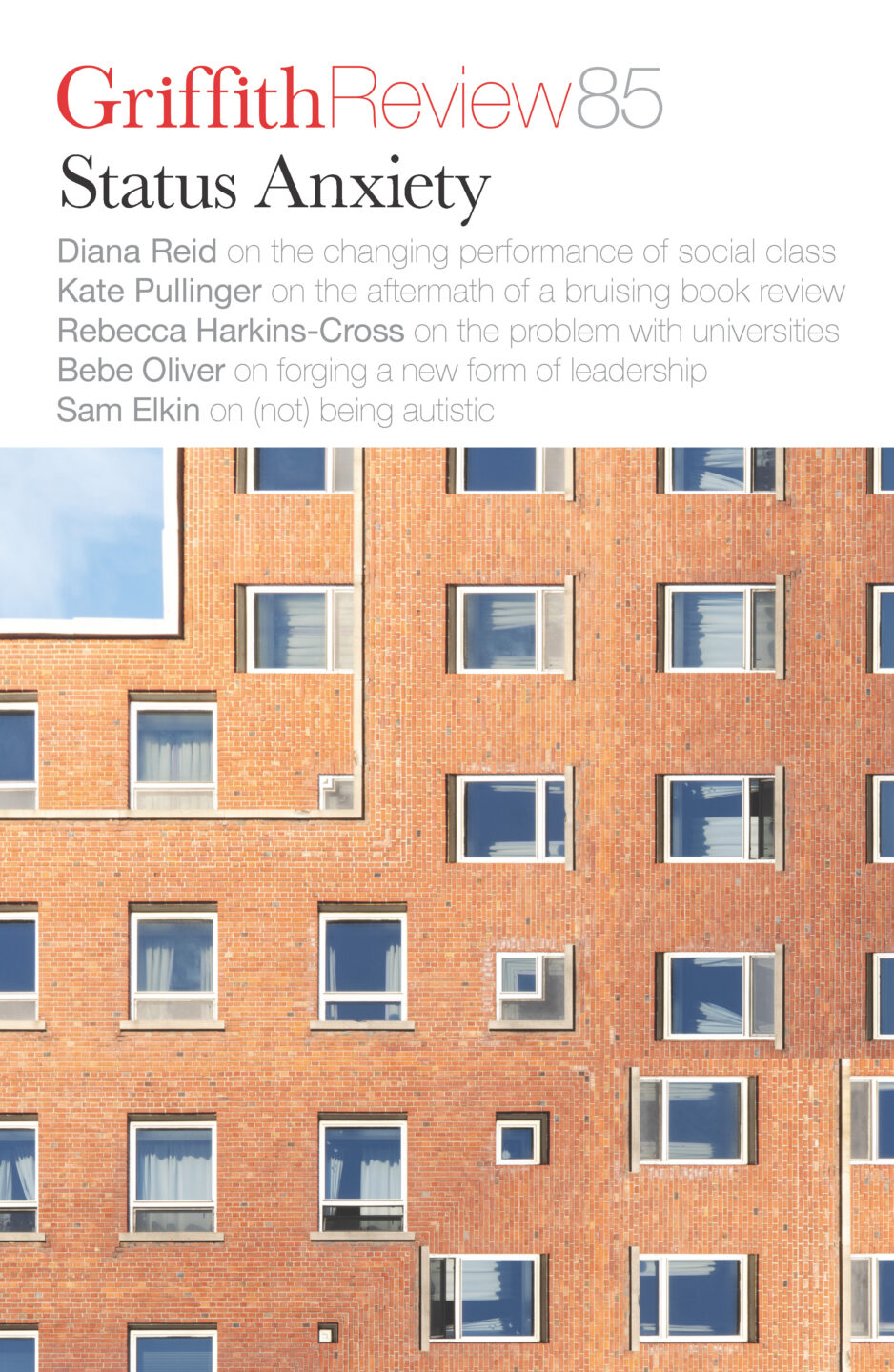
- Published 20240806
- ISBN: 978-1-922212-98-6
- Extent: 216pp
- Paperback, ePUB, PDF

Already a subscriber? Sign in here
If you are an educator or student wishing to access content for study purposes please contact us at griffithreview@griffith.edu.au
Share article
About the author

Bebe Oliver
Bebe Oliver is a descendant of the Bardi Jawi people of the Kimberley region of Western Australia and an award-winning writer, poet, illustrator, speaker and...
More from this edition

Conferral
Non-fictionBeneath my fantasy of a regular wage is the puerile hunch that if I stay in academia, I can regain some of the nervy possibility I held as an undergraduate student. It was at university that I first met people whose days were preoccupied with thinking, reading and writing, revelatory mostly because they were compensated for these activities with bourgeois trappings and validation. With hindsight, I can recognise that my straining so doggedly to become the kind of person who succeeded according to the university’s metrics mainly taught me what bell hooks says is the primary lesson of college – namely, ‘obedience to authority’.

Dying of exposure
Non-fictionPublishing is a weird industry, a retail supply service where every day hundreds – thousands – of brand-new, untested products are launched, each one a little bit different to the last. The long-haul career trajectory of most writers is increasingly difficult to maintain with incomes nosediving, as evidenced by multiple surveys. The road is cluttered with novelists brought down by ‘bad track’, their new books rejected because of the poor sales of previous titles. But as readers we still need help to discover good books, to figure out what to read next. As book pages, magazines and newspapers shrink or disappear altogether, it’s no longer clear what impact book reviewers can have on a career. The endorsement of someone whose work – critical or otherwise – you admire remains important to many writers.

Habitat
PoetryIt was early. I recognised my fate in the bathroom mirror. Behind which he slept deep into the morning...
