

Welcome to GR Online, a series of short-form articles that take aim at the moving target of contemporary culture as it’s whisked along the guide rails of innovations in digital media, globalisation and late-stage capitalism.

Operator, please
A 2024 website post from CHOICE confirms this trend: ‘In a survey of over 6,000 CHOICE supporters in May this year, 73% told us they had encountered sub-par service from a business in the preceding year, and 85% believed this assistance was getting worse.’
These numbers seem to indicate the growing distance that corporations are placing between themselves and their customers. If the invention of the call centre in the mid-twentieth century helped this phenomenon along, then the creation of AI chatbots has only accelerated the issue in an alarming way.
Gold standard
Not long after the 2018 Royal Commission into Misconduct in the Banking, Superannuation and Financial Services Industry, I attended a panel discussion that sought to consider its professional and ethical implications for bankers. Anna Bligh, CEO of the Australian Banking Association at the time, persistently used the #notallbankers hashtag, which was stretched beyond all rational use during the commission. Despite a #fewbadapples, she suggested, bank integrity was secure: Australians could sleep well at night knowing their money was safe.
Until then, it had never occurred to me that my money – such as it is – might not be safe in the bank. These institutions go to some trouble to present themselves as symbols of safety, stability and trustworthiness. For example, there was great excitement when the Commonwealth Bank’s vault – still one of the largest in the world – was hauled to Sydney’s Martin Place in 1926 by the twenty-five horses required to transport it. It was a public spectacle that demanded our trust in banking, saying look at the hefty measures the bank takes to protect your money. Banks are now more likely to flaunt their investment in cybersecurity, scam prevention and online fraud, like the ANZ Falcon® technology that ‘works around the clock’ in a way that’s ‘personal to each and every one of our customers’. The message is the same: sure, we have big bucks, but we use them to keep your money safe.
How meme coins explain the world
THE MESSAGE POSTED on the $TRUMP website on 12 May 2025 reads like the opening gambit of an internet...
Uncanny virtue
I first heard Peter Singer speak at the University of Western Australia (UWA) in the summer of 2009. The subject was the ethics of what we eat, and the tone of the talk was open and generous. Some in the audience were hardcore animal-rights people, as one would expect at a Singer gig. But the philosopher’s message was that ethical eating is, in fact, a pretty complex matter, bearing not only on animal welfare but also on economic justice and the environmental impact of agriculture, and that what counted as ethical behaviour in one sphere was often difficult to reconcile with ethical behaviour in others. His advice was therefore to do what we could, advice I for one resolved to follow before hogging into the free wine and nibbles around the Beaux-Arts-style reflecting pool.
Splitting the bill
A couple of years ago, after too many years too casually spent as a casual academic, I went to work at a law firm. It was in need of a writer, and, for a steady wage, I was willing to pretend to be one. For a time, the change felt daunting, and I eased that feeling by making a mental note of its differences with my old workplace. At the firm, everyone was smartly dressed and spit-polished; at my university, there were professors who padded the corridors with rumpled hair and bare feet. At the firm, everything was urgent; at university, nothing ever was. The firm’s tearoom was stocked with gleaming coffee machines, bowls of fresh fruit and individually packaged Tim Tams; the only things stocked in the faculty tearoom at my uni were cockroach baits and dead cockroaches.
The ridiculous school
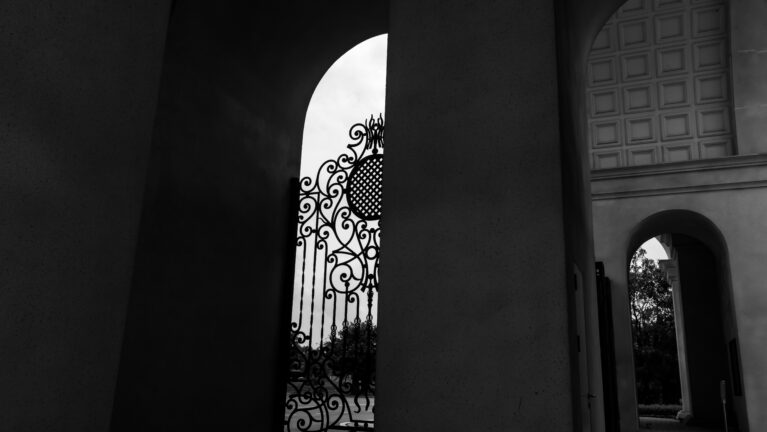
Here are some things I now know: that the school’s grounds, beyond those imposing gates, are large enough that they could comfortably contain at least three of my high school’s own in their entirety – and they include six separate cricket pitches. That there are staff employed to patrol the streets of the neighbouring suburbs in the mid-afternoon, purely to ensure those blazers are not taken off in public. That there are swimming trunks (and that is the word they use for them) as part of the school uniform – in the school’s colours and with its logo on one leg.
That the admission fee, each year, is equal to what I earn. (I am not, for the record, in any way involved in its payment.)
And also that none of this matters, not in the context of my family’s lives. I am, of course and for want of a better word, the stepmother to my girlfriend’s children, which is to say that my role is always supportive and not agential. I’m not the protagonist and do not want to be. The problem is that neither can I be antagonistic, nor should I.
I never thought that I would be here. Never imagined I might find myself driving through those massive gates on the occasional stormy afternoon and idling in a queue of European cars as the older boy swings his cricket kit onto my backseat (though I still curse those of their drivers who insist on trying to turn right when they return to the main road). Receiving the school’s monthly magazine with its thick, soft pages in my letterbox. Stitching name tags onto uniform trunks, the existence of which I couldn’t even fathom until last year. It is unsettling, to say the very least.
And I hate it.
Perfect match
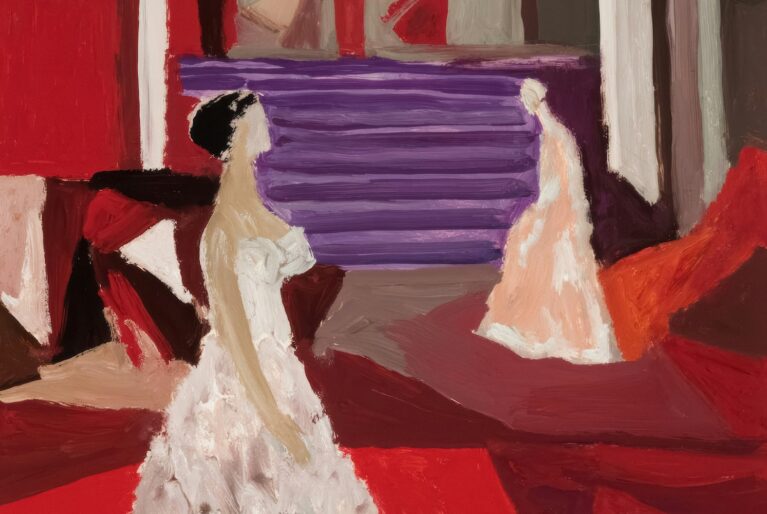
Art and fashion have long been co-conspirators, collaborating commercially and creatively to mutual benefit since the early twentieth century. At first glance, the disciplines appear to be fundamentally opposed. Where fashion has traditionally been seen as fickle, transient and driven by popular culture trends, designed to make itself redundant with each new collection, art is understood to be more thoughtful, intellectual and elitist, in pursuit of longevity – the nobler pursuit, owing to its intellectual and philosophical origins. Fashion embraces reinvention to make itself relevant, responding to consumer demands and the commercial imperative, whereas art, born of an artist’s creativity, has historically been regarded as the higher form, one that does not necessarily depend upon financial gain, nor require money for its creation.
Of course, these are outmoded, romantic notions – absolutes. Art is a commodity like any other, bought and sold as an investment. Art and fashion are economic systems with a great deal in common: both exist because they can, not because they serve a practical purpose.

Sovereign forever
I didn’t see many First Nations designers when I was growing up, but I suppose my saving grace was the few Black models working in the industry, such as Naomi Campbell, Tyra Banks, Iman and Veronica Webb. They introduced me to luxury fashion, and I’d cut their pictures from magazines and plaster them on my wall. I’d study the unique tailoring and signature styles of the clothing they wore. Without even realising what I was doing, I’d started creating my personal lookbook to capture what I dreamed of wearing one day.
That J-Lo dress
I find high fashion fascinating, in particular what the beautiful people wear on the catwalk or the red carpet. Just as compelling, to my mind, are the twin pillars of fashion industry gossip and business analysis, including what clothes might reveal about culture and society. Take the famous J-Lo dress: diaphanous green material slit to the waist in both directions, held together by a big jewel-encrusted broach, worn with sparkly panties and strappy heels (please admire my technical knowledge). This is the dress J-Lo wore to the 2000 Grammy Awards. I mentioned that it broke the internet.
Go west
This fever dream of an afternoon is a standard Sunday at Broken Heel, the drag festival in the desert where queer culture meets outback Australiana. Held over a long weekend in September, Broken Heel is a five-day extrava- ganza hosted by Broken Hill’s Palace Hotel – the pub that makes a cameo appearance in Stephan Elliott’s iconic 1994 film, The Adventures of Priscilla, Queen of the Desert. Conceived as a tribute to Priscilla, which was largely filmed and partly set around Broken Hill, Broken Heel was launched by Palace owner Esther La Rovere in 2015 to coincide with the film’s twenty-first birthday. Nine years later, the drag festival had become an annual institution, attracting thousands of punters from around Australia and overseas. Thirty years after Hugo Weaving stopped traffic on Argent Street with a pink thong dress and matching wig, this storied mining town with a pub on every corner welcomed a veritable deluge of men in muumuus.
Dress right, act right
In The Fashion System, Roland Barthes argues that clothing is never just functional or decorative; it’s always a language, a system of signs. The revival of prairie-style high necklines and nunnishly low hems is a semiotic gesture that can’t be divorced from its meaning. Joan Scott’s theory of gender as a historical sign system is also useful when analysing the forms and silhouettes that mark this new (or, rather, old) style era: in resurrecting the prim-and-proper silhouettes of the ’40s and the flouncy A-line dresses of the ’50s, with their exaggerated waists and corsetry-inspired bodices, we act in subtle ways to reinscribe historical gender roles.
Body doubles
While Borisov’s softcore porn captivates a global audience, Meta, Instagram’s parent company, polices other accounts it claims are sharing ‘sexually suggestive’ content. In 2019, Salty – an online newsletter and platform for women, trans and non-binary people – released research that indicates certain marginalised groups – such as women, sex workers, people of colour, plus-sized creators, and members of the LGBTQIA+ community – appear unfairly patrolled online when it comes to the sort of content they post. I myself have received ample warnings from Meta given I write regularly about women, abortion, sex and its many hiccups.
