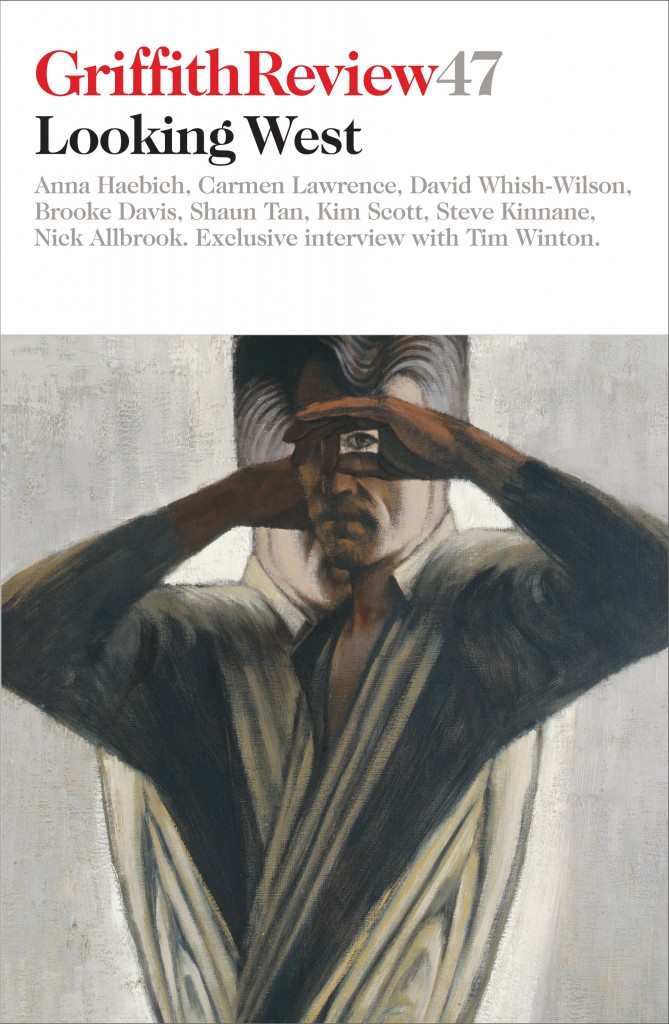
From the edge of the edge

Featured in

  • Published 20150203
  • ISBN: 9781922182678
  • Extent: 264 pp
  • Paperback (234 x 153mm), eBook

GOING HOME FROM work on late afternoons in summer, I drive west between lines of flat grey bush straight into the glaring red sun that hangs just above the horizon. I’m driving to the edge. As the crow flies, I live five minutes from where the land ends and the Indian Ocean takes over. On scorching days the Fremantle Doctor, gusting up from the south across near-deserted sand hills, rouses us from the torpor of a forty-degree-plus day. With our extreme new summer temperatures this is a definite plus for living on the edge of Australia. I live on a good cultural edge with my partner, Darryl Kickett, a local Noongar man with a strong culture, lots of relatives and an ancient family lineage stretching back forty-five thousand years. He doesn’t have to look anywhere else for Home – he’s right in its heart. Not like me, still looking back after twenty-five years, along with the hundreds of thousands of other immigrants looking every which way for Home.

Immigration to the west has been overwhelmingly Anglo-Celtic, bestowing an enduring legacy of looking back west to Britain as Home, like those colonists described by visiting Austrian botanist Baron von Huegel in 1833, who ‘gazed westward over the vast and stormy sea in the direction of their homeland, so far away and out of reach’.

Already a subscriber? Sign in here

If you are an educator or student wishing to access content for study purposes please contact us at griffithreview@griffith.edu.au

Share article

More from author

On ‘Bran Nue Dae’, by Jimmy Chi

EssayAmid the fun and laughter of the film, memories of the original musical streamed back to me. I know it well; I spent time with Jimmy Chi and his partner, Glennys Allen, in Broome in the mid-1980s when he was working on the songs and the concept. I’d made my own road trip to Broome in a canary-yellow V8 station wagon that was covered with red dust.

More from this edition

Might be rainbows

MemoirON THE SOUTH-WEST boundary of Uluru-Kata Tjuta National Park, in the centre of Australia, an unmarked red-dirt track turns left off the Lasseter Highway. For the few kilometres still within park lines it’s known as Docker River Road. Beyond that point it becomes Tjukaruru Road, leading to Western Australia through Aboriginal freehold land. In 2006, as a member of the park staff, I occasionally had to go down Docker River Road for work. From the park boundary I would stare into the seemingly untouched red landscape, both delighting and recoiling at the expanse of land ahead. I had never ventured any further.

How to eat a wilderness

EssayLATE JULY 1923, Newdegate district, Western Australia. It is not a sublime landscape, but beauty may yet be found in its intricate, fragile detail....

The native seeds of Augusta

Essay‘MUCH TO MY surprise in Dec last I received a particularly choice box of seeds, and your polite note, requesting a return of the...

Stay up to date with the latest, news, articles and special offers from Griffith Review.