
Featured in

THE ART OF writing often inspires an image of a person alone at a desk typing or scrawling with pen and paper. Many writers have highlighted this aspect of the process, from Ernest Hemingway who said that ‘writing, at its best, is a lonely life’ to RF Kuang who wrote, in her novel Yellowface, ‘writing is such a solitary activity’. As a writer and aspiring author, I’ve felt this isolation while working on my novels, but I’ve also experienced a deep sense of social collaboration within niche pockets of the writing community – pockets often unacknowledged by the mainstream industry.
Writing is not always a lonely art form. Co-written novels are one example of storytelling as a source of connection and community (one that fits neatly into mainstream publishing ideology). When we see two names on a book we understand that more than one person crafted the text, the world and the characters. But for every example that aligns with mainstream ideals, there are several more that don’t.
Since the late 1990s, the internet has housed a new form of serialised writing. One that permits instant interaction with readers. Current well-known platforms for these kinds of works include Wattpad and Archive of Our Own. While these platforms are becoming more mainstream thanks to the traditional publication and adaptation of works from them (such as The Love Hypothesis by Ali Hazelwood and Alchemised by SenLinYu), there remains significant stigma surrounding the origin of these works.
I’ve always been disappointed by this stigma. Admittedly, there are works on these platforms that are not of the best quality, but there are also plenty of traditionally published works that I struggle to appreciate.
Just as there are gems squeezed onto shelves of stores, there are addictive works online that have had me in a chokehold and made me regret my life choices when I wake severely sleep deprived.
Unlike traditional books, there’s a social aspect to these online platforms through votes or kudos and comments; this engagement can shape the future of the narrative. Matt Dinniman is one of the most obvious examples of this. His once self-published Dungeon Crawler Carl series was acquired by Penguin Random House and published in January 2026. Dinniman has described in an Audible interview how his fans on Patreon vote on certain external factors surrounding the characters in his books.
However, in spite of the way they connect the writing and reading communities, these platforms often still, at their core, promote writing as a solitary activity.
IN HIGH SCHOOL, I’d write in glitter pink pens, fold the paper and slip it along the desk to my friend. She’d push it back a few minutes later when our teacher turned towards the whiteboard. We didn’t trade in gossip. We traded snippets of stories.
This is roleplay writing. Unlike other forms of online writing, roleplay is (typically) a wholly collaborative activity. Each writer usually has a main character that the other writer isn’t allowed to control, but both writers are free to incorporate secondary characters and settings. Together, paragraph by paragraph, they take turns creating a story. As a preteen, I didn’t realise what my friends and I were doing was roleplay writing. To me, it was a way to pass the time during maths. As I grew older and began writing novels, I craved the social outlet of roleplay on the side.
When I was thirteen, I finished my first novel. It was, unsurprisingly, a disaster. My main character’s eye colour frequently changed, and the plot verged on nonsensical. More significantly, every character was white, straight and able-bodied, despite the fact I wasn’t straight and had a speech disability. Instead of writing what I knew, I wrote what I’d seen in every book I’d read. Roleplay writing changed this for me.
I remember talking in private messages with a fellow writer, planning a plotline for a ‘ship’ (romantic relationship), when they’d asked me the sexuality of my character and, therefore, which gender their character should be. At the time, I’d understood queerness existed only in subtext, as was the norm in TV shows I watched (Merlin, Sherlock and Supernatural), and had subconsciously assumed our ship would be heterosexual. This friend, among many others in roleplay, gave me a safe space to explore diversity and write from the perspective of new characters without fearing judgement from readers. Over the years, I’ve explored various roleplays: contemporary, celebrity, supernatural, fanfiction and more.
The social aspect of the activity is what always brings me back. I’m a people pleaser, a praise chaser, someone who constantly seeks approval and evidence that I’ve done well. I collected A-grades and high distinctions and eagerly awaited parent–teacher nights. Today, I have a folder in my work email where I store compliments from clients and supervisors. Roleplay caters to that side of me. Each reply from a fellow writer is a dopamine hit. Each positive reply confirms that my writing is interesting and has me excited to rapidly string together words in response.
WHEN PEOPLE ASK about my taste in books, I find referring to genres unhelpful. The Bell Jar, Gideon the Ninth, Lessons in Chemistry, Heartstopper, fanfiction based on BBC’s Merlin. These are some examples of what I love to read. Whether it be fantasy or literary or romance or non-fiction, I’ll consume it with joy so long as it gives me one thing: interesting characters. Roleplay heightened this for me.
Of all the writing courses I’ve done (and I’ve done quite a few) and all the writing prompts I’ve been given, nothing has improved my writing the way roleplay has. While style is not usually front of mind during my roleplay (I reserve this effort for my novels), during each reply, I ask three questions:
- Who is my character?
- How would my character react to this specific circumstance?
- How can I create conflict to provide my writing partner something to respond to?
I’ve always found it strange that not one of the writing courses I’ve completed has ever considered this form of writing as a teaching method. I suspect it’s either due to a lack of awareness or the stigma of roleplay not being considered ‘serious’ writing suitable for those aspiring to be published.
THIS ISN’T TO say that roleplay is all joy. Like traditional publishing, there are downsides too. Despite the two communities rarely intersecting, in my experience, both communities suffer from a similar flaw: high school drama. Different kinds of drama, but both of a migraine-inducing nature. In my novel and short story writing circles, I feel like I’m running a complex race in which the goal is to be safely in the middle. If you’re too far ahead in the publishing game, you inspire envy. If you’re too far behind, you lack any use to your peers. I filter myself in these circles, emphasising that I write literary dark academia fantasy; perhaps that’s true, but my intention is less about honesty and more about desperately attempting to seem worthy of their time.
In roleplay, you are battling for attention – fighting to remain in the spotlight (lest your partner become captivated by a fresher, more intriguing writer). This struggle is exacerbated by the public forums roleplayers engage in. On forums, people can see when their friends write with other partners or when plots are recycled for a pairing with better chemistry. Value becomes not about quality, but about the amount of time you can spend online keeping others engaged.
No matter the kind of writing, it seems to me that people are naturally inclined to judge and share bitter words behind backs. To combat this, I’ve learnt to navigate both avenues of creative writing the same way: I find those I trust, those who build me up. I stay loyal to them, as I hope they will to me, no matter what writing we may engage in.
It’s a shame that stigma exists in writing communities (towards genre, towards fanfiction or towards roleplay). Whether this stigma is born from a lack of acknowledgement from literary awards, a misconception that such work is juvenile, or – in the case of fanfiction and roleplay – a lack of profitability, it benefits no one. Writers could learn a lot from other forms of writing if they only gave them a try. I’d like to imagine that, one day, the art of writing won’t only evoke an image of a person working alone, but also the image of many writers together sharing art as a community.
This essay was commissioned and edited by Contributing Editor Jasmin McGaughey, thanks to funding support through the Copyright Agency Cultural Fund.
Image credit: Adventure Studio via Pexels.
Share article
About the author
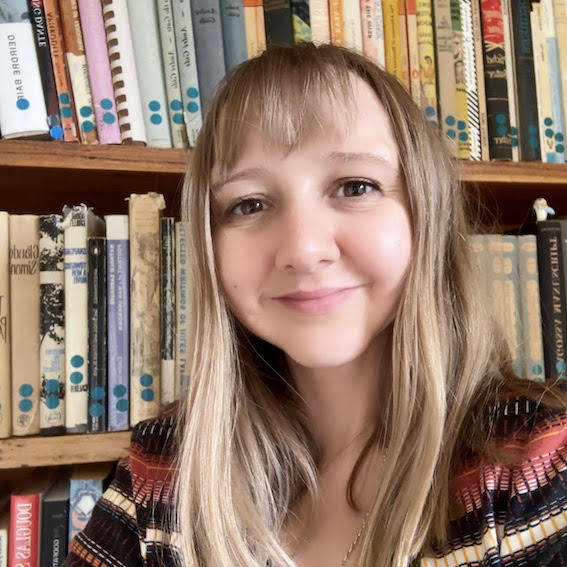
Georgina Maxine
Georgina Maxine is a Queensland based writer (originally from Jersey in the Channel Islands) whose work focuses on queer identities and self-worth. She is...
More from this edition
