
Featured in
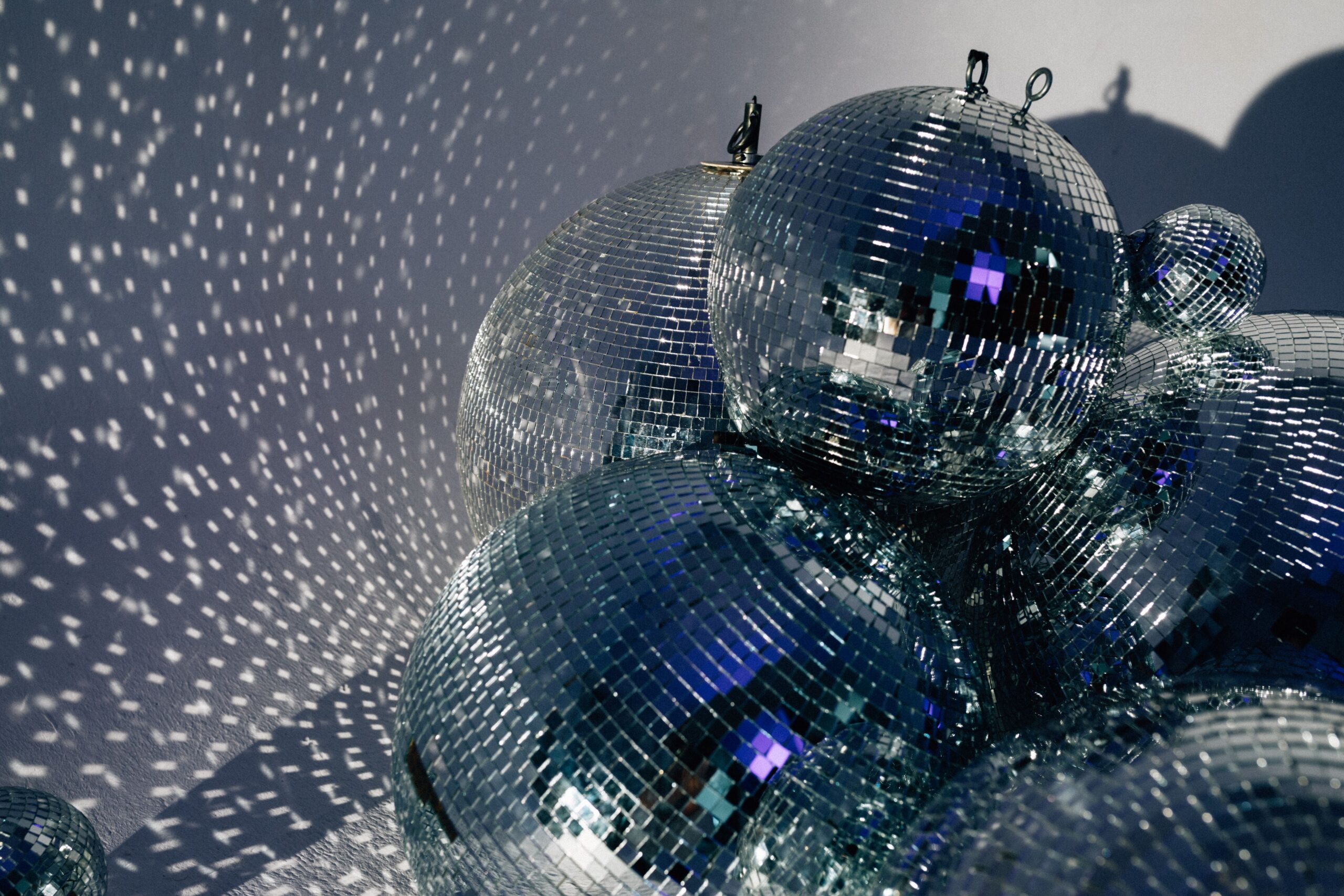
IT WAS AN average Saturday night in Brisbane, and the two of us had different plans in mind. One of us (Heather) was perfectly happy staying in for a quiet night on the couch with her wife, who she’d been with for twenty-three years. The other (Brooke) – single and with an increasingly independent teenage son – was booked to perform a ‘DJ set’ (we’re using that term very loosely) with two friends at a sapphic house party.
Heather had promised Brooke she would come to the party, so despite her better instincts and the very strong pull of the couch, she dragged herself out. Heather arrived at the pre-drinks to find Brooke and her ‘DJ’ friends (aka the Hole Punchers) smoking on the back steps rather than prioritising their playlist duties. She soon wrangled everyone back into the kitchen, where the Hole Punchers put their playlist in order and got ready for the party.
Our little group comprised a lesbian cis woman (Heather), a bisexual cis woman currently sworn off men (Brooke), a queer cis woman, and a queer and genderqueer person.
THE PARTY WE were attending was the Butch Doof Sapphic Saloon, the latest in a series of events across Brisbane run by the Magandjin Dyke Bar Project, a place for our community to come together to ‘connect, conspire and disrupt’. The parties are themed, expansive and wide-ranging, with food and drinks, performances, activities, workshops, a zine and a mutual aid fundraiser. Themes have included the Sapphic Saloon (‘saddle up butches and join us for a cracking good time as we lasso all the lassies and line dance the night away…grab your best boots and dress in your finest flannel’), the HOT Butch Doof (perfectly suited to Brisbane’s subtropical climes, ‘time to get sweaty…with chilled refreshing cock and mock tails’), and the aptly titled Sports Bra Bar.
Sapphic Saloon was held at the home of Brisbane lesbian icon Tilly, and she and a collective of others had thoughtfully planned every last detail. The event’s mini-zine guide promoted a variety of offerings: an immersive cinema experience inside the empty above-ground pool, the dance floor and performance stage (aka the Hoedown Space), workshops (everything from butch lap dancing to a workshop on shame titled ‘Even Butches Get the Blues’), competitions and a campfire singalong to Chappell Roan’s ‘Pink Pony Club’. The party was joyful, chaotic and inclusive, with a strong DIY ethos – unmistakable sapphic energy.
FURTHER SOUTH, WHERE the winters are more bitter, the Lesbian Action Group, or LAG, is currently involved in a legal battle over whether it can exclude trans women from public events by seeking an exemption under the Sex Discrimination Act. LAG wants to hold events for ‘lesbians born female’ only, a definition that excludes trans women. Its stated position is that sex cannot be changed, and that lesbian culture is being erased by trans women.
LAG started with an attempt to hold a ‘lesbians born female’ event at the Victorian Pride Centre, a place created to bring the community together. The Australian Human Rights Commission rejected their application for an exemption, and the Administrative Review Tribunal upheld that decision. In April this year, the Federal Court allowed LAG’s appeal, setting aside the Tribunal’s decision and sending the matter back to be reconsidered.
We’re starting to see more of this: LGB groups (with no T, I, or A) are popping up and deciding it’s time to pull the ladder up behind them. They label trans women a physical, psychological and cultural threat. Yet the evidence tells us something very different: trans women statistically face higher rates of violence, harassment and abuse.
This is an odd place for our movement to end up. Some of the loudest voices claiming to defend lesbians are accepting support from politicians and organisations that spent decades opposing queer rights, including marriage equality. Many of these politicians and organisations had little to say about lesbians until very recently. Now they say they are our ‘defenders’. Suddenly we’re at the centre of their political project. Forgive us if we question their motives.
A WORLD AWAY from this narrow idea of lesbianism, the prevailing vibe of a Butch Doof is one of effortless inclusion. The event’s Facebook page explains that it uses the term dyke ‘expansively, to encompass the infinite nature of gender and identities’, and welcomes anyone ‘who identifies with, or is an accomplice of, dykes and dyke culture’.
We’d barely made it through the gate at Sapphic Saloon before this became evident: One of us (Heather) got a hug from a trans woman she knew, then caught up across the food table with a non-binary mate who tirelessly volunteers for the community. The other (Brooke) went to see a queer friend who was running a butch workshop titled ‘The Subtle Gentleman’.
Just before 11 pm, Heather rounded up the Hole Punchers for their big DJ set (herding ‘musicians’ may be one of the most underappreciated lesbian skills). Eventually, we made it to the dance floor, our well-picked tunes bringing every kind of person with us. It was glorious. This is lesbian culture; despite what some would have you believe, it hasn’t met its demise. Nobody at that party was stopping lesbians from gathering. Nobody was checking whether someone was ‘lesbian enough’ to get through the front gate. Because who would have made that call? And who would have been turned away? How do we decide who fits and who doesn’t? While there’s often a focus on trans women, what about trans men? What about non-binary people? What about bisexuals, pansexuals and queers? The suggestion that we should start scrutinising people like that feels utterly foreign to the lesbian communities we’ve known our entire adult lives.
It’s also out of step with the evidence. Research from the United Kingdom found that 96 per cent of lesbians surveyed supported the inclusion of trans women. Whatever culture some campaigners claim to be defending, it isn’t the one we experienced that night, or the one reflected in the research. Nor is it one that represents our history. Queer women have always shown up for others. During the AIDS crisis, lesbians cared for gay men when many families and institutions would not. Two trans women, Marsha P Johnson and Sylvia Rivera, and gender-nonconforming lesbian Stormé DeLarverie were trailblazers of the Stonewall Uprising in 1969. Brenda Howard, a bisexual cis woman, was one of the founders of Pride Month. Dykes on Bikes, known for leading Pride parades around the world, patrolled Oxford Street in the 1980s to protect the whole community against violent hate crimes, and have more recently co-signed trans inclusionary statements. We have long understood that our liberation has never been achieved by narrowing our community, but by standing alongside others whose dignity was also under attack.
THAT’S WHY GROUPS like LAG don’t speak for us. Nor, we suspect, for most lesbians whose communities actually look like ours. The irony is that LAG isn’t actually prevented from creating the kind of community they claim has been taken from them. The Sex Discrimination Act doesn’t stop lesbians gathering. It doesn’t stop lesbian social events. It doesn’t stop parties, book clubs, bushwalks, dinners or backyard gatherings like the one we attended. The law only becomes relevant when organisations are providing goods or services to the public, including through publicly advertised events. That’s because, like every other business or public event organiser in Australia, they’re expected to reasonably comply with anti-discrimination law. We don’t see any truth in statements that lesbians can no longer gather. We can. We do. We always have. If anything is stopping LAG from hosting a packed night like the one we attended, it isn’t the Sex Discrimination Act. It’s that their vision of lesbian community simply doesn’t resonate with most lesbians we know.
What concerns us most is that this is about something bigger than excluding trans women. Groups like LAG are actively advocating for a monoculture – a community in which everyone thinks the same way, where your place depends on passing someone else’s test, and where difference is automatically treated as a threat.
Some politicians have built a career on the idea that diversity weakens communities. But both history and nature tell us otherwise. Monocultures don’t flourish. They stagnate. They become weak because they’re never challenged, never tested and never strengthened by difference. Diversity isn’t a weakness, but monoculturalism is.
The Magandjin Dyke Bar Project explicitly calls out transphobia, while acknowledging room for mistakes, with the following appearing on all event invites: ‘Racism, ableism, misogyny, queerphobia and transphobia are all a major “Fuck No!”. Let’s try to be excellent to each other, to own our shit and work on repairs when we get it wrong.’
There is no singular experience of lesbianism or queerness or gender – why try to claim that there is? Biology is not binary, and for many of us, over the course of a lifetime, neither is sexuality. Surely a world where we foster more empathy, more understanding and more community is better.
A FEW MONTHS ago, another Magandjin Dyke Bar Project event, Open Dyke, was held on a night of torrential rain. Huddled under a backyard pergola, with the audience spilling into the mud and sheltering under umbrellas, people performed poetry, songs, stories, rants and whatever else they felt brave enough to put in front of a crowd.
At the end of the night, several people took over the microphone to advertise other events, offer counselling services, rally support and thank the community. A parent of a trans child tearfully shared that they had driven six hours from rural Queensland to be there. It wasn’t lost on anyone that six trans people got up, one after another. The message was clear. To survive, and to thrive, we need to look after one another. That’s what queer kinship has always looked like: a diverse but connected group of friends and comrades, sheltering together while the rain pours down.
Queer kinship is exactly what we saw on the Sapphic Saloon dance floor, and it’s what makes our community resilient. It wasn’t a revolutionary evening. It was just another Saturday night. If you want to know what lesbian culture looks like in 2026, I’d trust that crowded backyard over the fantasies being sold by people who mistake exclusion for authenticity.
Image credit: KoolShooters via Pexels
Share article
About the author
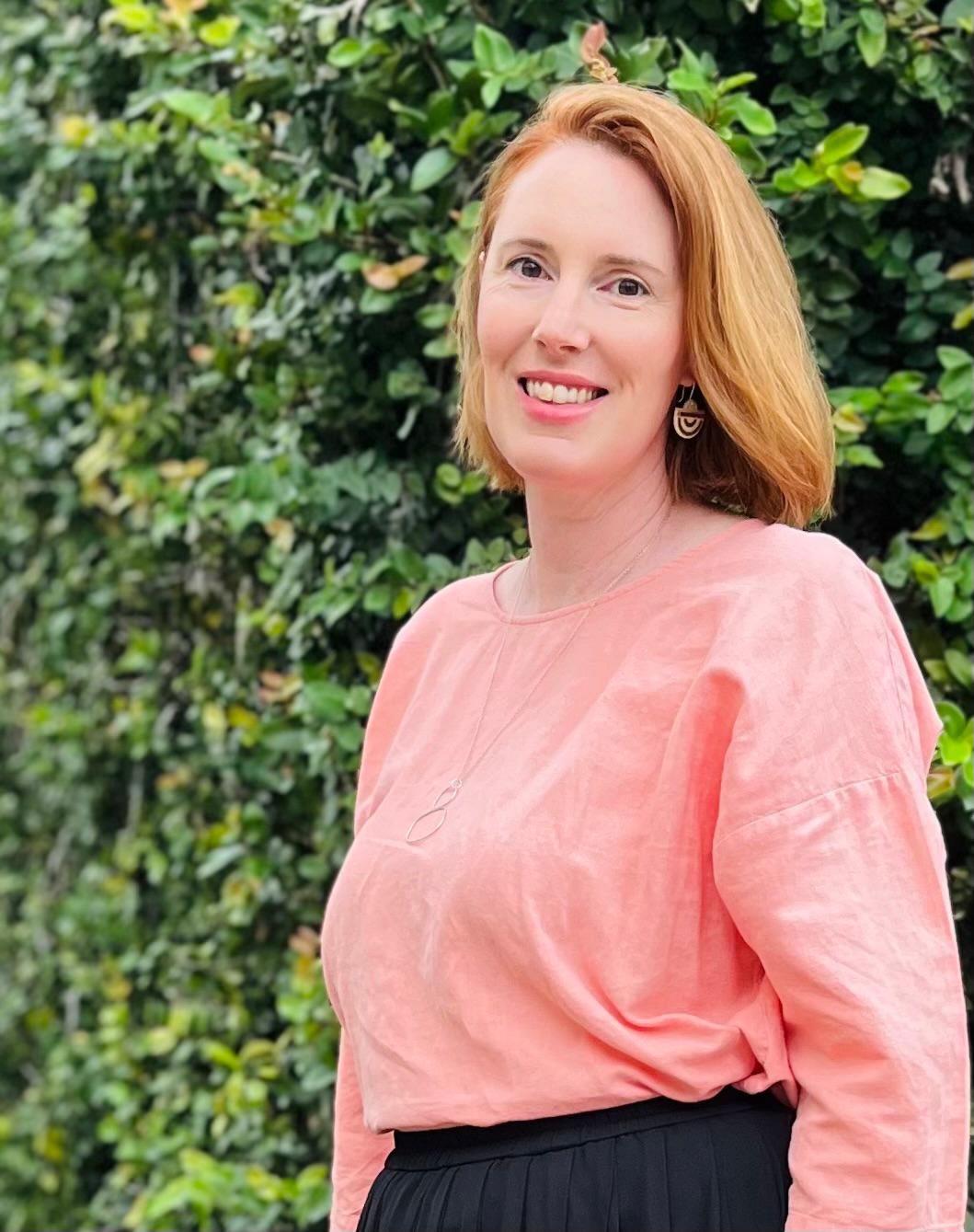
Heather Corkhill
Heather Corkhill is a human rights and anti-discrimination lawyer based in Magandjin (Brisbane). She works and volunteers to advance equality and human rights for...
More from this edition
