
Featured in
TODAY MY HYGIENIST had to show me how to handle an electric toothbrush, placing her hand intimately around mine as she excavated the remnants of plaque. A chewable purple tablet revealed the build-up around my molars. That is a mess, she admonished, pure dirt. I couldn’t say I was offended, or even surprised. My oral health, like other parts of my life, seemed to gather mess and dirt with a familiar ease. The only piece of designer clothing I own, a thrifted Burberry coat, is marked with purple food colouring; my workstation is littered with crumbs. Tracking dirt in has become a practice of self-preservation. It has become a literary practice too – a way of conserving the purgatory that is my idea of existence. Historically, questions of consciousness could be understood through the position of the sun, bipedalism or an explosion in the cosmos. But in the age of the internet, it’s only rational to turn to the biggest soothsayer: our deeply curated and personalised algorithm.
I’ve spent at least a quarter of this decade as a slave to my algorithm. My screen time has proudly declared itself to average four to five hours a day. This is largely owing to the never-ending implication that I need to improve myself while being drip-fed the latest beauty, fashion and wellness trends: the disavowal of ankle socks; looksmaxxing; skinnytok; barely-there makeup hacks (because wearing a full face means you’re trying too hard). I even purchased a pair of Salomon XT-6s because Adidas Sambas were suddenly too 2025. The pull towards instant knowledge feeds the ever-present fear of missing out, the need to belong to something bigger and communal; something shaped and enforced by a shared consciousness, proliferated through questions and concerns, consumed by hungry voids across Reddit, X and Instagram. Once I started dressing, performing and speaking the way my algorithm told me to, I was deemed inoffensive. After a period of extreme depersonalisation after moving back to my hometown, I craved a sense of belonging and looked to the algorithm for a place of new consciousness. But the dirt of my past smeared the philosophical lens.
The Clean Girl Aesthetic and The Cool Girl Substack are deliberately and openly anti-mess, proclaiming that the idea of physical and spiritual dirt impedes self-development and productivity. The rise of cleancore and detoxification – with their constant battle cries for improvement and reassembling one’s old self into a fresher, tighter new version – seemed the antithesis to the belonging I’d been searching for.
I discussed this recently with my mentor and friend Matthew Hooton. Both Matthew and I struggle with chronic illness and often respond to that through acts of assembly, both physical and spiritual. Matthew explores this literally in his 2025 book Everything Lost, Everything Found, a historical novel about Henry Ford’s rubber-tree plantation in the middle of the Amazon. I explore this in the abstract through a poetry collection with no linearity or adherence to traditional form, and a novel whose ending splits into multiple personalities. We concurred that the search for wholeness – the invention of better and brighter bodies and souls – could not make us whole. Dirt from the Amazon, dirt from grief, would always find its way inside. Fullness – a sum and amalgamation of one’s parts, their ghosts and hauntings – provided more comfort and contentment than my search for new, developed and curated truths.
While philosopher Jacques Derrida may have coined the term ‘hauntology’, I believe its popularisation can be attributed to writer Mark Fisher, who stated that the action was marked by a ‘refusing to give up the ghost…or the refusal of the ghost to give up on us’. Fisher presents the idea of haunting as consensual and willing; the haunted derive meaning from an abstract stream of disparate information, memories and cultures – in other words, an algorithm. While Fisher examined electronic musician Burial’s sample-heavy and sonically disparate 2007 album Untrue as a touchstone for his interpretation of hauntology, I examine my algorithm, where the ghosts of my life and lost futures linger well and true.
IT’S THE SUMMER of 2011, and I have just moved schools because of the extreme racism I experienced at an elite private institution in Adelaide. I am sustained by my YouTube algorithm, which is an endless source of information and, most importantly, companionship. The first video that comes up is of a Chinese-Vietnamese teenager with the same side fringe and spiky hair as my cousin Nigel. John Luc, or MyChonny, wrote and created skits of what it meant to grow up Asian-diasporic in Australia. He also had the same accent as me and spoke in the same disjointed Cantonese. In essence, he was, like me, a ‘Chogan’ – a portmanteau of Chinese and bogan, and a growing identity in Aussie playgrounds for second-generation immigrants who harnessed the extremes of their dual identities.
MyChonny portrayed characters of a loud, brash and annoying Asian family that matched my own: overbearing parents who didn’t allow pets to sleep inside and who stereotypically demanded perfection from their children; sisters and cousins who spent too much time on MySpace and wanted to date gweilo (white men) due to internalised racism. Most synonymous with MyChonny’s oeuvre is a skit about a father and son (both played by Luc) who argue about the latter’s B+ grade in English. It’s not exactly progressive (and it must be said that some of Luc’s skits fall into uncomfortable bouts of racial stereotyping), but as with all legacies, Luc’s does not come without its dirt. The broader picture, though – what he tries to convey despite the over-the-top and politically incorrect edge of mid-2000s YouTube – is something that endures, at least in my personal assemblage. Luc’s own quest for meaning and identity affirmation results in a complicated, sometimes awkward verisimilitude. This is ultimately what makes his work so personal – at least for an Asian-diaspora kid looking to see themselves reflected outside of a tokenistic migrant story of falling leaves and austerity. Luc’s videos feel like a product of his own cultural haunting – living in a family with a complicated migration story, surviving in a country that seeks to actively reject them. I think the mess of Luc’s videos – the obvious dirt that he’s left behind – makes the work all the more endearing. His newer content, shot in HD with costumes and sets, feels ineffective compared with the unpolished webcam footage of his teenage self.
OUR CULTURAL GHOSTS, Fisher states, are almost always in decay. They are crumbling and poignantly un-whole – cobbled together with distant memories and cultural ephemera. I think of my own sick body, held together by hormone replacements and medical stents, imprecise and messy, but surviving. A fullness that does not seek to be whole.
In Adrian Chiarella’s 2026 coming-of-age queer ghost story Leviticus, the question of shared hauntings lingers. The film’s ending makes us wonder whether it’s empowering to trust and lose ourselves in haunting rather than come at it with a sense of truth or conclusion. In essence, absconding the whole for the full, finding sanctuary and security in our missing and borrowed parts, choosing love and acceptance over fear and plans for the future. Luc’s videos filled parts of my identity that I was too afraid to confront or perform, introducing a new identity that no longer sought improvement. In MyChonny, my previously suppressed ghosts became familiar permeations who I finally allowed to follow me in my literary, physical and spiritual journey. Chicken bones wrapped in newspaper, people who definitely didn’t understand what an inside voice was, admonishment about my academic mediocrity: these scenes became normal, endearing, alarmingly tender, even.
It may be a bold claim, but without MyChonny, my debut novel, Plastic Budgie, wouldn’t exist. A story told in fragments and familiarities, its internal scaffolding was built from a haunted algorithm in which Asian-diasporic characters could be performed and perceived with a sense of distinct naturalism and good humour – all because MyChonny happened to find me as a fifteen-year-old. My latest poetry collection, Sick Note, is a direct response to the dirt we thought we’d left behind, with poems dedicated to a cleaner, simpler algorithm, ghosts speaking to each other through margins and footnotes, understanding formed by debris and acceptance of our hauntings – both in the body and soul.
When I speak now to other diaspora kids who grew up in the same disaffected classrooms of the mid-2000s, many found comfort in the complicated legacy of MyChonny. His catchphrases and skits were integral in our millennial mind palaces. As Fisher noted in his exploration of Untrue, the anonymity of 2000s internet, the sparse loneliness of it, could actually be used as a tool for communality and kinship. But this is at odds with the unlimited and uncomfortable access today’s algorithm gives us to other people’s lives.
Perhaps this is why the ghosts in my algorithm endure – filling the gaps in my existence with old detritus and debris and creating a messy, errant place of belonging.
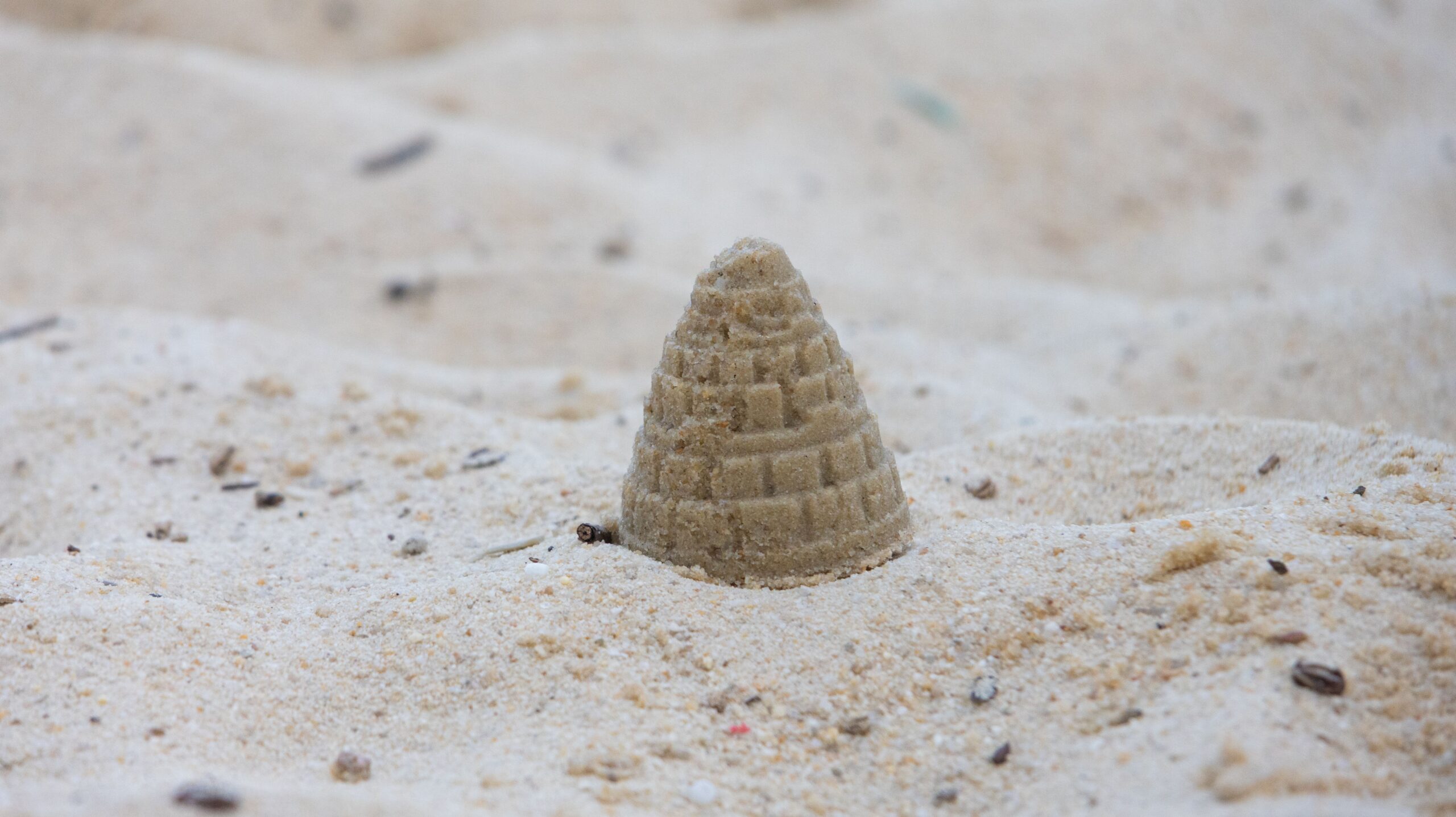
Image credit: beanie star via Pexels
Share article
More from author
This woman’s work
Poetry Life seemed easier – in the Tampon ads – like go roller-skating or scale a mountain with a heavy flow – but she wakes...
More from this edition
