
Featured in
WHEN I TURNED sixteen, I began investigating murder trials involving gay male victims. This may not sound like your typical hobby for a teenage boy growing up in Tasmania during the early 2000s, but my first case was close to home.
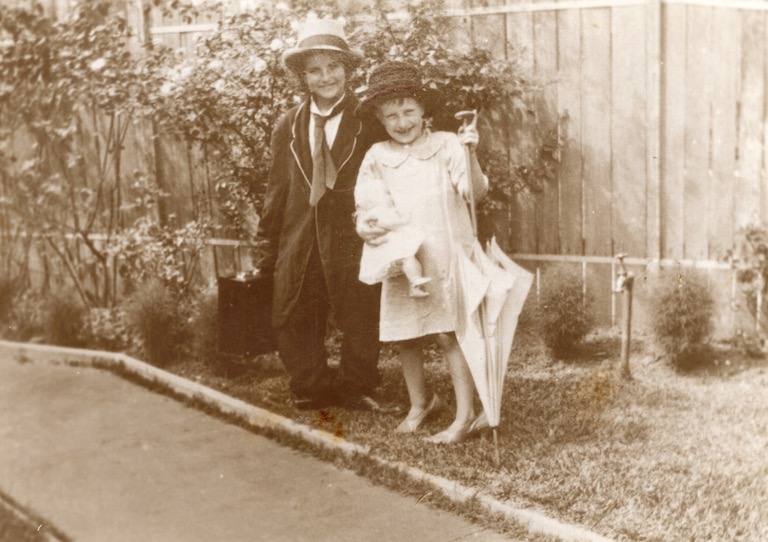
Warwick Meale came to me through a sepia photograph in my parents’ bedroom. It hung on the wall next to Mum’s side of the bed, and I would often clamber up onto the mattress to get a better look at it. It shows a five-year-old Warwick plays dress-ups with his cousin (my grandmother) Winifred in the late 1920s. Warwick is wearing a white dress, clutching a doll in one arm and a parasol in the other – an exciting act of transgression. Children are often blissfully free from gender constraints, but as someone who always knew I was gay, I recognised the impulse. I had a lingering sense that my difference was probably going to stick around; this fate weighed on me more heavily each year. Warwick made it a little lighter.
Mum loved to regale me with tales from her family’s past. But she waited until I was older to share Warwick’s. He had enlisted in World War II and died just months before his twenty-first birthday. Warwick did not die in battle. He was murdered beneath a bridge in Townsville in 1944. The killer, likely an allied serviceman, got away with it.
When Mum told me that the little boy in the photograph had been murdered, it was more than my teenage heart could take. If his death was in any way connected to his sexuality, I had to know. There may be little hope of finding justice through the courts for a crime committed over seventy years ago, but I had a personal score to settle. I was still deeply closeted at the time, so it lit a fire in me. I had to find evidence that Warwick had been gay, like me. Mum and I joined forces and started researching what happened to him under the guise of a family history research project. I didn’t realise it at the time, but Warwick would be my first foray into queer history. We spent hours on our 2004 iMac in our lime green office reading articles on TROVE and reaching out to people on genealogy websites.
Learning the other half of Warwick’s story was the first of many signs that death was an inevitable fate for gay men. When I built up enough courage to come out to my parents in 2008 – at seventeen years of age and still living in my Tasmanian family home – my parents validated my concerns. My mother was instantly filled with terror. She had grown up in Manly – a hotspot for the hate crimes that plagued Sydney from the 1970s to the 1990s, when teenagers would catch buses to gay beats to bash and kill men congregating there. She had absorbed articles about other types of lethal violence perpetrated against gay men, both in domestic settings and by strangers. She had also given birth to me during the 1991 peak of the AIDS crisis in Australia.
During those early, rocky days of coming and being ‘out’, I continued my quest to learn more about Warwick. It was an obsession that took the good part of a decade. Despite my best efforts, I never found a smoking gun to ‘prove’ that he wasn’t strictly heterosexual. But this is not surprising. Many servicemen kept their sexuality concealed throughout their lives. It was illegal, considered immoral and grounds for discharge. However, in Warwick’s case, there were clues: a family rumour, the fact that the crime scene was near a gay beat and, of course, the photographic evidence of a happy childhood memory.
RESEARCH SHOWS THAT when children are taught their genealogy, they come to understand that they are part of a larger tapestry. This is a fact that gives them strength. But as queer people, we’re raised – for the most part – in heterosexual families. Without our parents, schools or televisions enlightening us, this absence can worsen the isolation many of us experience during our younger years.
Looking for queer ancestors is complicated by the way identities have shifted over time. The language we use today was only solidified in the late twentieth century thanks to the gay liberation movement. In the preceding decades, many men with same-sex desires neither called themselves nor thought of themselves as ‘homosexual’. The line between gender and sexuality was also less pronounced. More important than their sexual identity were the types of interactions they sought out as well as their gender presentation. While many traditional historians cry anachronism to invalidate or downplay queer history, I think the unfamiliar language and cultures found in the past are an expansive challenge, not a limiting one. When I look to the past, I find more rather than fewer possibilities.
Many museums, historic sites, TV shows, movies, archives and libraries that tell our nation’s history were long centred on traditional, cisgendered, white, male, colonial and heterosexual perspectives. For decades, minorities were systematically omitted or painted in a negative light. In a reflection of the times in which they lived, queer people were most commonly found within criminal files and salacious journalistic reporting. Authorities considered same-sex desire and gender nonconformity a sin, disease and crime through much of Western history. Until 1981, homosexual acts were criminalised in my home state of Victoria (and as late as 1997 in Tasmania, where I grew up), and overpolicing and intimidation continued well after that.
The silver lining is that history is material – crime, the military and journalism all leave robust paper trails. While searching for Warwick, I discovered over 150 pages of correspondence between detectives in the Queensland State Archives. Homicide investigation developments were closely followed by the press, whose reports I could access and read. Warwick died a World War II soldier, so his documents will be forever preserved in the National Archive of Australia.
Other evidence for queer existence – such as love letters or intimate photographs – ran the risk of landing their creators in jail, costing them a job or resulting in the loss of child custody. Precious little of this evidence survives. With too much to lose and too little to gain, many queer people – arguably most queer people – never left a material trace of their love and desire.
LEARNING TO READ historical documents is similar to learning a foreign language. When it finally clicks, it’s exhilarating to be able to unlock a new universe. I can now spot patterns and know when to take the information with a grain of salt.
The first trick is to orientate yourself in the archaic language of the past. When the detectives questioned Warwick’s sexuality, they reported that he may have been a ‘pervert’. The courts, police and media often used the slur as a ‘catch-all’ term for paedophiles, bestiality or any other behaviour that strayed from the heterosexual norm. Our geographies are unorthodox too. Beats – sites where gay men congregated for sex and community – were linchpins of a nascent queer world. Camp pubs and cafes often wouldn’t overtly advertise their preferred clientele. Aspects that now feel like schoolyard gossip become important clues: clothing, career, marital status.
Even time doesn’t map neatly onto heterosexual history. Our BCE and CE inflection point is the gay liberation movement. Things can be trickier to unearth prior to the 1960s – the ‘in the ‘closet’ era. However, less visible doesn’t mean non-existent: colonial farmers, World War II soldiers, drag queens, daring artists and trailblazing advocacy bodies found community and love despite the odds. The gay liberation movement inspired many people to come out – right before the decriminalisation of homosexuality and the AIDs epidemic spurred an explosion of real-time history recording.
Intersections with other niche corners of history can be fertile ground for research. Experts who specialise in, say, military history or a specific geography or period may also have valuable knowledge about queer history within that context. My personal favourites are the oral histories, which are often mixed with myth but all the more enlightening for it. As it’s an academic field that only emerged in the last fifty years, it is still possible to read and speak with the experts who invented the concept of queer history in the first place.
Even in the rare and exhilarating circumstances when there is an abundance of sources, some traditional historians have been infamously reluctant to acknowledge non-normative sexuality and genders. Colonial-era Anne Drysdale and Caroline Newcomb migrated to Victoria, leased a farm and slept in the same bed. When Anne died, Caroline commissioned a mourning brooch made from finely woven strands of their hair. Despite this, the two are still commonly referred to as ‘friends’. It’s important to remember that some biographers and historians are fearful of ‘besmirching’ someone’s name with the ‘insult’ of calling them queer, so reading between the lines is essential.
I, like many queer people, am filled with grief for those who never got to live an authentic life. It’s heartbreaking that so many waited until they were on their deathbed to come out, or never came out at all, or couldn’t bear the hostile world and ended their life. Many were sent to jail for being themselves or seeking pleasure. Far too many lives were cut short due to HIV/AIDS before the creation of life-changing treatments. Among them were creative connoisseurs, wise elders and ordinary folk challenging the heterosexist norms – all lost. While I mourn each of them, I also feel a comfort in knowing that many historians are working tirelessly to ensure their lives and stories are remembered.
MY SEARCH FOR Warwick led me to Sex, Soldiers and the South Pacific (2017) by historian Yorick Smaal, in which Smaal mentions a clique of Australian diggers who seduced their GIs in Port Moresby in 1943. The best part was that this group called themselves the ‘New Guinea Girls’; when they weren’t cruising, they enjoyed singalongs. Seventeen soldiers were interrogated by the authorities. To see the transcripts of the investigation in the flesh, I ventured to the Australian Queer Archives (AQuA).
Since 1978 (when it was founded as the Australian Lesbian and Gay Archives), AQuA has collected, preserved and celebrated material from the lives and experiences of LGBTIQ+ Australians. Their collection illustrates not only violence but also resistance and fun. Finding AQuA when I was in my mid-twenties was a homecoming for me. It was a place to find the answers to the questions I’d been consciously and subconsciously asking my entire life. It was also a place to meet ancestors I never knew I had.
I’d never set foot in a physical archive before – my research had been limited to online databases and books. I pushed past my insecurities about my limited expertise, sent an email and made an appointment for their Monday night slot. Long before the construction of their custom-designed home in St Kilda’s palatial Victorian Pride Centre, AQuA was little more than a back room in an office block. On a dark winter’s night, I rocked up to the Victorian AIDS Council office (now known as Thorne Harbour Health) in South Yarra. The office workers had clocked off for the day, leaving the gloomy lobby eerily quiet. I phoned the AQuA representative with trepidation.
I had arrived at the same time as a volunteer, and I was accidentally swept up into a comprehensive tour of the space. Five or so other researchers were seated along the tables in the centre of the room and were quietly flicking through files or typing on laptops. I wondered what secret corner of history each of them was exploring. The air carried the distinctive archival smell of objects that hadn’t seen sunlight in years. The fortified grey metal compactus was filled with cardboard boxes; lockers lined the opposite wall. The directories to the archive’s holdings were kept on rudimentary but robust spreadsheets.
I took a seat under the fluorescent lighting and got to work. I was eager to get through the seventeen interrogations I’d requested before visiting hours were over. The intrusive yet fascinating inquisitions followed the same series of questions. First, the New Guinea Girls were asked for a detailed description of their sexual experiences before and during the war. Then they disclosed the type of men they gravitated towards (some were catholic in their tastes; others preferred only Americans or fellow Australians. Racism and fetishisation toward the black GIs was also common). They were asked about their favourite sex acts (anal sex was called ‘browning’; the Americans’ favourite was the blow job) and whether they’d ever even tried sleeping with a woman or enjoying sports. They were asked to provide details of any harassment they’d experienced from fellow unit members and if they’d ever accepted money for their services.
The New Guinea Girls’ file is limited and violent in the way a lot of documented queer history is. But the typewritten reports were also a tantalising taste of same-sex desire from the time. At first, I wondered if encountering queer people of the past would be like encountering aliens from a different planet. To my delight, the opposite was true. Someone worked at David Jones like I did through my university years. Another was coddled by his overbearing mother (guilty!). Many pursued a covert relationship with a neighbour. Even in distressing contexts, some managed to sneak in some camp humour. I was hooked.
One major limitation of the file was that it was heavily redacted. Names, hometowns and military details had all been obfuscated, blocking me from ever knowing if, somehow, Warwick was in the file. It also blocks historians from cross-referencing other documents and creating a fuller picture. The legislation feels homophobic: that revealing the ‘personal affairs’ of these men would be damaging to their reputations, even though they’re all long gone and laws and social stigma have eased.
AQuA offers an invaluable alternative to a heterosexual national history. It’s impossible not to be inspired by the stories of people who defied societal expectations and lived rich and fulfilling lives. Many expressed their true gender (despite draconian laws) through the often gender-affirming practice of photography. Now, we’re gifted with breathtaking archival photoshoots. The names of almost-forgotten watering holes or beats – where queer people surreptitiously or overtly found each other – survive at AQuA. So do the faces and names of the folks who fought tooth and nail for our rights. Take the lovers and activists Kendall (Ken) Lovett (1922–2020) and Mannie de Saxe (1926–2024), who donated over three cubic metres of boxes of hand-lettered placards, posters, and material documenting their solidarity with the fight against homophobia and other causes. Mainstream historical queer narratives centre on international scholarship and events like Stonewall in New York City, so AQuA is also a place to understand how things went down for queer people in Australia.
Although each pin, T-shirt, zine, photograph, letter, book, campaign and oral history preserved within AQuA’s collection elicits a magical, golden spark of happiness, AQuA is really made by the living. At AQuA, we’re all looking for our people; my people are the librarians, academics and enthusiasts who call AQuA home. A gathering of queer historians inevitably turns to gossip about the salacious new discoveries that correct the record or enrich a known narrative. It’s a privilege to speak with both younger and older historians, and to learn from the varying perspectives they offer.
DESPITE MY RESEARCH bringing me closer to Warwick and my queer forebears, I feel an unresolved shame about my fixation on violence directed at queer people. There’s a valid argument for the limitations of ruminating on such distressing historical stories. After decades of marginalisation and discrimination, shouldn’t we be focusing on queer flourishing? Am I simply passing the trauma down to the next generation of queer people?
My efforts likely have their roots in a survival instinct. By forensically examining these cases in my younger years, I had been looking for an explanation for Mum’s pessimistic outlook while also studying how to survive – clawing for a sense of control over my fate. The recent rise in violent attacks using geolocated hook-up apps such as Grindr and Sniffies means my fears have unfortunately been rendered valid. New York authorities have begun cracking down on known cruising areas, as they did throughout the twentieth century. One only needs to trace the discourse around trans and gender-diverse people in the last ten years to see that emancipation isn’t linear. The so called ‘gay panic defence’ (which was a legal strategy that could result in a downgraded charge of murder to manslaughter if defendants could prove they were ‘provoked’ by a homosexual advance) was only abolished in South Australia in 2020.
This is why queer archives and history are so important. They are both a guide to queer pleasure and survival. My research into Warwick later became the basis of my 2022 book, The Boy in the Dress. Many people research their family history to create a family bible for future generations, but I don’t intend to have children of my own. It’s comforting to know that my book now proudly sits within the AQuA collection, ready for someone to discover a chapter of their queer family history.
Share article
About the author
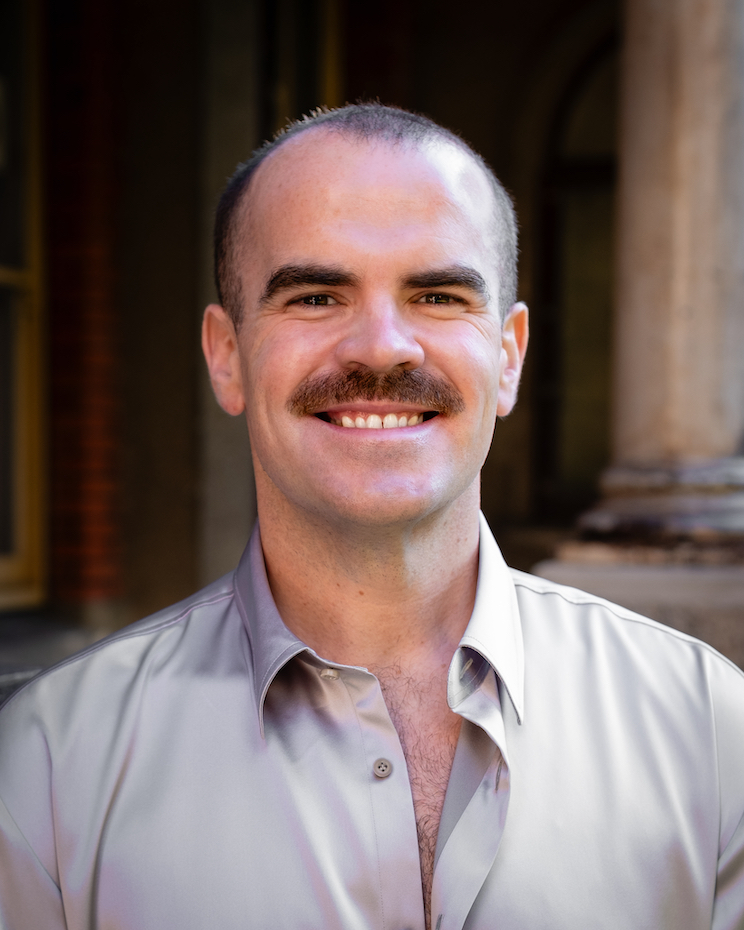
Jonathan Butler
Jonathan is a queer writer, broadcaster and community educator living in Naarm. His debut book, The Boy in the Dress (Affirm Press, 2022), was shortlisted for The Age Book of...
More from this edition
