
Featured in

IN SEPTEMBER OF 1997, I crossed hemispheres, leaving my home in Turkey for a new life in Australia. Just a few weeks short of turning fourteen, I was dropped in what seemed to me like a Hitchcockian land, where a hot-headed magpie in my uncle’s front yard would level his pointy beak at my face like a rifle. The world had turned upside down – literally. The man on the moon was now gazing at me inverted, as if performing a handstand, and escalator etiquette dictated that it was the lefthand side we should vacate for standing. Only when the novelty of fairy bread and the Nutbush started to wear off did I realise that the topsy-turvy world had slapped me with a new label: immigrant background.
Before 1997, I was just a noun – a child, a daughter, a student – in an education system shaped by the Turkish dogma ya sev ya terket (‘love it or leave it’). This slogan, ironically imported from the United States, demanded allegiance to and guardianship of the state. After 1997, I became a noun phrase – a teenager with an immigrant background – who carried her resident status in her accent. The phrase evolved with me as I moved through different stages in life. I became a girlfriend with an immigrant background, a teacher with an immigrant background, an Australian expat in South Korea with an immigrant background. Once I began to identify as a writer, the phrase quietly crept into my bio and began to dictate not only what I could write but also how it should be written, who it should be written for and why.
MY INTEREST IN writing fiction coincided with my arrival in Australia. I was confined within the borders of a country, practising a borderless art in the only language I could express myself in: Turkish. Everything I wrote back then merely imitated the works I was familiar with – Turkish classics I had to study in school, and some prominent writers from Iran, Russia and Brazil. It wasn’t until my late teens – when I discovered writers like Jhumpa Lahiri, Amy Tan and Ahdaf Soueif – that I realised there were stories that existed beyond the boundaries of any one nation’s literary traditions. There was something about the works featuring mahjong tables in San Francisco or an isolated Egyptian woman in London that excited me. What I didn’t know at the time was that my excitement derived from the diverse representation of lived experience. These stories weren’t my reflection in the mirror (that kind of representation wasn’t available). However, these stories gave me the chance to look through a window where my silhouette reflected on the glass blurred into the similar yet unknown.
Looking at how the immigrant or diasporic genre has evolved since the ’90s – both in visibility and in the number of authors contributing to it – I began to write in English. That was less than a decade ago, and I was still under the impression that switching my pen to English wouldn’t feel too different – aside from the ungodly amount of time I would spend googling synonyms and grammar rules. After all, many of the core storytelling devices that shape narratives are universal and timeless. Sumerians inscribed on clay tablets the first example of a hero’s journey. It was Shahrazad’s cliffhangers that kept King Shahryar captivated, and Chekov’s pistol appeared in the scene only if it was going to be fired.
Once I started to write in English, my focus shifted from the act of writing itself to trying to understand the mechanics of the literary market. To get published, I needed to understand who was allowed a seat at the table – the ones with the power to decide whose stories to publish. I subscribed to journals, joined workshops, attended events and began to network with writers who also wrote diasporic literature. It appeared from the outside that the literary market was finally elevating the stories of those in the margins. Voices were ‘given back’, and narratives were being flipped. Upon closer inspection, though, it wasn’t hard to see that being heard came with the condition of following a pre-existing narrative template.
So, I began to navigate the surreal landscape of contemporary diasporic writing, where mangoes were appointed as cultural attachés, stinky lunchboxes were the source of trauma and everyone hated their hair because of colonialism. The mass production of personal essays such as this – indistinguishable from one another due to repetitive themes of identity, belonging, otherness – stood in sharp contrast to the genre’s early examples, in which writers distinguished themselves by the diversity of their themes and the quality of their storytelling.
In Australia, a substantial body of work has been published over the past decade that could be grouped under the label of ‘ethnic trauma’. These narratives typically centre on a self-loathing protagonist – a person of colour who is humiliated and dehumanised by the actions of a white character. The narrative devotes so much attention to describing ears, eyes, mouths and noses that it overcrowds the characters’ interiority. Stunted cultural references emphasise the supposed otherworldliness of the communities these writers depict. I understand that tropes like these initially emerged in response to Anglo-Australian storytelling traditions and their portrayal of First Nations peoples and immigrant groups.
As a fledgling writer desperate to get published, did I stick to the same rules? Sure. I rewrote my protagonist as a sad ethnic woman. The truth is that I too am a sad ethnic woman, but unlike my protagonist, my existence isn’t something I define only in comparison to white Australia. To fit my characters into the template, I starved them of nuance and hammered them into flat caricatures of Turkishness. I sprinkled a few Turkish words here and there like tarçın on my mother’s sütlaç (see what I did here). I claimed to offer insights into the Turkish experience that were as authentic as a tour around the Blue Mosque. Then I gave up.
THE WEST’S INVENTION of the exotic, inferior Other is hardly a recent phenomenon. Orientalism formed the framework propping up centuries of colonialist propaganda, churning out hundreds of stereotypes about the region. We have all seen at least one Hollywood film set in Southwest Asia and North Africa featuring barbaric Muslim men and repressed women. Yes, I am talking about the scenes where locals wrapped in layers and layers of fabric make their way through narrow alleyways as a prayer rings out in the background.
However, the Other exoticising themselves to capitalise on dominant orientalist tropes is a recent trend. I spent my twenties living in Istanbul – a city fetishised by the West, run by locals who turned the West’s fantasies into a money-making opportunity. This taught me a thing or two about how orientalist tropes are repackaged into marketable content for wealthy, well-meaning yet clueless Western consumers. During this time, in an Istanbul restaurant packed with tour groups, I witnessed a Sufi ceremony of Whirling Dervishes. The British woman, noticing the terror on my face, leaned over to ask if I was alright. I was shaken to see a centuries-old ritual – a form of prayer that is meant to symbolise one’s shedding of ego and connection with God – reduced to a form of entertainment. I personally wouldn’t want to watch people confess their sins to a Catholic priest while digging into my beef wellington. Whenever an editor asks me to drop some cultural reference onto the page to make my story ‘more Turkish’, I picture myself in that Dervish hırka, spinning between tables and chairs for the amusement of European pensioners.
However, these kinds of requests do not frustrate me as much as the post-immigrant generations’ eagerness to fit into those templates at the cost of reducing the craft to an identity performance. I use the word ‘generation’ intentionally here, because the genre is overwhelmingly driven by the post-immigrant generation, whose writing shapes dominant narratives and trends. The lack of first-generation voices is unsurprising. To create art, one must climb all the way to the top of Maslow’s hierarchy of needs.
The prevailing norms in diasporic literature can encourage writers to speak from victimhood, without recognising that being immersed in English from a young age and having gone through the Australian education system automatically grants some diasporic writers a voice that rises above the many others.
I SPENT MY first few years in Western Sydney, where most of my peers were born in Australia to non-Anglo parents. More recent arrivals like me, imports, made up a much smaller segment of the population. The differences between how the two groups lived and operated were glaring. The Australia-born kids I knew lived in big houses – not single-bedroom flats; they bought soft serves from McDonald’s without hesitation and seemed to wear an invisible cloak that made them fearless in front of our teachers and bus drivers. I was an ‘import’ and acutely aware that I had more in common with the thirty-something-year-old Iraqi woman next door, Zainab, than with her fourteen-year-old daughter, whom I walked with to school.
Zainab needed her daughter’s guidance to fill out government forms. I followed Zainab’s daughter’s shadow to navigate the timetable and the school layout that resembled a labyrinth. Every import teen I knew at the time relied on such a friend – often not by choice, but because they had been paired with one by a well-meaning teacher who was blind to the power dynamics between students. Those who wore the cloak of confidence would stand smugly at the school gates, armed with their cultural wisdom of the inside. They possessed the power not only to instruct you in any way they wanted but also to translate the world to you – and you to the schoolyard.
Australia’s homogeneous literary scene recreates the same schoolyard dynamics. When the market turns a writer into a spokesperson for the community they are seen to represent, and when the writer offers a narrative that packages their experience as a singular ‘cultural truth’, they are effectively granted the authority to shape the stories of entire communities. Of course, we all have our own truths, which are derived from lived experience, but this is only useful if we interrogate the factors that shape that experience.
WE LIVE IN a country that gathers a multitude of diasporic histories and identities under the same banner. It is therefore expected that the publishing industry continues to frame this diversity as a unified category, expecting immigrant writers to follow whatever template is purportedly designed to empower them. It falls to the authors to acknowledge that conforming to pre-established, superficial narratives to gain short-lived admiration from Western readers contributes little to the communities they portray. Diaspora stories are what I want to write because they are what I know. But for the sake of visibility alone, I cannot bring myself to produce sickly sweet depictions of a homeland with which my relationship is already fraught. I want to write from a voice of dissent, not of victimhood. I hope that, someday, I will regain the confidence I once had when I wrote in Turkish – before I became paralysed by questions of audience, market demands and the conventions of genre.
Image credit: Husam El Haq via Unsplash
Share article
About the author
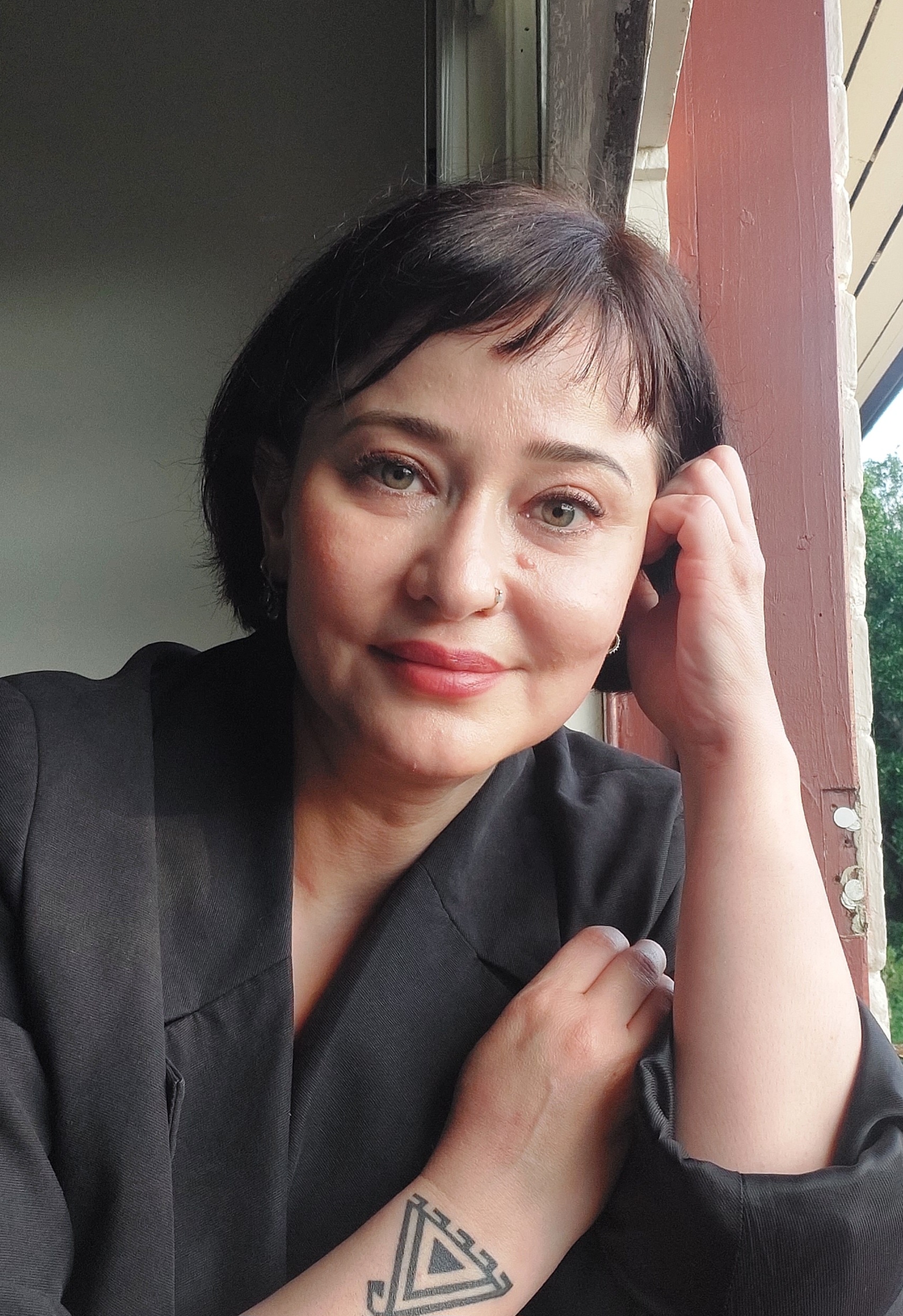
Deniz Ağraz
Deniz Ağraz is a is a freelance writer based on Gadigal Land. Her writing has appeared in Liminal, Meniscus, ABC, diaCRITICS and elsewhere. Her short...
More from this edition
