
Featured in
1.
minutes before dawn
firm faces of ghosts walking –
drum-drum & bagpipes
2.
The teenaged schoolboy invited to give the commemorative address: every few sentences, his newly broken voice approximates a faux ‘Englishness’. Perhaps he is acting on advice from a parent or teacher. Perhaps at some point during his relatively short life he acquired this technique through osmosis. Either way, it is an affectation. And it’s illuminating.
3.
An online entry in The Sydney Morning Herald, 6.31 am: ‘Welcome to Country boos at Melbourne’s Anzac Day dawn service.’ Later in The Guardian, 6.54 am: ‘The Age and the Australian report that a group of men shouted over Bunurong Elder Uncle Mark Brown as he welcomed attendees to his father’s land.’ The Australian ‘heard shouts of “this is our country” and “we don’t have to be welcomed”’.
Within hours, reports of a similar disturbance in Perth.
4.
Strike me pink
the square heads are dead
mongrels. They will Keep firing
until you are two yds. off them
& then drop their rifle & ask for
mercy. They get it too right
where the chicken gets the axe
…I…will fix a few more
before I have finished. Its good sport father
when the bayonet goes in
there eyes bulge out
like prawns[i]
5.
On your way home, a postcard on the footpath. You pick it up. On the front is a photograph of the Goulburn Boer War Memorial (unveiled in 1904): a soldier wears a slouch hat, his arms firmly down by his sides, stuck in time. Printed on the back of the postcard are the words Get your FREE suburb report. A QR code adorns the black-and-gold branding of one of Australia’s most prominent real-estate franchises.
Profit can be a form of blindness.
6.
A choice: ‘English Breakfast’ tea or ‘Australian Afternoon’ tea? Both are made by Twinings, whose logo, conceived in 1787, is one of the oldest in the world. According to the packaging, ‘English Breakfast’ tea is stronger than ‘Australian Afternoon’ tea.
You choose
green tea, in a bag
stolen
from an Ibis
hotel
7.
Last month, over lunch, you watched on ABC iView a Four Corners episode about the $500 million redevelopment and expansion of the Australian War Memorial in Canberra. During the program, the Honourable Kim Beazley AC, who is the current chair of the Memorial’s board (and a former leader of the Australian Labor Party), said with casual-to-the-point-of-offhand pride, ‘The Australian War Memorial contains the heart and soul of the Australian spirit.’
8.
As the schoolboy finished his relatively thoughtful speech – relatively thoughtful in that he mentioned Australia’s involvement at Gallipoli was a defeat but neglected to mention the total number of deaths: 11,488 soldiers from Australia and New Zealand were killed, and 86,692 Turkish soldiers also died[ii] – there was silence in the bruising dark, before applause, soft and tentative, then steadily louder, like rain.
9.
NOTES FROM 24 MARCH 2025: as I approached the pre-polling station at the north end of the main street, my body swelled with anxiety – I had spent a week here while supporting the recently defeated YES campaign for the Indigenous Voice to Parliament referendum. I made my way through the volunteers who were handing out how-to-vote cards. Nearing the entrance to the voting station, I saw a friend, another artist, who was volunteering for the Greens. I stepped up to him. He smiled; we embraced. I accepted one of his flyers, as well as one from a young man volunteering for the Australian Labor Party. With about two dozen other people, I stood in line. Not long later, I was in the room being used for voting. An AEC worker, a woman about my age, called me over to her desk and asked for my name. I told her. A bit sheepishly (maybe she wasn’t meant to reveal her identity), she said, ‘My husband does your plumbing.’ I said, ‘Bob?’ She said, ‘Yes.’ I said, ‘I think he’s a lovely guy.’ She smiled, handed me the forms.
10.
While feeding the chickens, you notice that the leaves of the crabapple tree have turned yellow like ripe bananas, while the leaves of the ornamental grape vine covering, almost smothering, the chook run (it would smother it, if you didn’t cut it back) have turned a deep red –
the colour of wine
or blood
11.
In Love Alone: Eighteen Elegies for Rog (1984), Paul Monette writes that he is full of praise for Wilfred Owen, one of the most prominent English poets from the First World War. Monette points out that Owen, in the preface to his posthumously published poetry collection, asks us not to read his anthem for the doomed youth of his generation as ‘decorous’ hero worship. ‘Decorum is the contemptible pose of the politicians and preachers,’ writes Monette. ‘The hypocrite slime whose grinning hatred slicks this dying land like rotten morning dew.’ Monette then clarifies that he has great respect for all those who served on battlefields like Flanders but claims he would rather have Love Alone categorised under AIDS than poetry: ‘because if these words speak to anyone they are for those who are mad with loss, to let them know they are not alone.’
12.
we are young
& free?
no
we are one
& free?
no
girt by sea? decapitated
heads on star-pickets
at the gates
more like it
13.
An unexpected lesson in the power and resonance of contrasting objects: reading a biography of the eminent, late Margaret Olley, subtitled Far from Still Life (by Meg Stewart, 2005), you turn the page to see a colour plate of a painting called ‘Cherries and Roses’, dated 1985. The painting depicts, as arranged on a table, cherries on a blue plate, roses in a blue-and-white vase, a blue-and-white sugar jar, a loose spray of silver leaves in a blue-and-white vase, a blue-and-white teapot with a wooden handle. Two thirds of the painting is background and blue, one third is orange-brown. Back on the table: three cherries, a sprig of grey leaves and a small bird (it might be an ornament), which is staring into the top-left corner of the painting. The near left-hand corner of the table has been cut off – by whom?
A few pages later, the biographer has Olley wondering if it is ever possible for an artist to judge their own work. Olley says, ‘it’s like, when do you think a painting is finished?’ She believes the answer to that question is ‘when it’s first begun – the first sketch could be the best.’
14.
A memory, hours old:
cobwebs like lost jewellery
on a garden fence, silk – that natural
form of protein – glistening
with dew
trapping
the fiercest
sun
15.
NOTES FROM 24 MARCH 2025: Back outside the polling station, I returned the Greens flyer to my friend, then the ALP flyer to the young man. When I volunteered for various campaigns (though never for the two major parties), it was affirming to receive a wink, smile or nod from a voter who was leaving and wanted to suggest support; remembering this, I gave the ALP volunteer a covert thumbs-up. Standing beside the ALP volunteer was a similarly aged man volunteering for the conservatives. ‘Bad move,’ he said before picking up his SAY NO TO LABOR’S UTE TAX corflute and wobbling it at me like Rolf Harris. He continued, ‘is your ute not expensive enough for you?’
I wanted to say that I have no interest in utes, no interest in cars generally, that I like to spend my days reading, my legs wrapped in a cashmere blanket once used by my maternal grandmother.
On the way home, I visited the Goulburn Emporium; I wanted a copy of Essays in Idleness by Yoshida Kenkō (1330). Instead, I left with The Best of Roberta Flack on CD (1981) for five dollars. Shortly afterwards, I sat on the couch in my living room while Roberta Flack sang ‘Killing Me Softly with His Song’.
16.
When I jumped
into the trench I saw a man lying
there and he moved. I gave him a savage
prod with my bayonet and he curled up
like a caterpillar drawing his legs
up and clenching his fists. His eyes
turned upside down showing the white
and there was a gurgle in his throat
like the water running
out of a bath[iii]
17.
If you were asked (at your age it’s unlikely), the six books about war that have meant the most to you would be the following:
- Lest Innocent Blood Be Shed: The Story of the Village Le Chambon, and How Goodness Happened There by Philip Hallie (1979)
- Poets of the Great War: Wilfred Owen (2004)
- Bad Characters: Sex, Crime, Mutiny, Murder and the Australian Imperial Force by Peter Stanley (2010)
- Deserter: A Hidden History of the Second World War by Charles Glass (2013)
- On Earth We’re Briefly Gorgeous by Ocean Vuong (2019)
- Chaos of the Night: Women’s Poetry and Verse of the Second World War, selected by Catherine Reilly (1984).
18.
You take a break from Margaret Olley after she slips into alcoholism and offers to marry her good buddy, the resolutely homosexual Donald Friend. Friend served as a lieutenant in the Second World War and was also an official war artist before, later in life, confessing in his diary (which he maintained daily from the age of fourteen) to paedophilia. You dress in black jeans and a zip-up grey hoodie, then walk down to the nearest pub – you have never experienced two-up and think it’s about time.
Nearing the southern end of the main street, you hear the roar of a crowd.
You enter the Tatts Hotel, order yourself a Jameson, then head out to the beer garden. About one hundred people, mostly in their twenties, are standing shoulder to shoulder in a circle. A large screen overhead displays a game of National Rugby League. You watch as punters hand cash to each other; increments of $50 seem to be common. Sometimes a punter taps his or her head (more often than not it’s his) before handing over notes – it takes you quite a while to understand: this gesture indicates that the bet is on the coins landing heads up.
A young woman steps forward to set out the three coins on her hand, then flings them high in the air. You watch as they come back down on a square of carpet bordered with wood. When the coins settle, a portion of the crowd raises fists into the air. Shouts of jubilation.
19.
Encyclopaedia Britannica defines sacred as ‘the power, being, or realm understood by religious persons to be at the core of existence and to have a transformative effect on their daily lives and destinies’.
War remains a god.
20.
Wanting some distance from the noise, you return inside, order another Jameson (two millimetres of whiskey at the bottom of a plastic schooner glass), then sit at a table in a room with a view of the beer garden. Here you write notes about the game of two-up you witnessed. Every so often you make sure to put on your glasses and spend a moment checking the score of the Australian Football League game playing on one of the two TVs in the room. You want to give the impression that you are interested in sport to those on their way to the toilets.
21.
On Monday 6 August 1945, the United States of America dropped a nuclear bomb on Hiroshima. Three days later, they dropped one on Nagasaki.
It is estimated that 60,000 people died in Hiroshima and 39,000 died in Nagasaki. In Hiroshima, 60 per cent burned to death while 40 per cent were killed by falling debris. In Nagasaki, 95 per cent burned to death.[iv]
22.
A fragment from a possible play about Anzac Day.
CHARACTERS
YOU. A fifty-seven-year-old gay man born on the right side of the tracks.
HIM. A thirty-seven-year-old gay man born on the wrong side of the tracks.
YOU
The conflation of Christianity, nationalism and war is troubling – it’s open to manipulation by political leaders.
Scratch that.
It has been manipulated by leaders.
And for nefarious purposes.
HIM
Do you really think that?
YOU
I do.
HIM
Isn’t it just about respect?
YOU
Respect mustn’t be unreasoned obedience.
HIM
That’s not what I was suggesting.
YOU
I also believe that nothing should be beyond critique.
[‘Khe Sanh’ by Cold Chisel begins playing over the PA, at a low but audible volume]
HIM
Nothing?
YOU
Nothing.
[self-righteously] It’s a brittle nation, possibly pathetic, that condemns – ejects, quite literally – someone who criticises military history.
HIM
What about at least respecting the sacrifice?
YOU
What about it?
HIM
It was an ultimate sacrifice.
To keep us safe.
To maintain our way of life.
YOU
Do you feel safe?
HIM
Not always, but that’s not the point.
The point is there’s a time and a place to criticise something of great historical and cultural value.
YOU
When is that time?
And where is that place?
HIM
[shaking his head] Just let them have their day.
That’s what I reckon.
YOU
I hold to my original position.
Nothing is sacred.
Nothing.
HIM
What about neo-Nazis who disrupt Dawn Services?
YOU
That’s different.
HIM
How so?
YOU
Hatred is hatred.
HIM
[cuttingly] Didn’t you just say that there can be wisdom in disobedience?
YOU
Critique is not hatred.
23.
On your phone, you google ‘two-up’. You scroll through the search results. It seems the game is likely to have been brought to the continent now called ‘Australia’ by Irish and English settlers. You look up through the floor-to-ceiling window at the expectant faces of punters – the coins have been tossed again.
24.
What did the people living in Hiroshima and Nagasaki see, feel, smell, taste in the seconds before being crushed to death or eviscerated?
25.
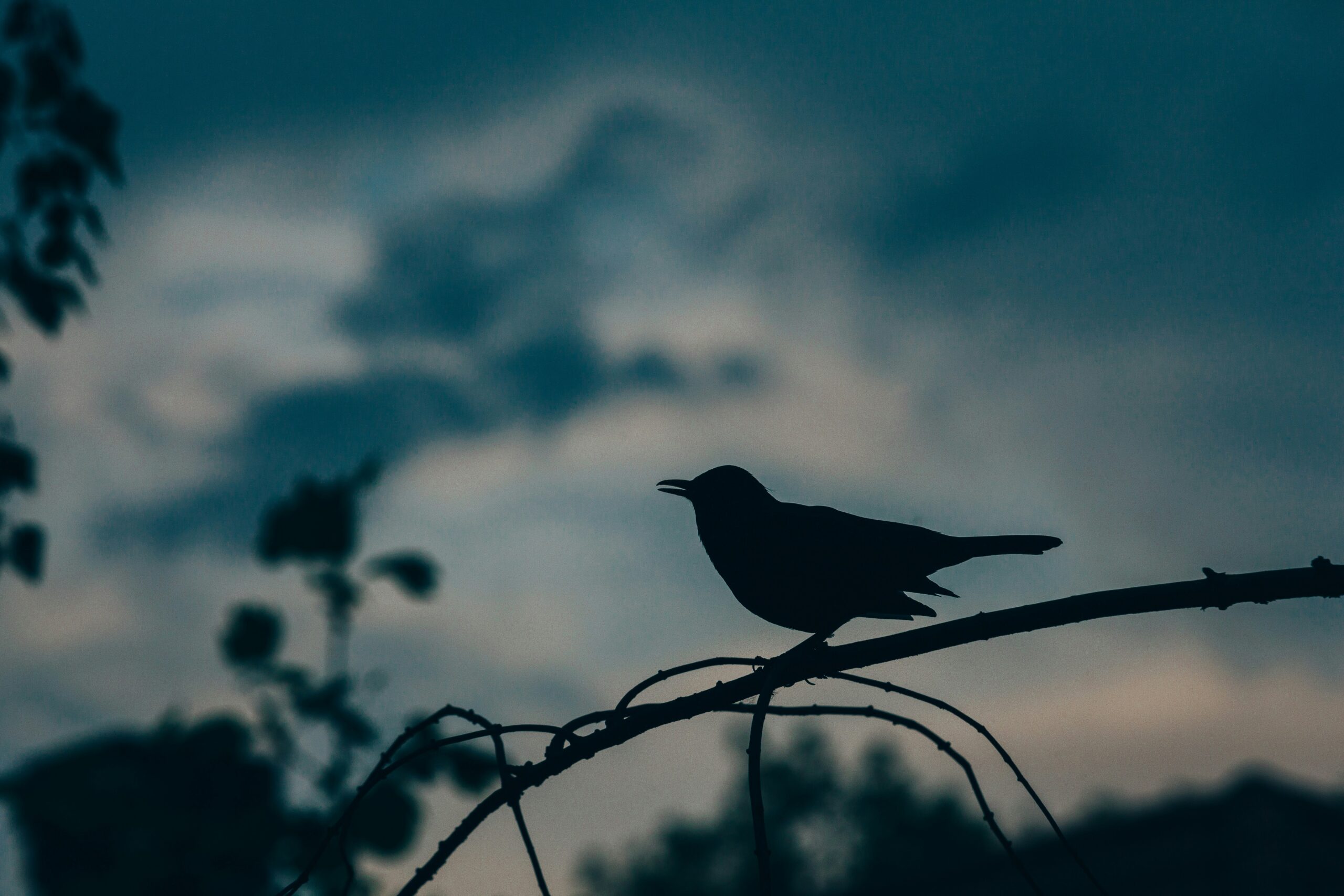
Alone again at the kitchen table – the only sound, other than the fridge’s airy drone, is made by
a twitchy gang
of sparrows
in the ash
tree over the way
a blackbird
& its alpha-
bet song
NOTES
[i] formed entirely, including spelling, punctuation and capitalisation, from a part of a letter written by L. Hill, dated 13/8/1916, as selected and quoted by Bill Gammage and published in The Broken Years: Australian Soldiers in the Great War (1974). Used with permission. Line breaks my own.
[ii] according to https://nzhistory.govt.nz/media/interactive/gallipoli-casualties-country, retrieved on 25 April 2025.
[iii] formed entirely, including spelling, punctuation and capitalisation, from a part of a letter written by L. Galwey, dated 2/8/1917, as selected and quoted by Bill Gammage and published in The Broken Years: Australian Soldiers in the Great War (1974). Used with permission. Line breaks my own.
[iv] according to www.atomicarchive.com, retrieved, with head bowed, on 25 April 2025
Share article
More from author

Genealogy: 2
Poetry 1983 in the mountains of smoke haze & roads hacked through sandstone, your father declares after trekking alone for hours, he made it to the rocks, volcanic, prehistoric:...
More from this edition
