
Featured in

- Published 20240806
- ISBN: 978-1-922212-98-6
- Extent: 216pp
- Paperback, ePUB, PDF

Already a subscriber? Sign in here
If you are an educator or student wishing to access content for study purposes please contact us at griffithreview@griffith.edu.au
Share article
More from author
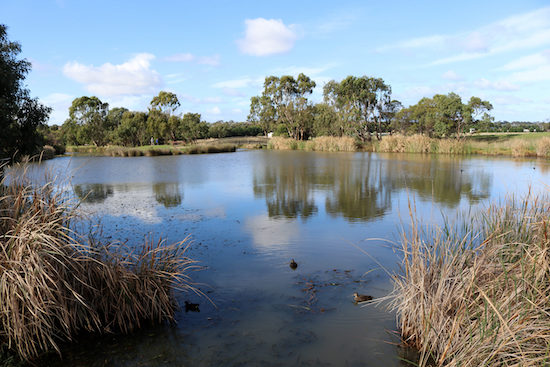
Into the swamp
Non-fictionSome versions of environmentalism understandably encourage an almost Swiftian misanthropy, with the ecological collapse framed as the inevitable response of nature to a pestiferous humanity, the only species that, by its very existence, destroys all that it touches. But maybe, just maybe, it doesn’t have to be that way.
More from this edition
The inspirations of radical nostalgia
Non-fictionEnvironmentalism, like history, is a civic discourse that critically engages with change in the world, contemplates the nature of limits and challenges ahistorical self-absorption. Like all good historians, environmentalists create recognition that the structures and conditions of today are not natural, inevitable or preordained but thoroughly contingent. The study of history and ecologically motivated advocacy also both demand reasoned scepticism towards the ideological claims of the powerful.

Into the void
Non-fictionThe singular achievement of mass politics was allowing otherwise powerless individuals a greater say in how society was ruled. It gave ordinary people the kind of status that hitherto they could hardly imagine. Its withering away, therefore, has allowed those in society whose status has always been higher to assert their interests more fully. Business and the wealthy are no longer forced to make big compromises to accommodate the interests of those below them in the social pecking order. For example, trade and financial liberalisation policies have permitted many companies to shift production, and even some services, offshore to capitalise on lower labour costs, weakening unions’ bargaining power considerably. Many lower paid workers have been pushed into insecure, low-paid jobs with poor conditions, a transformation justified by political and economic elites as contributing to greater economic ‘efficiency’ and labour market ‘flexibility’. Owners thus pocket a greater share of the economic pie, while workers’ incomes often stagnate or even decline in real terms, causing wealth inequality to rise steeply...

how to launch a poem
Poetry i) recall democracy is pretty numbers & orange clusters, strategically bold and critically wet, intemperate type-c photographs; ii) advance stagger: inkjet-laboured nested griefs & hybrid...
