
Featured in
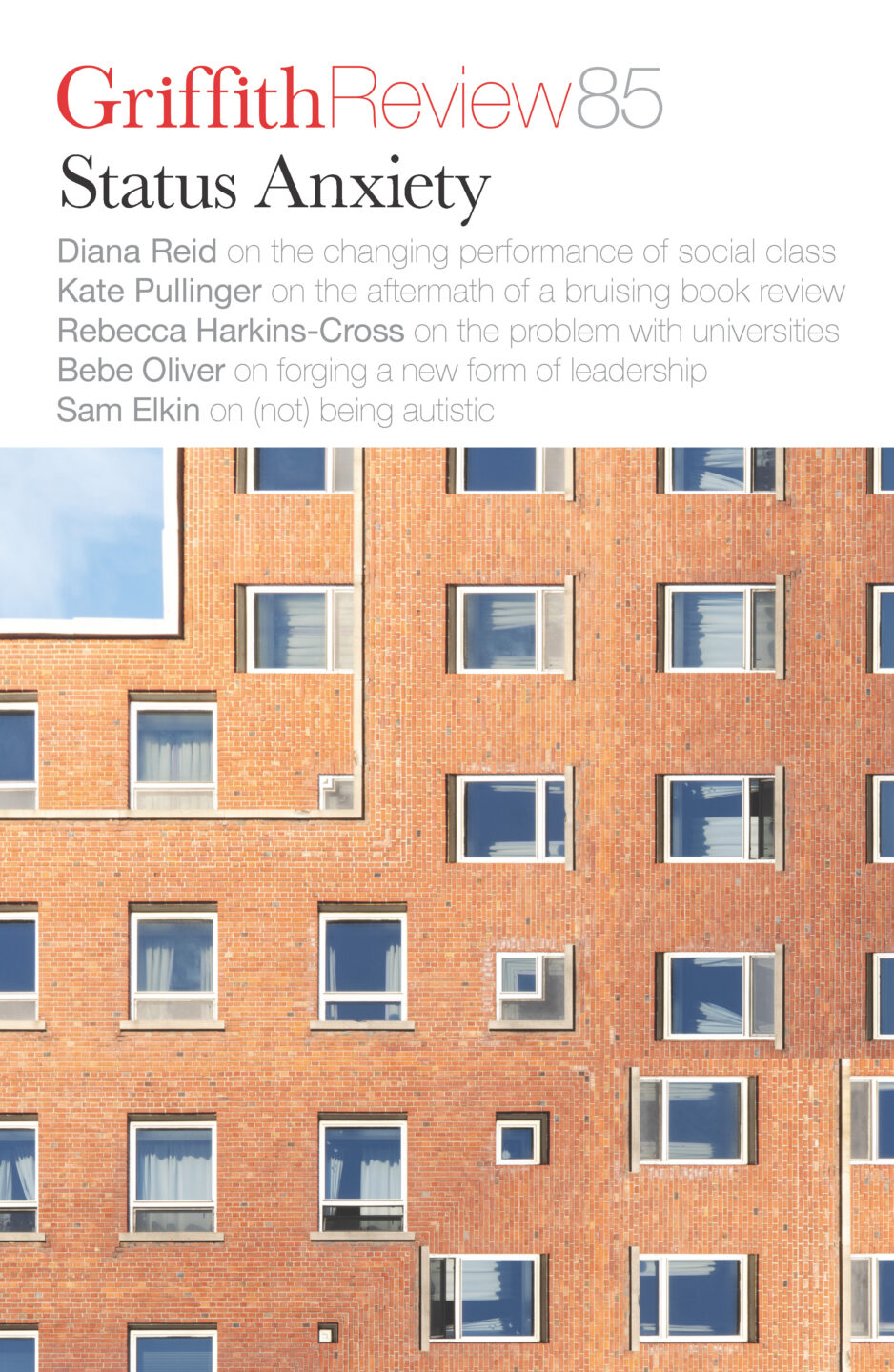
- Published 20240806
- ISBN: 978-1-922212-98-6
- Extent: 216pp
- Paperback, ePUB, PDF

Already a subscriber? Sign in here
If you are an educator or student wishing to access content for study purposes please contact us at griffithreview@griffith.edu.au
Share article
More from author
Trans as monster
GR OnlineA near future in the West in which access to gender-affirming surgery and cross-sex hormones is outlawed is no longer unimaginable. Those of us who have updated our sex markers on our passports have begun to wonder if they will be soon declared invalid with the stroke of a pen. It’s already happening in the US and the UK, once the global torch bearers of queer liberation. Why couldn’t it happen here too?
More from this edition

Conferral
Non-fictionBeneath my fantasy of a regular wage is the puerile hunch that if I stay in academia, I can regain some of the nervy possibility I held as an undergraduate student. It was at university that I first met people whose days were preoccupied with thinking, reading and writing, revelatory mostly because they were compensated for these activities with bourgeois trappings and validation. With hindsight, I can recognise that my straining so doggedly to become the kind of person who succeeded according to the university’s metrics mainly taught me what bell hooks says is the primary lesson of college – namely, ‘obedience to authority’.
The Juansons
FictionIn the morning, she walks over to the Johnsons’ place and knocks on the door. Nothing. She calls the police, but once the officer on the phone understands that Norma is not the boy’s kin, he brushes her off. She makes coffee and goes into the living room and turns on CNN. A banner across the top of the screen reads: INSTANT E-DEPORTATIONS ACROSS US.

Animal control
FictionShe’d seen her mother a couple of times since the lockdown ended, but it was still a shock. Margaret had lost some vital density that seemed ethereal, although it was obviously about her body – the protruding cheekbones, eyes sunk too deep in her head and hair a wispy cap across her scalp. Only her hands looked the same – her piano-playing hands resting neatly in her lap, long-fingered and surprisingly preserved. The rest of her was ghostly, and there was a blink when she looked at her daughter and the lights didn’t go on. SJ felt a momentary sinkhole: not that, not yet.
