
The motherload
The rise and rise of the shared parental responsibility myth
Featured in
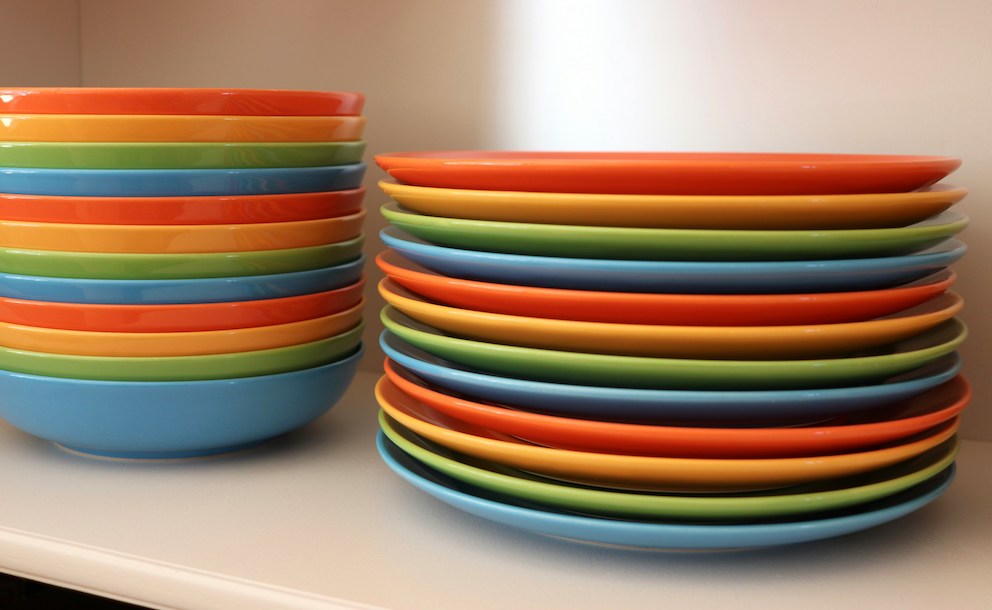
I RECENTLY SENT my best friend a document titled ‘The Motherload’: a manual explaining how to be me in the event that I die, am incapacitated or sent to jail for killing my husband. It includes gems such as the food preferences of each of my children, the sunscreen that doesn’t cause rashes and how often they need to see the dentist. The ostensibly trivial items on it are the ones that matter most – catering to kids’ idiosyncrasies makes for a happy family life. Losing your mum would be made substantially worse by having a fuckwit for a default parent – one who doesn’t even know what colour plate you always have your breakfast on.
Coincidentally, my bestie and I are also shovel buddies. No questions asked, each of us would rock up to the other’s home wearing a hazmat suit and carrying a spade, ready to dig a (deservedly) shallow grave. You know, if push came to shove(l). I know that my (loving) husband would have no clue about the minutiae of his own progeny. While he’s an adult who would probably figure it out eventually, I don’t want my (theoretically grieving) children to have their customer service experience plummet in the interim.
RAISING KIDS REMAINS a special sort of thankless, unpaid grind that mostly falls to women (who are also expected to bounce back and stay hydrated while remembering to smile). Despite a narrative to the contrary, heterosexual couples continue to experience chasm-like disparities in parental labour. Mortar Research found that women complete twelve out of thirteen aspects of childcare, ‘from bedtime and bathtime to helping out with homework and buying clothes’, challengingthe rise of the shared parental responsibility myth. This disparity in domestic labour makes the gender pay gap (currently 21.1 per cent, or seventy-nine cents to the dollar) feel even more unreasonable. The inequity doesn’t dissipate once the little ones are weaned – there’s an argument that things are actually downhill from there. Data from a recent British study shows that in more than 95 per cent of heterosexual couples, women (even those with full-time jobs) undertake most of the childcare. Of course, plenty of people (shout-out to the mothers-in-law) defend the underdads by saying they earn more and therefore shouldn’t be expected to contribute equally. This makes sense until you remember that women are the victims of the gender wage gap, not its sodding architects.
Contrary to conservatives, the only pronoun that upsets me is ‘we’. We didn’t get pregnant, give birth or breastfeed on demand. I bloody did. At the risk of making sweeping (but anecdotally accurate) generalisations, just how is it that so many men are afflicted with the same lack of key parenting skills? The complex interplay of low societal expectations, weaponised incompetence and deeply ingrained gender roles equates to an awful lot of men failing to pull their weight. It seems to me that men want to be parents but not do parenting. Does my husband love his kids? Sure. Has he ever cut their nails? Not a chance. Darling, I know you’re supposed to put your oxygen mask on before you help others, but do you have to put your mask on, take a forty-five-minute shit, watch Jack Irish repeats and scratch your balls before you check whether the kids are breathing? I’m not alone in this frustration – my birth group recently recommended a book by Jancee Dunn called How Not to Hate Your Husband After Kids.
In recent history, we got slapped on the wrists for presenting a certain flavour of male as (benignly) useless. Classics such as Three Men and a Baby and plenty of mildly sheepish ads (like this one) leant into this trope. However, as it’s ‘not nice’ to tease straight men for their failings, we are now expected to remain mute on the subject. If we termagants have the audacity to mention shortcomings, it’s often met with anger or squeaks about misandry. Dads don’t want to look like shit but are wonderfully content to be shit. To the men who argue that ‘children are big into parental preference, it’s a thing’, I agree. Of course those children prefer their mothers – I too would prefer to be looked after in a competent manner. To this point, I say: try being more favouriteable. Charming skits like Jimmy Kimmel’s Pop Quiz (in which dads don’t know their offspring’s birthday or life-threatening allergies) speak to a systemic issue. This begs the question: have we as a society accepted that a dad’s parental responsibility is nothing more than their contribution to conception?
Naturally, this isn’t a new problem. What is new, however, is the shame of admitting that that’s how things are in your house. After all, social media tells us that we’re meant to be working on ourselves, breaking cycles and living our best lives – not quietly and resentfully doing more than our fair share. Women chastise each other for not making their fertiliser step up and do better – as if they should dance around in tit tassels with a sign that reads ‘pull your weight’. But by not calling out men for their lacklustre approach to family life, we continue to enable it and hamstring ourselves – and we’re too busy doing ALL THE THINGS to have the energy to cover for someone who isn’t contributing fairly. My mates joke that they have the number of kids they actually have plus the man-child that is their husband – funny, and for the record, gents, very much not hot. Women are embarrassed by how little their ‘partners’ (passive-aggressive air quotes, right there) contribute to the running of their family – their partners, evidently, are not. I’m also endlessly bored by faux-grateful dadfessions that their wife does the ‘lion’s share’ – they’re doing the lioness’ share, you labour-mining dud! Social media influencers (who flaunt their shiny marriages online) tell us not to be mummy martyrs; we are told to ask for help. The thing is, being told to ‘ask for help’ implies that the other party is willing to step up.
CURRENTLY, ONE IN three marriages in Australia will end in divorce; 69 per cent of those divorces are initiated by women. The internet is awash with male influencers who explain the importance of stepping up and divorced dads who drop in at the weekend for fun before leaving the homework to their ex. I saw a meme claiming that no one fights harder for equally shared custody than the dad who wouldn’t even watch the kids for fifteen minutes so Mum could take a shower. This doesn’t affirm the widespread assumption that marriage is a woman’s ultimate dream. What it does affirm is that a lot of women will eventually reach a point where they introduce their spouse as their ex-husband. If women are choosing to solo parent ‘officially’ by opting for divorce, it suggests that the prospect of single parenting – with its various roles and responsibilities – doesn’t overwhelm them. Perhaps they are not overwhelmed because, for many of them, divorce wouldn’tchange all that much. If anything, it might even make things easier.
Schools are now being asked to send comms to both parents. While this is a nice gesture, it’s probably creating extra work for the (largely female, subsequently underpaid) administrators who then go home to manage an unfair share of their own parental load. We still labour under the false assumption that outsourcing work typically undertaken by mothers (like cleaning, childcare and cooking) enforces equality, but this is problematic. By outsourcing this work to other underpaid and underappreciated women, said work doesn’t gain status. Consequently, equality endures as a luxury expense out of reach for most households. Seems like a rather convoluted route – why not just make men do their fair share? It’s almost as if the answer is staring us in the face (every night over dinner).
While recently speed reading my Motherload document, I noticed that it covers a minuscule fraction of the work it takes to run a family. While none of it is rocket science (because I shouldn’t mess with physics when I’m so over-caffeinated that I can see through walls), its eight pages barely scratch my overstretched surface. Oh, titans of industry, masters of the universe, why are you unable to show me how shit-hot you are on the home front? When it comes to the parental load, we need to name and shame the inequality. Only then do we stand a chance of changing the status quo. Toenails don’t cut themselves.
Image credit: Julia Taubitz via Unsplash.
Share article
More from author

John Williams makes me get something in my eye
GR OnlineWith just a few notes I can feel excited, thrilled, scared, sad, melancholy, soaringly happy and optimistic – I could go on. Frankly, I didn’t even know I came with those as factory settings, let alone being able to activate them with a few bars of music.
More from this edition
